RULAAC backs SERAP, rejects ‘repressive’ clauses in Data Protection Amendment Bill
The Rule of Law and Accountability Advocacy Centre (RULAAC) has thrown its weight behind the Socio-Economic Rights and Accountability Project (SERAP) in opposing sections of the proposed Nigeria Data Protection (Amendment) Bill, 2026, warning that the provisions could undermine freedom of expression, access to information, and democratic participation if passed in their current form.
In a statement issued in Abuja on Sunday, RULAAC’s Executive Director, Okechukwu Nwanguma, said the organisation supports the government’s responsibility to strengthen data protection but insisted this must not come at the expense of constitutional and international human rights obligations.
“Data protection cannot become a pretext for expanding governmental control over digital spaces or introducing measures that facilitate censorship through indirect means,” the statement read.
RULAAC flagged as particularly concerning the clauses that could empower regulators to shut down digital platforms over non-compliance with data localisation requirements, warning this could trigger a repeat of the 2021 Twitter suspension in Nigeria — a move the ECOWAS Court of Justice had ruled violated the right to freedom of expression.
The group cited Section 39 of the 1999 Constitution, which guarantees freedom of expression, as well as Article 9 of the African Charter on Human and Peoples’ Rights and Article 19 of the International Covenant on Civil and Political Rights, arguing that any restriction on these rights must meet the tests of legality, necessity, proportionality, and legitimate purpose.
According to RULAAC, granting regulatory bodies broad powers to block platforms without judicial oversight fails to meet these standards, given how heavily Nigerians depend on digital platforms for journalism, education, civic engagement, business, and government services.
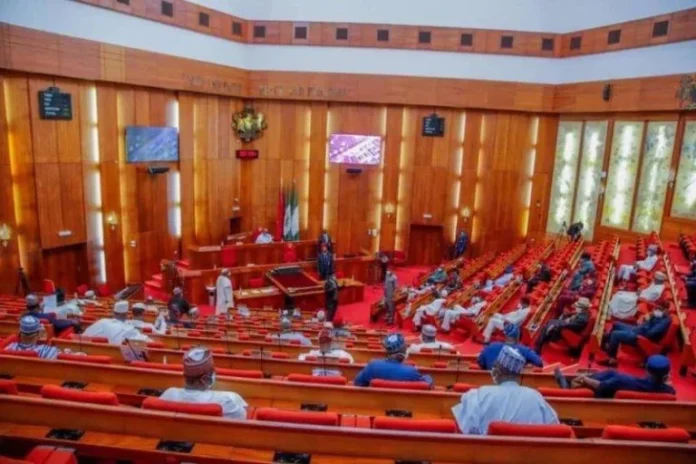
RULAAC called on the Senate President, the Speaker of the House of Representatives, and the National Assembly to withdraw or substantially revise the contentious provisions, urging that any reforms to the data protection framework be developed through wider consultation with civil society, digital rights groups, the tech sector, academia, and media practitioners.
RULAAC also appealed to civil society organisations, labour unions, student bodies, media houses, and other Nigerians to join the push to defend digital rights, stressing that digital freedom is “a constitutional imperative” rather than a mere technological issue.
“At moments such as this, silence is not neutrality,” Nwanguma said, adding that RULAAC remains committed to working with SERAP and other stakeholders to ensure Nigeria’s digital governance reflects constitutionalism and respect for human rights.