By Ishaya Ibrahim
African climate negotiators at the ongoing COP31 climate conference in Antalya, Türkiye, have been urged to reject loans for addressing climate change impacts largely caused by wealthy countries.
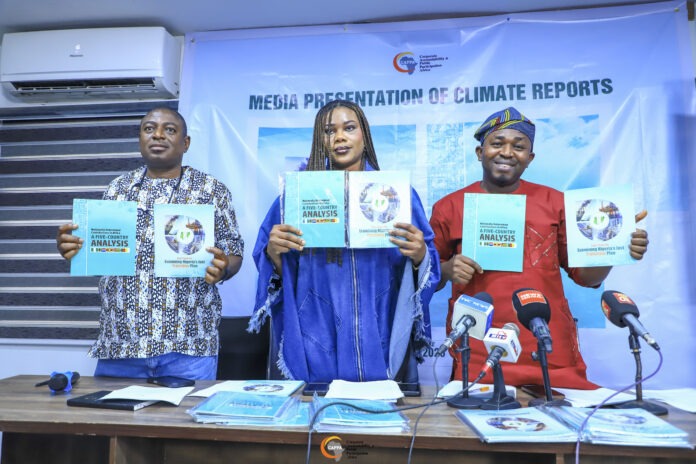
The call is among the recommendations in two reports published by Corporate Accountability and Public Participation Africa (CAPPA), in conjunction with the Make Big Polluters Pay Coalition (MBPP Africa).
The reports, Four Years On: Examining Nigeria’s Just Transition Plan and Nationally Determined Contributions in Africa: A Five-Country Analysis, urged wealthy nations, which bear the greatest responsibility for global emissions, to provide direct, grant-based financial support to African countries rather than loans that could deepen their debt burden.
At the presentation of the reports in Lagos on November 10, 2026, the organisations noted that Africa contributes barely three per cent to global emissions but bears a disproportionate share of climate impacts, leaving the continent with the additional burden of borrowing to address damage it did little to cause.
The concerns were contained in a press statement read by CAPPA’s Assistant Executive Director, Zikora Ibeh, at the launch.
The first report examines Nigeria’s energy transition policies, financing arrangements and social protection mechanisms, while the second assesses the climate commitments of Nigeria, Cameroon, South Africa, Togo and Uganda.
According to the organisations, although African countries have committed to reducing emissions and expanding renewable energy, their policies and investments often contradict these goals, particularly where governments continue to promote oil and gas development.
Nigeria’s ambition to achieve net-zero emissions by 2060, for instance, exists alongside a target to increase oil production to three million barrels per day by 2030. Cameroon is also pursuing negotiations for five oil exploration blocks with Murphy West Africa and Octavia Energy.
The reports further questioned the promotion of natural gas as a transition fuel, noting that methane, its principal component, is a potent greenhouse gas responsible for nearly 30 per cent of warming since the Industrial Revolution.
On Nigeria’s energy transition, the assessment acknowledged progress in policy development and renewable energy deployment but identified weaknesses in institutional coordination, financing and social protection.
It noted that responsibilities remain fragmented across government institutions, while financing depends heavily on anticipated investments. Workers and communities affected by the transition also lack enforceable guarantees on income security, retraining and environmental restoration.
With more than 80 million Nigerians reportedly lacking access to electricity, CAPPA and MBPP Africa argued that the transition must be measured not only by emissions reductions but also by access to affordable and reliable electricity, secure livelihoods and the restoration of degraded environments, particularly in the Niger Delta.
The five-country assessment also raised concerns about the growing reliance on carbon markets and offsetting mechanisms, warning that they could allow major polluters to delay actual emissions reductions by compensating for their pollution through projects such as commercial forestry and plantations.
Uganda’s climate plan was cited as an example, with the report noting that commercial plantations account for significantly greater projected emissions reductions than the country’s two natural forest restoration measures.
The organisations also referenced Oakland Institute documentation of forced evictions linked to a forestry and carbon-credit project in Kachung, Uganda, warning against climate interventions that undermine local communities’ land rights and livelihoods.
On financing, the reports highlighted Africa’s continued dependence on international support to implement its climate commitments.
Nigeria estimates that it requires US$337 billion between 2026 and 2035, with 80 per cent expected from international sources. Togo, meanwhile, makes 69.9 per cent of its financing requirements conditional on international support.
South Africa’s Nationally Determined Contribution (NDC) also indicates that approximately 80 per cent of international financial support recorded for 2021 and 2022 came in the form of loans.
The organisations warned that such financing arrangements could worsen Africa’s debt burden, despite the continent’s relatively small contribution to historical global emissions and its disproportionate exposure to climate impacts.
Contributing to the discussion, Ndivile Mokoena, Founder and Chief Executive of Yielding Intersectional Movements in South Africa, an MBPP Africa partner organisation, said: “The persistent gap between global climate commitments and local realities raises critical questions about political will and economic systems that continue to prioritise profit and growth over human well-being and ecological sustainability. This report underscores the urgent need to move beyond promises to tangible implementation, adequate climate financing, and meaningful support for developing countries.”
Similarly, Acola Amina, Executive Director of Nia Environment & Zero Carbon Alliance, an MBPP Africa partner in Uganda, stressed the importance of community participation in shaping climate policies.
“Achieving a rights-based, ecofeminist climate agenda that reflects Uganda’s realities and responds to the needs of affected communities requires inclusive participation and collective commitment.”
Kwami Kpondzo, Executive Director of Centre pour la Justice Environnementale, an MBPP Africa partner in Togo, also criticised the growing reliance on carbon markets and other interventions he described as false solutions to the climate crisis.
“Carbon markets and geoengineering are not solutions to the climate crisis. Rather, they are dangerous distractions that risk worsening the plight of vulnerable communities, threatening livelihoods, and undermining genuine climate action. We must put people and the planet before profit. Nature is not a commodity for sale, and we remain steadfast in our commitment to defending it.”
Akinbode Oluwafemi, Executive Director of CAPPA, which hosts the MBPP Africa secretariat, said the reports provide an opportunity for African governments to reassess their energy policies and climate commitments in the interest of ordinary people and affected communities.
“The Nigeria Energy Transition Plan and the Five-Country NDCs Reports offer an opportunity to rethink how energy policies and climate commitments serve people and communities. These reports emphasise that equity, transparency and accountability must remain central in every plan, while ensuring that affected communities have a meaningful voice in decisions that shape their future.”
The organisations urged the African Group of Negotiators and progressive delegates at COP31 to reject carbon offsetting as a substitute for actual emissions reductions. They also called for a review of accounting arrangements under Article 6 of the Paris Agreement that could allow continued fossil fuel pollution to be offset by temporary or unreliable carbon storage.
They further urged African governments to establish binding safeguards against corporate capture of climate policies, including conflict-of-interest rules to prevent fossil fuel companies, major industrial polluters and conflicted private consultants from determining national climate priorities.
Other recommendations include legal protection for communal lands and the livelihoods of Indigenous Peoples, smallholder farmers, rural women and frontline communities, alongside enforceable rights allowing communities to reject projects that threaten their lands and livelihoods.
On climate finance, CAPPA and MBPP Africa called on historically responsible, high-emitting countries to provide adequate, predictable and grant-based funding, alongside reparations, rather than loans that could deepen Africa’s indebtedness.
They also demanded a planned and funded phase-down of fossil fuel extraction, backed by substantial public investment in decentralised renewable energy and affordable electricity, as well as legally binding protections for workers and affected communities.