



Presidency says Tinubu’s visit to Saint Lucia is diplomatic, not vacation
By Jeffrey Agbo
The Presidency has said that President Bola Tinubu’s state visit to Saint Lucia is historic and diplomatic contrary to “misguided, mischievous and uninformed” opinions.
Saint Lucia is the headquarters of the Organisation of Eastern Caribbean States (OECS) and serves as a gateway to the 15-member Caribbean Community (CARICOM), which boasts a combined GDP of over $130 billion.
A statement issued by Bayo Onanuga, Special Adviser to the President on Information and Strategy, said the visit is deeply rooted in cultural, historical, and diplomatic imperatives that seek to reconnect Nigeria with its diaspora and expand South-South cooperation.
The Presidency said the visit is particularly meaningful to Saint Lucia, a Caribbean island nation with strong ancestral ties to Africa, especially Nigeria. In the mid-19th century, migrants from present-day Nigeria settled in Saint Lucia, contributing cultural and religious practices that still thrive today.
“Citizens of Saint Lucia are excited that President Tinubu has chosen to visit the island. They long to strengthen their bonds with African nations with which they share ancestral links,” the statement said.
The Presidency highlighted that deepening ties with CARICOM states is a strategic step in enhancing South-South cooperation in an era of global uncertainty.
The statement also recalled the notable contributions of Saint Lucians to Nigeria’s development. Most prominent among them is Sir Darnley Alexander, a Saint Lucian-born jurist who served as Nigeria’s Chief Justice from 1975 to 1979. His son, Michael, also served Nigeria as a medical doctor in the Nigerian Army during the civil war. Another Lucian, Neville Skeete, was part of the architectural team that designed the Central Bank of Nigeria headquarters.
President Tinubu’s visit is anchored in Nigeria’s “Four D’s” foreign policy framework: Democracy, Development, Diaspora, and Demography. The trip aligns with the African Union’s Sixth Region agenda, which identifies the African diaspora as a strategic partner for development.
The statement noted that on the Friday preceding Tinubu’s visit, Afrobeats and Nigerian music dominated the island’s airwaves, particularly at the iconic Gros Islet Street Party, one of the Caribbean’s most vibrant cultural events.
Emphasising democracy as a shared value, the Presidency noted that Saint Lucia, like Nigeria, is a stable parliamentary democracy.
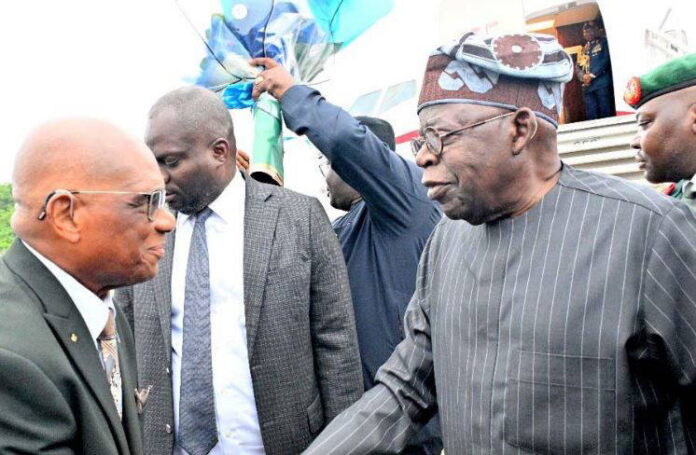
It noted that during the live coverage of President Tinubu’s arrival at Hewanorra International Airport, a local commentator described him as a “fighter for democracy,” referencing his long-standing pro-democracy credentials.
The President’s planned visit to Sir Arthur Lewis Community College and the inclusion of Nigerian Technical Aid Corps (TAC) officials in his delegation demonstrate a commitment to education and knowledge-sharing across the African and Caribbean regions, said the statement.
The visit is only the second official state visit by an African leader to Saint Lucia since its independence in 1979. The last was by South Africa’s Nelson Mandela in 1998.
President Tinubu will also deliver an address to a special joint session of Saint Lucia’s bicameral parliament at the Sandals Grande Conference Hall, famously named after former U.S. President Bill Clinton.
President Tinubu is also expected to meet with members of the Nigerian community in Saint Lucia during a special reception hosted by the Saint Lucian Prime Minister.
“President Tinubu’s visit is not a vacation, as misrepresented by critics, but a diplomatic and cultural outreach that advances Nigeria’s interests and deepens its global partnerships,” the statement added.


