Outrage as Trump widens retribution presidency scope amid questions about extent of government surveillance of social media activity
By Jeph Ajobaju, Chief Copy Editor
********************************
US state department announced it was systematically identifying visa holders who “celebrated the heinous assassination of Charlie Kirk”, declaring in a social media statement that “the United States has no obligation to host foreigners who wish death on Americans” ….
[Charlie Kirk’s] legacy has been celebrated by conservatives, who view him as a free speech champion and effective mobiliser of young Republicans.
But comments by Kirk, who co-founded Turning Point USA, a student organisation focused on spreading conservative ideas on college campuses, have prompted angry liberal backlash on numerous occasions, and he was accused of hate speech and racism for his comments on issues such as race and crime – BBC.
“You can’t defend ‘our culture’ by eroding the very cornerstone of what America stands for: freedom of speech and thought.
“The Trump administration must stop punishing people for their opinions alone. The supreme court has been clear that noncitizens have a right to freedom of speech.
“In America, no one should fear a midnight knock at the door because of their political views” – Conor Fitzpatrick, attorney at the Foundation for Individual Rights and Expression (Fire).
Visa revocations under these parameters “are censorship, plain and simple. Mere ‘mockery’ can’t be grounds for adverse government action – whether revocation of broadcast licenses or revocation of visas.
“While the government can revoke visas for many reasons, the First Amendment forbids it from doing so based on viewpoint” – Carrie DeCell, Knight First Amendment Institute’s senior staff attorney and legislative adviser.
********************************
Donald Trump has widened the scope of retribution in his presidency by ordering the United States Department of Justice (DOJ) to go after current and former officials who lawfully criticised or investigated or prosecuted him over his illegalities in his first term, to perceived political enemies, and now to those who made negative comments about the death of a political ally last month.
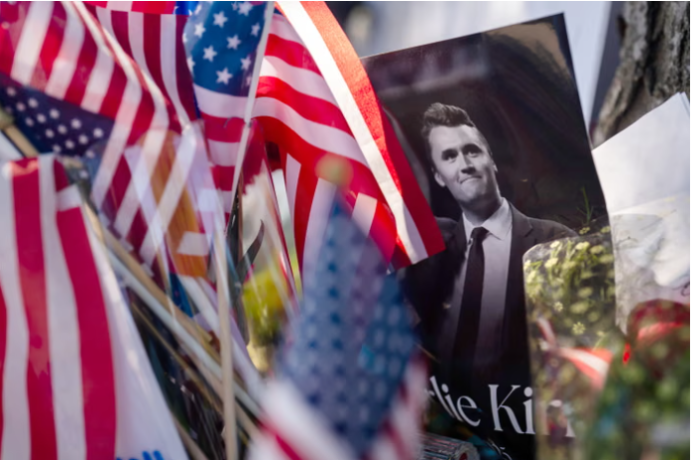
Charlie Kirk, a registered member of Trump’s Republican Party, was assassinated in September by a 22-year-old White man apparently for enabling and amplifying what critics list as Trump’s extremism in, among others, racism, misogyny, dishonesty, anti-immigrant, hypocrisy, divisiveness, a streak for self-serving and for verbal and physical violence.
US civil liberties advocates are warning that the Trump administration’s decision to strip visas from at least six foreign nationals over social media posts about Kirk’s killing represents yet another example of dangerous government crackdowns on protected speech.
The state department has announced that it is systematically identifying visa holders who “celebrated the heinous assassination of Charlie Kirk”, declaring in a social media statement that “the United States has no obligation to host foreigners who wish death on Americans”.
The BBC reports the Trump administration revoked the visas of at least six people for public comments made about the murder of Kirk, a right-wing influencer.
The state department shared on X screenshots of six social media posts which it said were examples of foreign visa holders welcoming Kirk’s death on 10 September, and suggested further visa cancellations would follow.
Kirk, an ally of Trump, was shot dead while speaking at a university event in Utah.
The 31-year-old’s legacy has been celebrated by conservatives, who view him as a free speech champion and effective mobiliser of young Republicans.
But comments by Kirk, who co-founded Turning Point USA, a student organisation focused on spreading conservative ideas on college campuses, have prompted angry liberal backlash on numerous occasions, and he was accused of hate speech and racism for his comments on issues such as race and crime.
In the statement, the state department said it “continues to identify visa holders who celebrated the heinous assassination of Charlie Kirk”.
The six people who had their visas revoked were from Argentina, South Africa, Mexico, Brazil, Germany and Paraguay, according to the department.
It is unclear when the department revoked the visas and what type of visa each person held.
While they have not been named, South African national Nhlamulo Baloyi told media including Reuters and the Washington Post that his visa had been revoked.
He said he had written one of the posts shared by the state department. In the post, he said “Kirk won’t be remembered as a hero” and described his followers as “trailer trash”.
He added that he received confirmation last week that his business visa had been revoked.
Brazilian comedian Tiago Santineli, 33, identified himself as another member of the group. He told BBC Brasil that he learned two weeks ago while in Portugal for a show that he had lost his US tourist visa.
He said the development was a “source of pride for me and my followers. It didn’t really have any negative impact”.
In a 16 September post to his 430,000 followers on X, Santineli wrote that Kirk had “died too late” and said that he “was the reason for a Nazi demonstration where they marched in tribute to him. Good riddance!”
He told the BBC: “I did make the joke. It was an aggressive joke. I have no regrets. That’s it.”
The announcement of the visa cancellations came the same day as Trump posthumously awarded Kirk the Presidential Medal of Freedom.
Trump has described Kirk as a “martyr” and blamed what he called “far-left radicals” for the killing.
Kirk was fatally shot at Utah Valley University while speaking in front of thousands at The American Comeback tour hosted by Turning Point USA.
Tyler Robinson, 22, was arrested as a suspect two days later and has been charged with aggravated murder by state prosecutors.
The Trump administration’s visa cancellations mirror a larger effort by Republicans to target Kirk’s critics in the wake of his death, with Vice-President JD Vance urging people to “call their employer” to report those who celebrated the killing.
TV host Jimmy Kimmel was temporarily pulled off air after comments he made about the shooting of Charlie Kirk.
More broadly, the Trump administration has expanded social media vetting during visa applications and revoked thousands of student visas as part of its immigration crackdown.
Over 6,000 international student visas have been cancelled this year, and the state department said the “vast majority” of the violations were assault, driving under the influence (DUI), burglary and “support for terrorism”.
While the department did not specify what it meant by “support for terrorism”, the Trump administration has targeted some students who have protested in support of Palestine.
Questions about extent of government surveillance of social media activity
The Guardian (UK) adds that the visa cancellations represent an escalating government-wide campaign to suppress criticism of Kirk.
“You can’t defend ‘our culture’ by eroding the very cornerstone of what America stands for: freedom of speech and thought,” Conor Fitzpatrick, an attorney at the Foundation for Individual Rights and Expression (Fire) said in a statement to the newspaper.
“The Trump administration must stop punishing people for their opinions alone.”
Visa revocations under these parameters “are censorship, plain and simple”, Carrie DeCell, Knight First Amendment Institute’s senior staff attorney and legislative adviser, said in a press release.
“Mere ‘mockery’ can’t be grounds for adverse government action – whether revocation of broadcast licenses or revocation of visas,” DeCell said. “While the government can revoke visas for many reasons, the First Amendment forbids it from doing so based on viewpoint.”
The crackdown has ensnared foreign nationals for posts with minimal reach, raising questions about the extent of government surveillance of social media activity.
Among those whose visas were revoked was a South African national whose commentary attracted just 2,344 views. The individual “mocked Americans grieving the loss of Kirk, saying ‘they’re hurt that the racist rally ended in attempted martyrdom’ and alleging ‘he was used to astroturf a movement of white nationalist trailer trash’”, according to the state department.
A German national also had their visa cancelled for a post written in German that translated to: “when fascists die, democrats don’t complain.” The state department characterized this as celebrating Kirk’s death and attempting to justify his murder.
The Brazilian stripped of his US visa is Tiago Santineli, a far-left standup comedian and online influencer who published a series of inflammatory tweets about Charlie Kirk after his assassination.
In one 16 September post, cited by the state department on Monday, the 33-year-old comedian, who has more than 430,000 X followers, wrote: “Charlie Kirk was the reason for a Nazi demonstration where they marched in tribute to him. Good riddance!”
In a second part of the tweet, not cited by the state department, Santineli refers to the fatal shot to Kirk’s neck, writing: “If only someone had given Hitler this kind of tracheostomy before he had reached power. It’s too bad that Little Charlie Deep Throat was killed by another right-wing conservative, it takes a bit of the fun out of it, but it’s still worth it.”
The controversial Brasília-born comedian, who has nearly a million YouTube subscribers, published several other incendiary messages about Kirk’s assassination.
In one 18 September post, Santineli wrote beneath a photo of two well-known rightwing Brazilian politicians: “When are these [two] going to get the charlie kirk treatment?”
Santineli did not reply to a request for comment but writing on X on 1 October he said he had received an email from the US embassy revoking his visa.
The Brazilian boasted that that made him “the world’s first comedian to be banned from entering the US because of a joke”.
“I can’t go to the US,” Santineli wrote. “But the worst thing is that Charlie Kirk will never be able to leave hahahahahahahahaha.”
Another person singled out by the visa restrictions was Enrique “Kike” Gamarra, a veteran talkshow host who is often critical of Paraguay’s conservative government.
In a recent programme, Gamarra said that Kirk’s killing “doesn’t absolve the way he lived his life. Charlie Kirk was a son of a bitch and died according to his own rules.” Gamarra declined to comment when contacted by the Guardian.
Pro-government media in Paraguay celebrated the travel ban imposed on the broadcaster, which comes amid deepening ties between Trump’s White House and Paraguay’s president, Santiago Peña.
The state department’s actions draw on a vast surveillance apparatus established in 2019, when the department began requiring nearly all visa applicants worldwide to provide social media handles from platforms including Twitter/X, Facebook, Instagram, YouTube, LinkedIn and Reddit used within the past five years.
The policy, adopted under Trump’s first administration as part of “extreme vetting” measures, continued under Joe Biden, and expanded dramatically in March this year.
A state department cable obtained by the Guardian at the time ordered consular offices to conduct comprehensive social media investigations of student visa applicants, with officers instructed to preserve screenshots of “potentially derogatory” content to create permanent records – even if posts were altered or deleted.
The March directive established sweeping new grounds for visa denials, writing that “evidence that an applicant advocates for terrorist activity, or otherwise demonstrates a degree of public approval or public advocacy for terrorist activity or a terrorist organization” could justify rejection.
It also mandated social media reviews of all students applying for visas, with fraud prevention units directed to flag and document content the administration deems threatening to national security.
The directive followed high-profile visa revocations and arrests targeting pro-Palestinian campus activism, signaling an aggressive expansion of how immigration enforcement could be wielded against political speech.
“The supreme court has been clear that noncitizens have a right to freedom of speech” Fitzpatrick said. “In America, no one should fear a midnight knock at the door because of their political views.”
Read also: