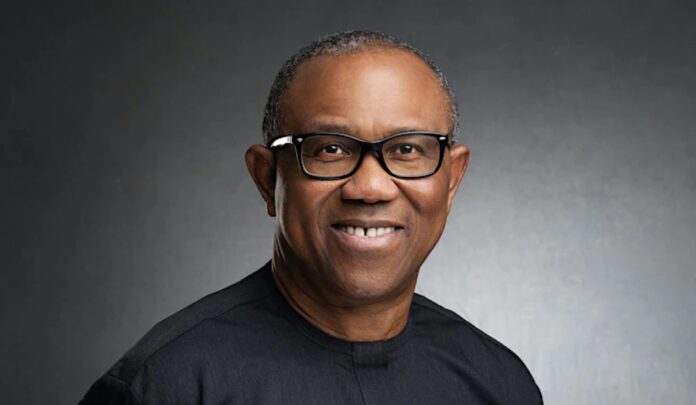
Obi noted that governments should invest in education rather than introduce financial measures that could discourage school enrolment.
By Kehinde Okeowo
Nigeria Democratic Congress (NDC) presidential candidate, Peter Obi, has welcomed the Federal Government’s decision to halt the hike in fees for the West African Senior School Certificate Examination (WASSCE), otherwise known as WAEC, and the National Examinations Council (NECO) Senior School Certificate Examination (SSCE).
He hailed the decision on Monday via a post shared on his X page titled: ‘Suspension of Examination Fees: A Victory for the People’.
After initially approving an 82% increment of the examination fee from ₦27,500 to ₦50,000, the government made a U-turn and suspended the decision.
Justifying the suspension, the Director of Press and Public Relations for the Federal Ministry of Education, Folasade Boriowo, said it was to allow room for further consultations.
She said, “The proposed review of examination registration fees will not take effect, as earlier communicated, pending the conclusion of the consultation process.”
Reacting to the suspension, Obi urged the FG to review other policies he argued have imposed hardship on Nigerians.
ALSO READ: FG bows to pressure, suspends WAEC, NECO fees hike
According to him, the suspension followed widespread public opposition to the policy, which he argued would have placed additional financial pressure on families already facing economic challenges.
The former Anambra State governor maintained that introducing examination fees at the basic education level would have created barriers to learning at a time when efforts should be focused on reducing the number of out-of-school children across the country.
Taking to his verified handle, Obi wrote, “While I commend the authorities for listening to the widespread public outcry and suspending the policy, it must be said that the fee was an unnecessary burden that should never have been introduced at this time of great hardship, when we should be doing everything possible to invest in basic education and reduce the millions of out-of-school children in Nigeria.
“At a time when many families are struggling to make ends meet, access to education should be expanded, not restricted. Education is a fundamental right and a public good, not a source of government revenue.”
He went on to note that governments have a responsibility to invest in education rather than introduce financial measures that could discourage school enrolment.
“Imposing multiple fees at the basic education level risks denying many children their right to education. At that stage, the State has a duty to invest in educating and preparing its citizens for productive lives, not to erect financial barriers that keep them out of school,” Obi said.
He added that leaders should be willing to reverse policies that place unnecessary burdens on citizens and thanked parents, advocacy groups, and other Nigerians whose public opposition, according to him, contributed to the suspension of the examination fees.