



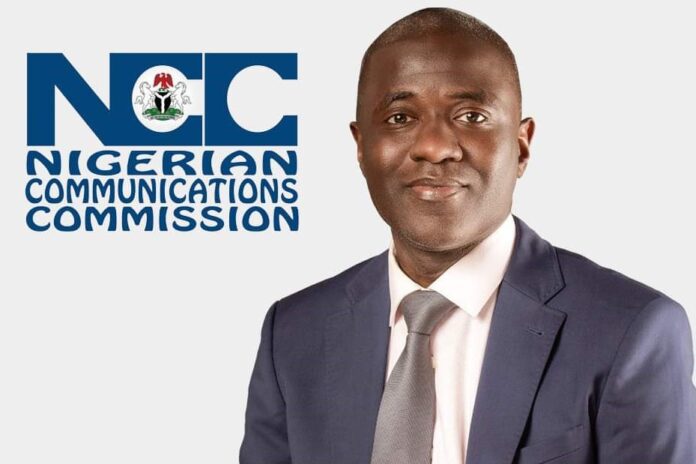
Nigerian Communications Commission (NCC) has presented the Draft General Authorisation Framework to telecom stakeholders, pledging a new era of agile, inclusive, and innovation-driven regulation for the communication industry.
By Emma Ogbuehi
Nigerian Communications Commission (NCC) has presented the Draft General Authorisation Framework to telecom stakeholders, pledging a new era of agile, inclusive, and innovation-driven regulation for the communication industry.
The Executive Vice Chairman/CEO of NCC, Dr. Aminu Maida, made the presentation at a stakeholders’ forum comprising industry executives, technology entrepreneurs, sector associations, and the media in Abuja. The meeting was to deliberate on strategies to enhance communications services in Nigeria.
In his address at the gathering, Maida lauded the rising profile of Nigeria’s telecoms sector since the liberalisation of the sector, 24 years ago. He stated that as of May 2025, the country’s tele-density stood at over 79.65%, with broadband penetration at 48.81% – feats he attributed to rapid uptake of mobile technology, upsurge in data consumption, and growing appetite for digital services.
READ ALSO:
NCC restates commitment to protecting telecom infrastructure
Maida stated, “We have witnessed tremendous transformation leading to achievements that underscore our progress as a nation. But we are now at a turning point where the nature of innovation demands a regulatory paradigm that is not only responsive but enabling.”
He stressed that the sector was at a crossroads where traditional regulatory frameworks were struggling to keep pace with breakneck innovation. “Modern regulation must enable—not hinder—innovation,” he said, emphasizing the urgent need for a new system to accommodate advancements such as 5G networks, AI-driven systems, blockchain, and fintech.
The General Authorisation Framework, according to Maida, is an NCC reform initiative aimed at offering flexibility and responsiveness, stressing that it is anchored on three instruments: Proof-of-Concept (PoC) pilots, which allows innovators to validate novel ideas in real-world settings; a Regulatory Sandbox, which provides a supervised environment for testing innovation such as Open RAN and dynamic spectrum sharing; and Interim Service Authorisation (ISA), which grants temporary operation of services not yet covered by existing licence categories.
Maida explained, “By adopting this approach, we are providing a platform for innovators of various sizes—whether startups or established companies—to demonstrate feasibility, assess risk, and measure outcomes before deployment. This model encourages experimentation and responsible innovation while safeguarding consumer rights and public interest.”
Emphasising the collective nature of regulatory success, he called on mobile network operators, service providers, infrastructure companies, original equipment manufacturers, start-ups, civil society, and academia to play active roles in refining the framework.
He underscored the NCC’s vision, saying, “To sustain momentum, we must be bold, collaborative, and committed to building a resilient and innovative ecosystem. Through the General Authorisation Framework, we are unlocking new pathways for experimentation, market entry, and growth.”
In her presentation, the Director of NCC’s Licensing and Authorization Department revealed that the draft framework was fashioned after an extensive internal review, benchmarking against international models such as the UK’s Ofcom Sandbox and Singapore’s IMDA testbeds. She noted, “These examples helped us understand how to promote innovation in a way that still meets regulatory goals.”
She added, “The framework is designed to be time-bound, transparent, and data-driven, while aligning with national policies including the Nigeria Data Protection Act 2023, the National Broadband Plan, and the Nigerian Communications Act 2003.
“We have embedded key protections to ensure safety and market integrity, including data protection rules, cybersecurity measures, and customer information policies.”
Both the Executive Vice Chairman/CEO and the Director called for robust stakeholder feedback, describing the draft as “a living document” open for commentary and suggestions. Participants were reminded that the inclusive growth of Nigeria’s digital economy hinges on closing connectivity gaps and empowering underserved communities—particularly youth and women—through innovation-friendly regulation.


