More Nigerians push for domestic workers’ union to curtail abuse, exploitation
By Ishaya Ibrahim
A critical mass of Nigerians is demonstrating support for domestic workers to establish a union to directly confront the escalating abuse and exploitation prevalent within the sector.
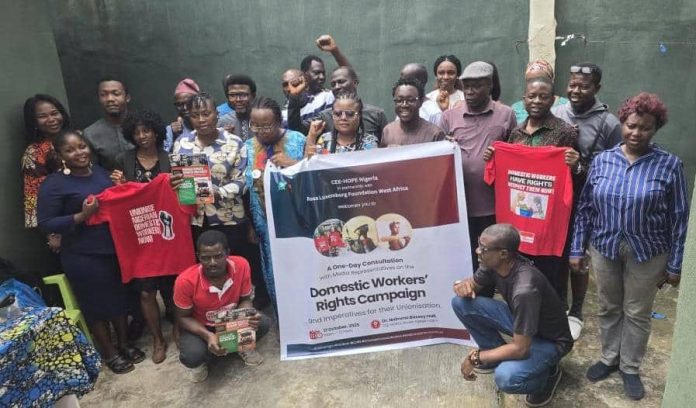
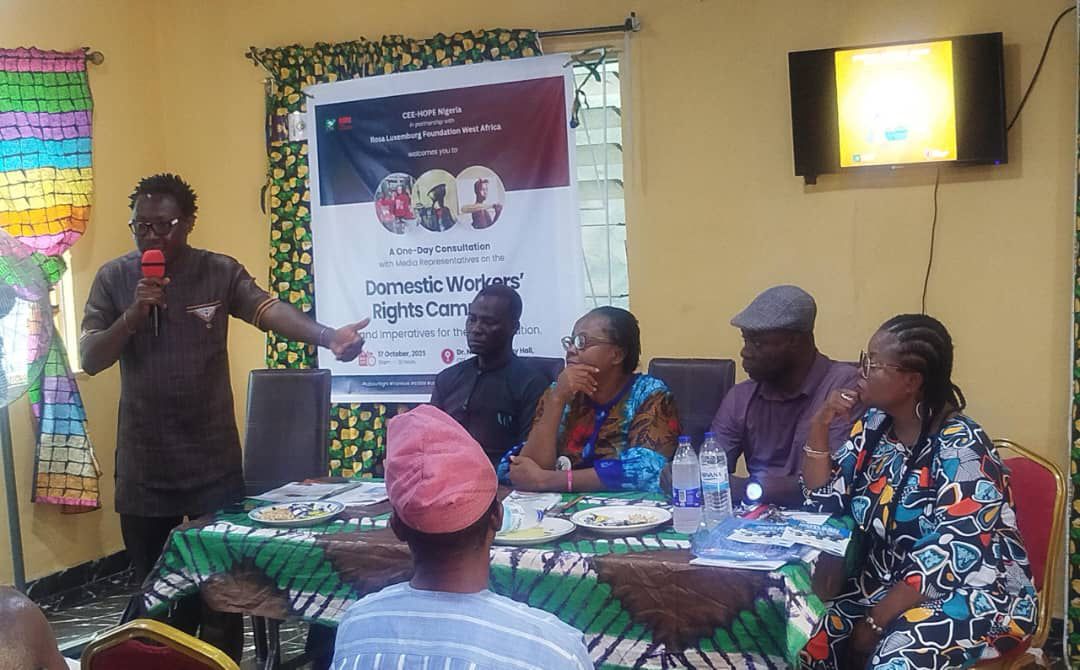
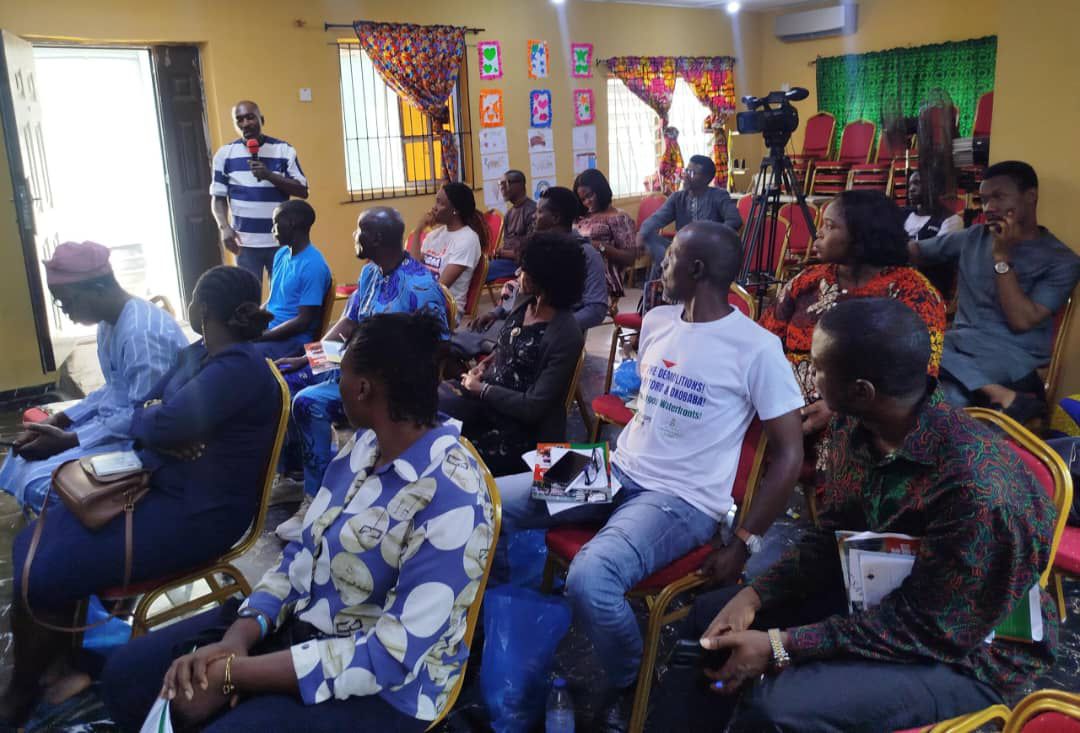
At a media parley organised by the Centre for Children’s Health Education, Orientation and Protection (CEE-HOPE), activists lamented the growing cases of abuse and exploitation of domestic workers, arguing that only the formal unionisation of the industry can adequately address this issue.
Betty Abah, convener of the parley and executive director of CEE-HOPE, said that domestic workers are the invisible backbone of society. “They care for our homes, nurture our children, and support our families—yet they remain among the most unrecognised, undervalued, and most vulnerable workers in Nigeria. For too long, their labour has been invisible and unprotected.”
Abah said the majority of domestic workers are women and girls, arguing that protecting their rights means protecting some of the most marginalised voices in our country.
She said the push for the unionisation of domestic workers was inspired by the International Labour Organisation (ILO) Convention 189 on decent work.
She revealed that two bills are currently before the National Assembly, which, if passed, would transform the landscape for domestic workers in Nigeria.
One of the bills in the House of Representatives is titled: HB.1765: A Bill for an Act to Domesticate the ‘Domestic Workers Bill of Rights’ in Nigeria, Establishing Minimum Employment Standards, Ensuring the Protection and Welfare of Domestic Workers, and for Related Matters. Sponsored by Hon. Akin Alabi, the Bill has passed its second reading.
The Bill in the Senate is titled: SB.629: A Bill for an Act to Regulate and Formalise the Employment of Domestic Workers, Apprenticeships, Interns and Other Informal Sector Employees and to Empower the National Directorate of Employment to Issue Licenses and Monitor Privately Owned Employment Agencies in Nigeria. The Bill was sponsored by Senator Sani Musa.
According to Abah, these bills represent a historic opportunity that, if passed, would enshrine fair wages, safe working conditions, protection from abuse, access to social security, and enforceable legal recourse for domestic workers.
She said the bills, if passed, would formalise an entire sector that has long existed in legal limbo, bringing accountability, oversight, and dignity to millions who work behind closed doors.
She added: “When workers come together in a collective, they can negotiate for better terms, resist exploitation, and build solidarity. Without a union, domestic workers remain isolated and voiceless; with one, they gain structure, voice, and protection. We have seen domestic worker unions in other countries push meaningful improvements in wages, working hours, and respect. Nigeria must embrace this path immediately.”
A development expert, Dr Monday Ashibogwu, also advocated for the establishment of a union to protect the rights of domestic workers.
He said the formation of a union is a matter of right to protect the dignity of the Nigerian worker, citing examples of abuse in the banking sector because of the weakening of the union.
He said: “It is among domestic workers that one finds victims of child abuse, manipulation, and sexual and gender-based violence. These are places where you find inhumane treatment, where people are asked to sleep in generator houses or dog kennels. That shouldn’t be where a fellow human should stay because that person has chosen to be a domestic worker.”
He also added, “We have seen people pour hot water on domestic workers. These are not acceptable forms of treatment. Nobody would want that to be done to his son or daughter.”
According to Ashibogwu, no one is doing a domestic worker a favour by employing them, arguing that it is a service being rendered.
Former Lagos State Coordinator of Child Protection Network, Ngozi Okoro, urged the Nigerian government to back the unionisation of domestic workers like in Ghana, Kenya, and Uganda, where they have very vibrant domestic workers communities.
“There is no organised or recognised domestic workers union in Nigeria, which is quite embarrassing because Nigeria has the highest population in Africa. And when you talk about the state of human rights, when you talk about impunity, when you talk about how people flout policies, it’s Nigeria.”
One of the Lagos coordinators of #EndBadGovernance, Hassan Taiwo Soweto, said the push for the unionisation of domestic workers is to protect the workers and employers.
He explained: “We need to ensure that domestic workers are organized as workers, and to ensure that they are not children.”
Media trainer, Lekan Otufodunrin, Assistant Executive Director at Corporate Accountability and Public Participation Africa (CAPPA), Zikora Ibeh, and a representative of the Nigeria Labour Congress (NLC), among others, also attended the event.