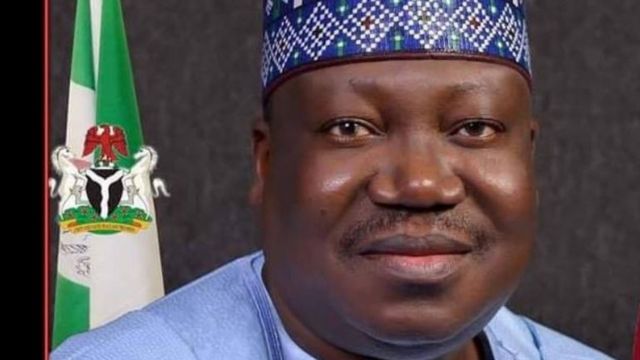
Lawan’s foundation also provides solar boreholes and hand pump facilities for the livestock rearers in his constituency and many more veterinary services to assist the growth of the sector.
By Jeffrey Agbo
Senate President Ahmad Lawan has called for more support from the government for the livestock sub-sector, noting that it has suffered neglect over the years.
Lawan accused some unnamed people of being hypocritical on the issue of possible government support for the livestock business.
The Senate President spoke while playing host to a delegation from the Federal Ministry of Agriculture, led by the Minister, Mohammad Abubakar, and also representatives of the Nigerian Veterinary Medical Association, led by its President, Adetuberu Olutoyin.
Lawan said: “This sector, the livestock sector, does not get the attention of the government. And I find it strange that here, you have a sector that has the potential of boosting our economy significantly and yet it is neglected.
“I am not a Fulani in any way. I don’t have any Fulani blood but I think our livestock rearers have not received a fair deal all through our history.
“As elected people, we owe every segment of those that elect us the obligation and responsibility to do what is right, to draw attention of government and where we are able to do something personally we do so for the betterment of our people.
“I think many Nigerians have been hypocritical. When it comes to livestock rearers, they will say, No, No, No. government should not support them, it is private business. That is hypocrisy.
“What can be more private than banks? Individuals will establish bank, steal the money, then AMCON will take over. They will call it toxic assets and put the burden on our heads.
READ ALSO:
Lawan calls for better funding of RMAFC
“Government has given over N1.2 trillion to Electricity Distribution Companies that have been sold to people. Even those who are engaged in crop farming get something, maybe free, and when it comes to livestock, they will say it is private business. That is hypocrisy. And it is unfair to those who are engaged in livestock farming.
“This is 2022. Next year there will be elections for the President, Governors, Senators, House of Representatives and state Assembly members. In the APC, I will fight until our manifesto provides for our livestock sub-sector programme.
“Yes, I will lead the fight and there will be no problem because I believe that our administration must do something. And whatever is left for this administration, I am going to get more of my colleagues to push something for the livestock sector. Fair is fair.
“We just have to be fair to people and I think we have not been fair to our livestock animal rearers and fishermen. Our livestock sub-sector needs better attention.
“And I’m not talking politics. Leaders, at all levels of government, federal, state and local government, must do something to address this. And Nigerians must desist from being hypocritical.”
The Senate President has, for about five years, through his foundation, Senator Ahmad Ibrahim Lawan (SAIL) Foundation launched an annual programme of free vaccination for cattle, goats and sheep in his Yobe North Senatorial District.
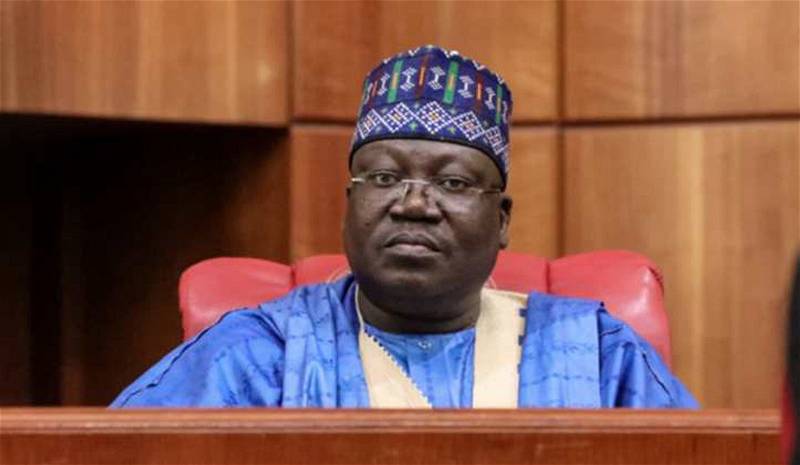
Lawan’s foundation also provides solar boreholes and hand pump facilities for the livestock rearers in his constituency and many more veterinary services to assist the growth of the sector.
The Senate President was honoured with the award of Champion for the Control of Peste Des Petit Ruminants (PPR) in Nigeria.
The award was presented to him by the Minister of Agriculture and Rural Development, Mohammad Abubakar, on behalf of his Ministry, the World Organisation of Animal Health, Food and Agriculture Organisation and other relevant bodies.
Similarly, the Nigerian Veterinary Medical Association (NVMA) also honoured Lawan with the Award of Excellence.
NVMA President, Adetuberu Olutoyin, who presented the award said it was “in recognition and appreciation of his contributions to the Veterinary profession and public health protection.”
Abubakar told Lawan that, among the livestock diseases, PPR remained a major constraint to small ruminant production in Africa.