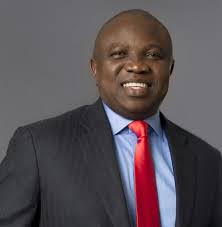
The Lagos State Government has described as “reckless” and “slanderous” an article published in the latest edition of the Economist magazine of London which blamed Lagos State Governor Akinwunmi Ambode for the worsening traffic and increase in criminal activities in the state.
The Economist had written a scathing article describing Ambode as “weak”, “less competent” and “full of excuses.”
It said the governor had managed to roll back the successes achieved by his predecessor Babatunde Fashola, in reducing crime and easing vehicular gridlocks in the city.
In a statement on Wednesday, the state Commissioner for Information and Strategy Steve Ayorinde, said the Economist’s article was “reckless”, “slanderous” and “ill-conceived.”
Ayorinde said he deemed it fit to write a rebuttal because the article titled, “Paralysed: Why Nigeria’s largest city is even less navigable than usual”, contained a “series of biased judgment in it.”
Describing the article as the work of fifth columnists, Ayorinde wondered why traditional and social media in the country latched on it at “a time Ambode read the riot act to traffic offenders on the readiness of his government to carry out comprehensive enforcement effort on traffic management.”
The commissioner said the article ignored the bigger picture of an emerging “reform policy, designed to address the larger concerns in the management of security, traffic and the environment”.
“If we were to conclude hastily, like the article did, we would have described the magazine’s effort in the same words it once famously used as ‘an unpleasant nose-to-stranger’s-armpit experience’.”
Ayorinde further explained that “it was inaccurate and preposterous for the article to suggest that Governor Ambode cut the powers of traffic controllers by banning them from impounding cars when it concluded that it had made officers reluctant to enforce the rules.
“What the Governor did instead was to enjoin the officers to look at other options to apprehend traffic offenders by adopting the ticketing system backed by the same type of technology used in licensing and tracking vehicles instead of impounding the vehicles as first option.
“That The Economist sees nothing wrong in recalcitrant officers refusing to carry out a directive by their employer is as surprising as it is shameful. Shockingly still, the veil finally came off this curious article when it states that by choosing a compassionate approach to enforcement, Governor Ambode is less competent and has deviated from his predecessor’s template.
“But what legacy has The Economist bequeathed to former Governor Babatunde Fashola? ‘Cars were terrified into order by a state traffic agency, LASTMA, whose bribe-hungry officers flagged down offending drivers’
“This is clearly an uncharitable summation of traffic management under the last administration. It is disrespectful, even more condescending to the officers of LASTMA and to Lagosians in general for whom the magazine purports to be fighting. In any case, if indeed some officers were corrupt in LASTMA, by The Economist’s damning verdict, should Governor Ambode continue to maintain such a tainted template? Is this the magazine’s idea of the end justifies the means or it is negligible because this is Africa?
“Perhaps, it is high time that this vaunted magazine learnt to restrict itself to strict journalism rather than seeking to impose jaded views in a volatile political climate where, we dare say, the gluttonous lot can choke on their own bile, almost hoping that the elections leading to the emergence of the governor could be held over again.”
Ayorinde said in the last five months Ambode “has shown his capacity to improve on the fortunes of the state and has mapped out workable strategies in the area of security, transportation and economic sustainability in the face of harsh national economic realities.”
-PT
What the Economist said:
Paralysed: Why Nigeria’s largest city is even less navigable than usual
TRAFFIC is a way of life in Lagos, Africa’s most populous city. Home by some counts to over 20m people, it is among the most notoriously congested places in the world. The “go-slow” piles up long before dawn as businessmen in SUVs and traders in battered buses hit the overburdened roads. It lasts until well after dark. Often the queues can be unfathomable: a rainstorm, a breakdown or a public holiday can condemn a driver to hours in horn-honking hell. Tardy workers proffer one irrefutable excuse: “Traffic is bad.”
Yet the gridlock that Lagosians have suffered in recent weeks is noteworthy even by the city’s horrendous standards. Rush hours have lengthened, and vehicles back up at unusual hours along the bridges linking the mainland with an island business district. Safety concerns are mounting as armed robbers pillage stuck cars while police are far away. Security experts reckon this is symptomatic of a broader increase in organised crime under a new and less competent state government.
Lagos is a hub for investors in Africa—it is a bigger economy in its own right than most countries on the continent, so this is of serious concern. The state’s former governor, Babatunde Fashola, who left office after elections in March, was lauded for improving traffic and security. He curbed dangerous motorbike taxis and brought local “area boys” (street children), under control. Cars were terrified into order by a state traffic agency, LASTMA, whose bribe-hungry officers flagged down offending drivers.
His successor, Akinwunmi Ambode, is full of excuses, but few solutions, for the worsening gridlock. Traffic is always bad during the rains, he says. Nigerians are migrating to Lagos en masse in search of work in a worsening economy, his office adds. Yet the root of the problem is in policy: Mr Ambode cut the powers of traffic controllers by banning them from impounding cars. In retaliation, officers have refused to enforce the rules.
Reform in a culture riddled with corruption is never easy. Mr Ambode’s office says the measure was intended to create a more “civil society”. Less fastidious types think it amounts to weakness, and would prefer that he focused on public transport instead. The biggest concern is that the gridlock is a sign of a breakdown in relations between security forces, government agencies and the new governor. If that is the case, there could be worse to come. That is bad news not only for Lagosians, but all Nigerians too.
-The Economist