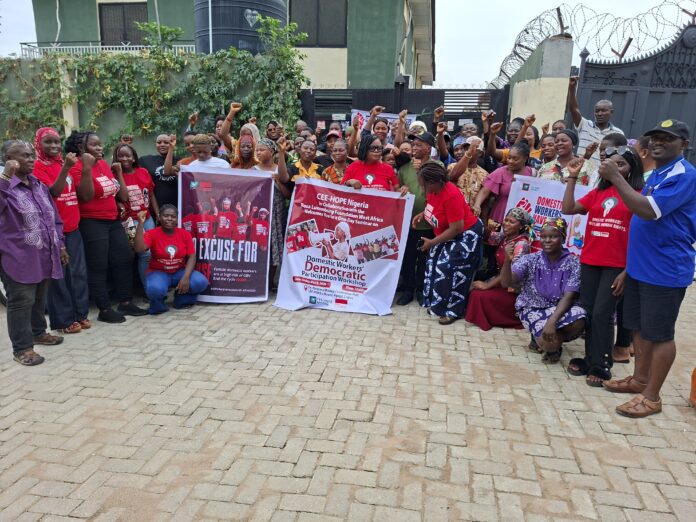
Labour rights experts sensitise domestic workers on need to unionise as CEE-HOPE leads campaign
By Ishaya Ibrahim
Labour rights experts on Friday sensitised domestic workers, popularly known as house helps, on the need to unionise.
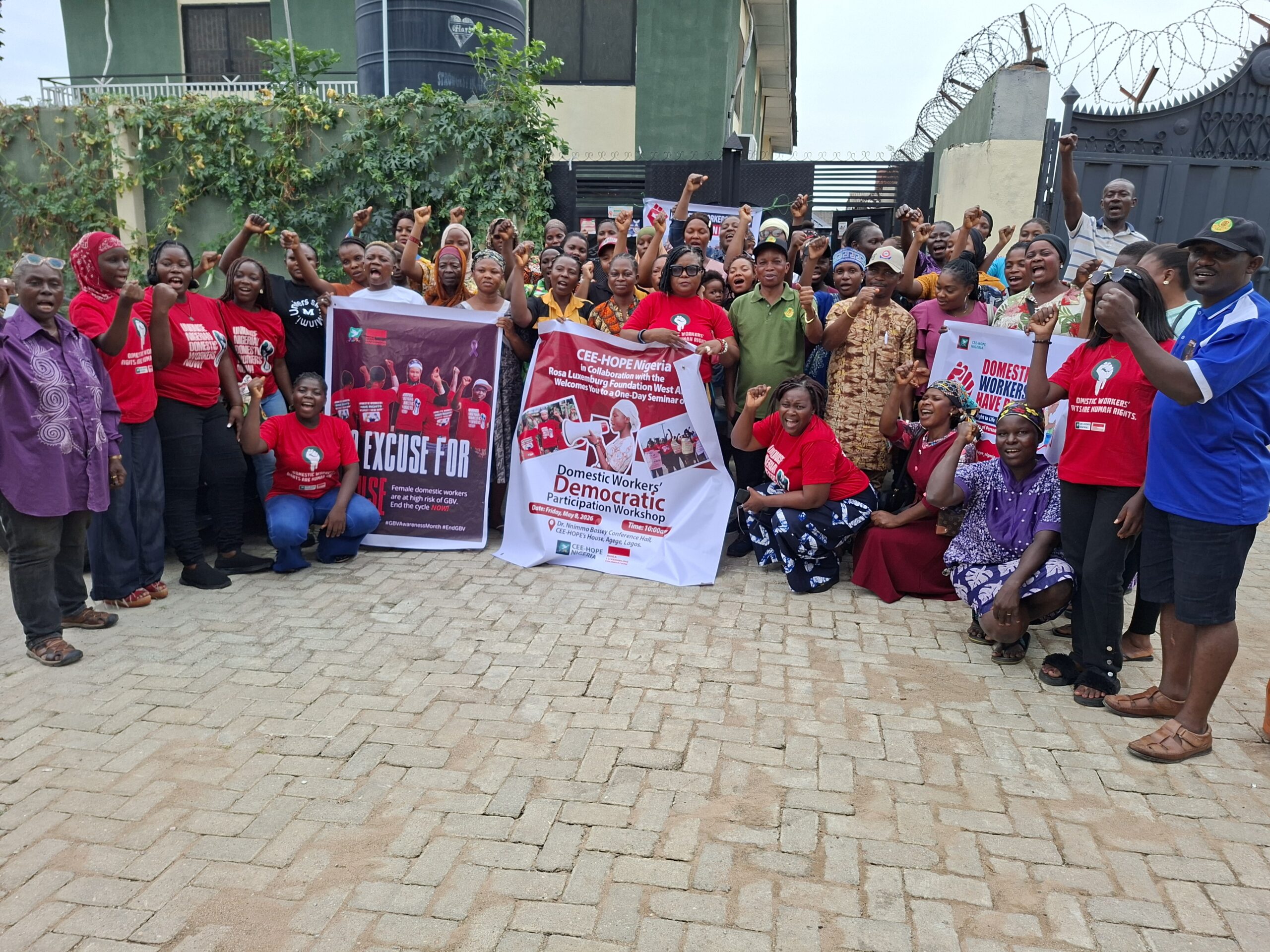
At a one-day sensitisation workshop organised by the Centre for Children’s Health Education, Orientation and Protection (CEE-HOPE) in Lagos, the experts highlighted the benefits of unionisation, including collective bargaining, social dialogue, and protection of rights.
National President of the Electrical Union Association of Nigeria, Rufus Olusesan, called for the immediate unionisation of domestic workers, insisting that collective action remains the strongest protection for workers.
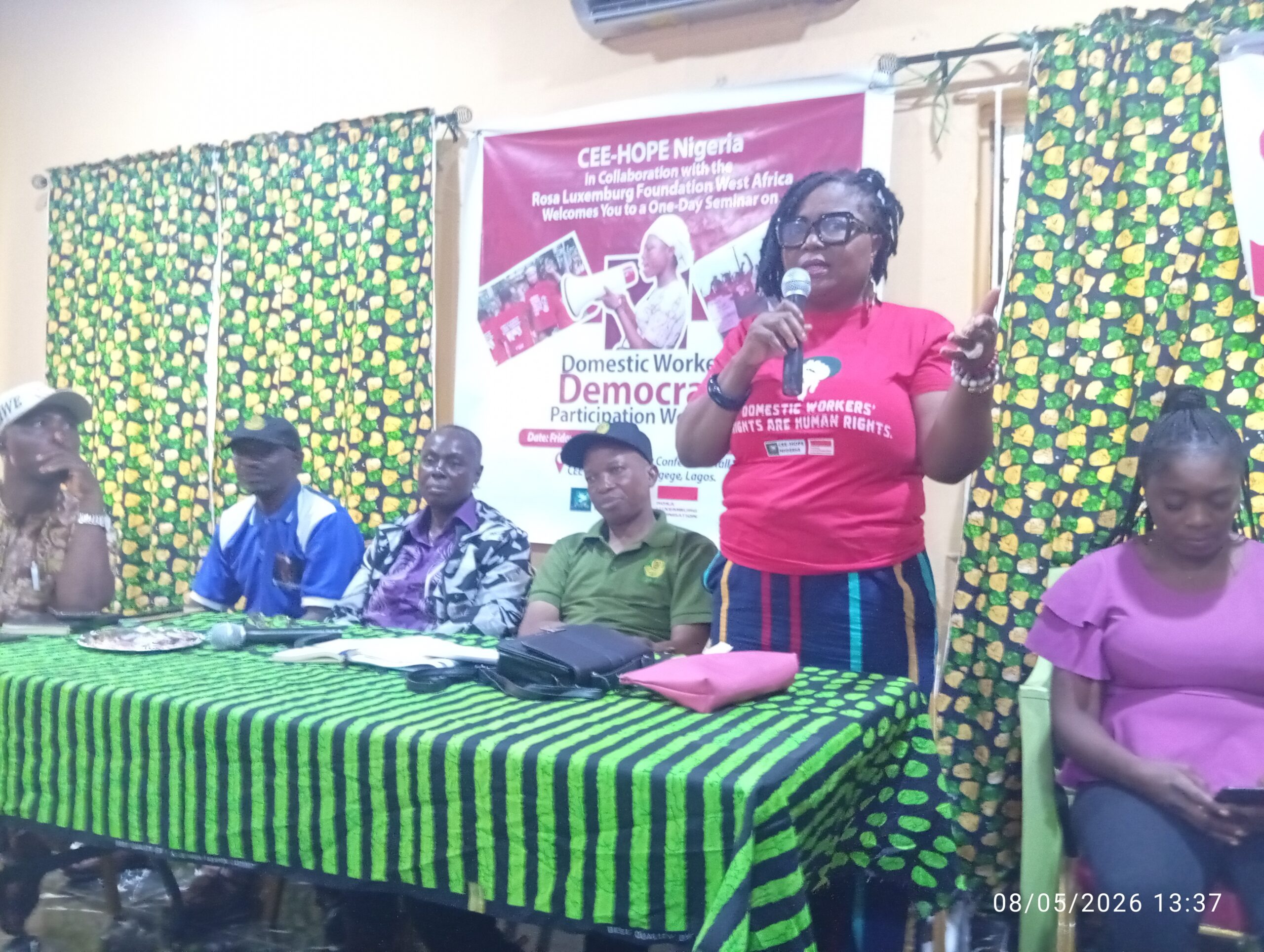
“We must understand who domestic workers are. They are people engaged to perform household tasks in homes, yet many of them remain invisible in society,” he said.
Olusesan, who has spent four decades in active unionism in Nigeria, noted that domestic workers constitute a significant part of the country’s informal workforce but remain excluded from mainstream labour structures.
“In developed countries, there are laws and guidelines protecting domestic workers, but here many of them are isolated and unable to speak out,” he stated.
The labour leader explained that unionisation had helped many informal workers in Nigeria secure better recognition and welfare.
He cited the example of private security guards and waste workers who now have recognised unions after years of mobilisation.
“Years ago, waste workers had no voice, but today they have their own union operating in many states of the federation. That shows unionisation is possible,” he said.
Olusesan argued that many employers exploit domestic workers because they lack collective bargaining power.
“In Nigeria, it is often the poor struggling against the rich. Nobody will fight for you unless you stand up and fight for yourselves,” he said.
Using the traditional broom as an illustration, he stressed the importance of unity among workers.
“If you remove one stick from a broom, it cannot sweep. But when the sticks are together, they become strong and useful. That is the meaning of unionism,” he added.
He urged domestic workers to organise themselves into a national body capable of defending their rights and negotiating for better wages and improved welfare.
Convener of the workshop and Executive Director of CEE-HOPE, Betty Abah, said unionisation of domestic workers is crucial because they are among the most vulnerable categories of workers in Nigeria.
She explained that many domestic workers endure long hours, physical abuse, denial of education opportunities, and poor welfare conditions without any organised structure to defend their rights.
Using the story of Rose Fruitful, a former domestic worker, Abah painted a grim picture of the realities many child domestic workers face.
“She went through a lot. Her education was disrupted because she moved from one home to another. Yet, despite everything, she remained strong,” she stated.
Abah explained that Rose lost her father at an early age and was sent to different homes to work due to her family’s difficult financial situation. The experience, she said, affected Rose’s education and emotional wellbeing.
“The painful thing is that these are children who deserve care and protection, but instead many of them are treated harshly and denied opportunities,” she stated.
The activist also recounted disturbing cases handled by her organisation involving domestic workers who lost their lives after severe abuse.
Recalling one incident, Abah spoke of a teenage domestic worker who died after prolonged maltreatment during the COVID-19 lockdown.
“This is somebody’s child,” she said. “I cannot imagine how people treat another person’s child with such cruelty while caring lovingly for their own children.”
She blamed the situation on weak labour protection systems, poor enforcement of laws, and the absence of structures that can help vulnerable workers seek justice.
“There is so much wickedness because we do not have a working system that truly protects vulnerable people,” Abah lamented.
According to her, many domestic workers remain silent because they fear losing their jobs or facing intimidation from influential employers.
“The absence of a formal union has made it difficult for workers to collectively demand better conditions,” she said.
Abah revealed that CEE-HOPE had organised several meetings in Lagos and Abuja involving domestic workers, labour leaders, journalists, and other stakeholders to discuss strategies for building a domestic workers’ union in Nigeria.
“What we want is to ensure domestic workers in Nigeria know their rights and have a platform to protect themselves,” she affirmed.
She stressed that unionisation would help domestic workers negotiate fair wages, challenge abuse, and access legal and social protection.
Abah also emphasised the need to remove children from domestic labour and ensure they have access to education.
“Education changes lives. Even basic education gives children confidence and opportunities,” she said, noting that her organisation had supported hundreds of vulnerable children with education and vocational training.
Also lending his voice to the campaign, Chairman of the National Union of Nigerian Welders, Dare Adeyemo, described unionism as a powerful tool for workers’ empowerment.
“There are many benefits in unionism,” he said. “Belonging to a union has given me the exposure I have today and no worker in Nigeria should be denied the opportunity to belong to a union that can fight for their cause.”
Other speakers at the event included Rose Fruitful, a former domestic worker and survivor of multiple abuses, Comrade Bimbo Osobe, National President of Nigerian Slum and Informal Settlement Federation, and Comrade Joseph, National President of the Private Guards Association of Nigeria.