



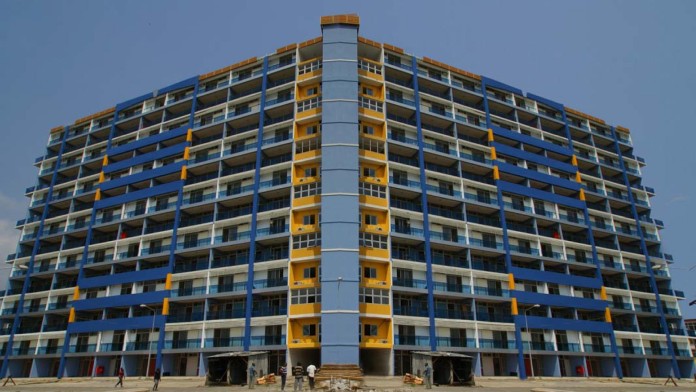
Against the backdrop of a very difficult year in which the construction industry witnessed several abandoned or uncompleted projects, job losses and huge debts owed contractors for projects already completed, the built environment experts have called on the Federal Government to pump more money into the fledlging sector in view of its multiplier effect on other sectors.
The experts argued that the construction industry is generally regarded as the barometer for measuring the health of any economy and should be accorded priority attention by the Muhammadu Buhari-led Federal Government.
Mr. Olujide Oke, Secretary, Marketing & Corporate Affairs, Nigerian Institute of Quantity Surveyors (NIQS), said expectations are high that the sector will come out of the woods.
Sectoral activities
“The budget has been read but we are yet to get the breakdown to enable us know how sectoral activities will be. But we are positive and optimistic because of the improvement in capital expenditure and the fact that we have a tested and trusted man in the person of Mr. Babatunde Fashola as the Minister in charge of Power, Works and Housing. We are still watching as events unfold but we are optimistic and hopeful,” Mr. Oke said.
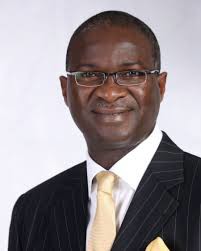
Asked to set an agenda for the government, Oke advised the government to inject sufficient funds into the construction and housing sector. The NIQS Secretary observed that too many projects in the country have either been abandoned or are at a standstill and called on the government to reawaken and bring such projects back to life. He also advised the government to pay contractors the outstanding debts owed them to enable them return to the abandoned construction sites.
“The construction sector is the first sector to reflect the health of any economy. If the government pumps money into it, other sectors will benefit: Artisans, contractors, consultants, construction materials producers and suppliers – the benefits will cut across all sectors of the economy. The trickle down effect will be massive,” he said.
Oke charged the government to do all within its power to ensure that power supply becomes stable. “If power becomes stable, many of the industries which are pulling out of the country will return while those planning to exit will remain. Small scale industries will thrive and artisans will have power to remain in business,” he said.
He lauded current efforts by the Federal Government to boost activities in the Housing sector. “It will be a massive boost to the economy if the government pumps in enough money into the sector. The construction industry has been comatose as it were, our roads are in very bad states. If enough money is injected into the construction industry, the government will be in a position to fix the Lagos-Ibadan Expressway, the Benin-Ore Road and other very bad roads in the South-eastern part of the country,” the NIQS image maker said, adding that the government should also tackle corruption in the construction industry with all its might.
Immediate-past chairman of the Lagos State branch of the Nigerian Institution of Estate Surveyors and Valuers (NIESV), Pastor Stephen Jagun who also called on the Federal Government to come up with a clear-cut financial policy to enable local and foreign investors know where to put their money.
Jagun noted that since the present administration came to power, we have not had a clear-cut financial policy and this is hurting the economy. According to him, the financial policy somersault is impacting negatively on the economy as many investors are scared of investing in the country’s real estate sector.
Jagun noted that expectations that infrastructure and housing would be given a major boost going by the pedigree of Fashola who oversees the Power, Works and Housing Ministry, enjoined such optimists to soft-pedal. He anchored his subdued optimism on the fact that Fashola is not 100 percent in charge as was the scenario when he was the Governor of Lagos State.
“Now, he will take directives from the President and would also require the cooperation of other ministries and agencies. When he was performing in Lagos State, he was calling the shots 100 percent, unlike now,” Jagun posited.
The Chairman of NIESV, Lagos Branch, Mr. Samuel Ukpong, in his reaction, enjoined the Federal Government to shift its attention away from oil and focus on other sources of internally generated revenue (IGR).
Ukpong stated that real estate assets can be be a veritable source of revenue and advised the government to explore this. He called on the government to put measures in place to reduce substantially the current housing deficit put at a staggering 17 million units.
Apart from calling on the government to use relevant professionals in the execution of its projects, Ukpong advised both the Federal and state governments to appoint a Valuer-General especially now that the government is implementing the Public Sector Accounting Standards.
Also on his expectations in the new year, the President of the Building Collapse Prevention Guild (BCPG), Mr Kunle Awobodu called on the government to pay contractors who are owed huge debts for projects already completed.
Dwindling fortunes
Noting that many of them have retrenched or on the verge of downsizing their workforce, Awobodu maintained that the government cannot embark upon massive construction projects without the support of construction companies.
He prayed that the dwindling fortunes of the Naira against major currencies would be halted while the government looks for other sources of beefing up the country’s revenue base.
Awobodu, a former chairman of the Lagos State chapter of the Nigerian Institute of Building (NIOB), called on the government to register all developers engaged in housing construction.
He also made a case for quality control of houses being built in the country.
“The fact that we are in dire need of housing does not mean that we should build shoddy or substandard houses. Professionals should be engaged to play the necessary roles in the built environment sector,” he said.
-Vanguard


