From Bauchi to Enugu: How Nestlé is transforming women’s livelihoods across Nigeria
By Ishaya Ibrahim
For Blessing Abayi, a single mother in Bauchi State, the ability to pay her children’s school fees in full and on time for the first time was more than a financial achievement. It was evidence that her small business could become a more reliable source of income and provide greater security for her family.
Before participating in Nestlé Nigeria’s Empowering Rural Women Initiative, meeting her children’s educational expenses was a struggle. But after three months in the programme, the improvement in her business enabled her to settle the fees without the usual difficulty.
Her experience offers a glimpse into how access to business knowledge, resources and mentorship can change the economic circumstances of women and their families.
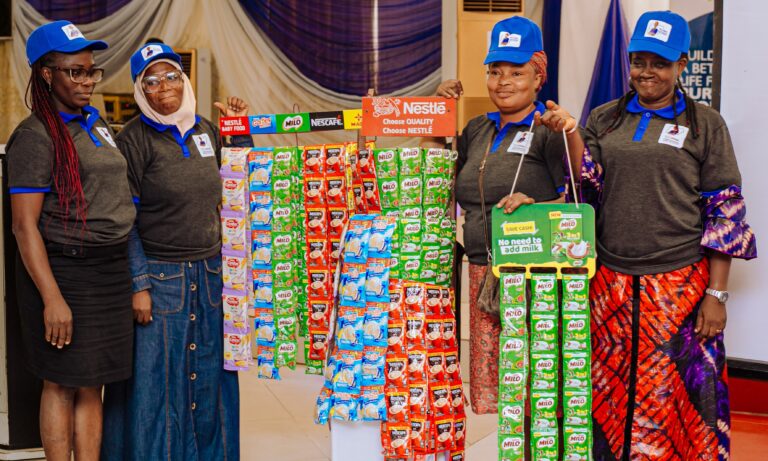
In Ede, Osun State, Alhaja Selimot Mustapha, owner of Aslam Store, has also experienced the benefits of acquiring practical business skills. For her, the difference became evident in the way she displayed and sold her products, attracting more customers and improving her daily sales.

“The way I merchandise my products now attracts even those who had no plan of buying and helps me attract more sales daily. I am now able to support my children’s education with some school items such as books and uniforms after my husband has paid the fees. My life has changed completely for the better,” she said.
Mustapha’s testimony illustrates how relatively simple business management skills can translate into meaningful improvements in household welfare. The ability to merchandise products effectively has not only improved her business prospects but also strengthened her capacity to contribute to her children’s education.
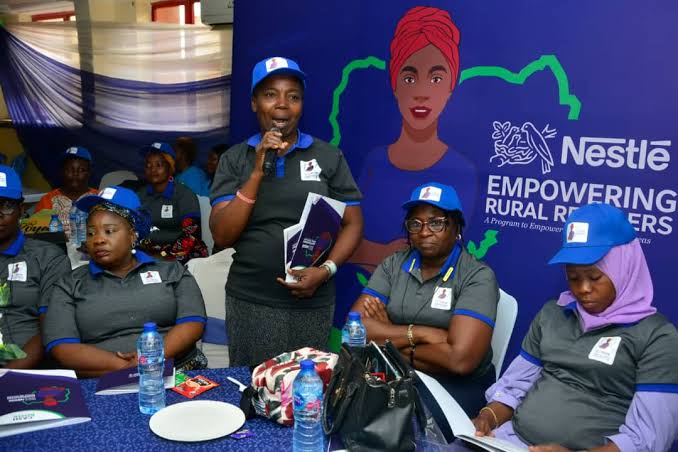
These are the kinds of outcomes Nestlé Nigeria’s Empowering Rural Women Initiative seeks to achieve – helping women build stronger businesses, improve their livelihoods and become more economically independent.
Launched in August 2021, the initiative has grown from an initial group of 50 female retailers in Abuja’s suburban communities into a nationwide intervention. With the addition of 50 beneficiaries in Zaria, Kaduna State, in August 2026, the programme has supported 482 women entrepreneurs across the country.
A family’s transformational story
In Akpabuyo, Cross River State, Mrs Favour Effiong, owner of Favour Stores, sees the programme’s support as an investment that extends beyond her shop.
Reflecting on the training and product grant she received, she said: “This training and the grant I have received will help my family. I cannot thank Nestlé enough for this investment in my business. Thank you, Nestlé.”
Her response captures an important dimension of the intervention. For many women who operate small retail businesses, the ability to maintain adequate stock, attract customers and generate consistent income is closely connected to their capacity to meet household responsibilities.
Nestle’s empowerment strategy
By providing business training alongside product grants, Nestlé is addressing some of the practical challenges that constrain the growth of small enterprises.
The support includes training in bookkeeping, merchandising, stock management, financial management and customer service. Beneficiaries also receive product grants valued at up to three times their existing stock, alongside three months of mentorship and coaching.
The combination is deliberate. While the grants provide immediate support for business expansion, the training and mentorship equip women with the knowledge to manage their enterprises beyond the initial intervention.
More than a lifeline
For Mrs Folasade Ogunjimi, owner of Save Way Stores in Sagamu, Ogun State, the programme represents a form of corporate support she had not experienced despite spending decades in business.
“This is the first time a company is bringing this amazing initiative to retailers in Sagamu in my 25 years of running this business,” she said.
Her experience is significant because it draws attention to the needs of women who have spent years sustaining small businesses, often without access to structured business development opportunities.
In Agbara, also in Ogun State, Mrs Eniola Fausat describes the programme as an opportunity that has changed how she views the potential of her business.
“This opportunity has opened my eyes to what is possible in my business. With the training and support, I am now more confident that I can improve my shop and better support my family. I thank Nestlé and the Alagbara for believing in us,” she said.
From the South-West, where beneficiaries in Osun, Ekiti, Lagos and Ogun have participated, to the South-South, including Cross River and Rivers, the initiative has reached women operating businesses in different community settings.
It has also extended into the South-East, including Enugu, and the North-East, with beneficiaries in Bauchi. The latest expansion into Zaria, Kaduna State, has further strengthened its presence in the North-West.
This geographical reach is important in a country where access to business development opportunities is uneven. Women operating small enterprises in rural and suburban communities often face constraints that go beyond access to capital. They may lack formal business training, reliable mentorship and the resources required to expand their stock and customer base.
Nestlé’s approach recognises that empowering women requires more than distributing grants. It requires sustained support that enables beneficiaries to apply what they learn and build businesses capable of surviving beyond the period of intervention.
According to the company’s Commercial Manager, Boladale Odunlami, women account for approximately 60 per cent of retailers in the company’s retail network.
This makes women’s economic participation important not only to their households but also to the wider business ecosystem through which products reach consumers across the country.
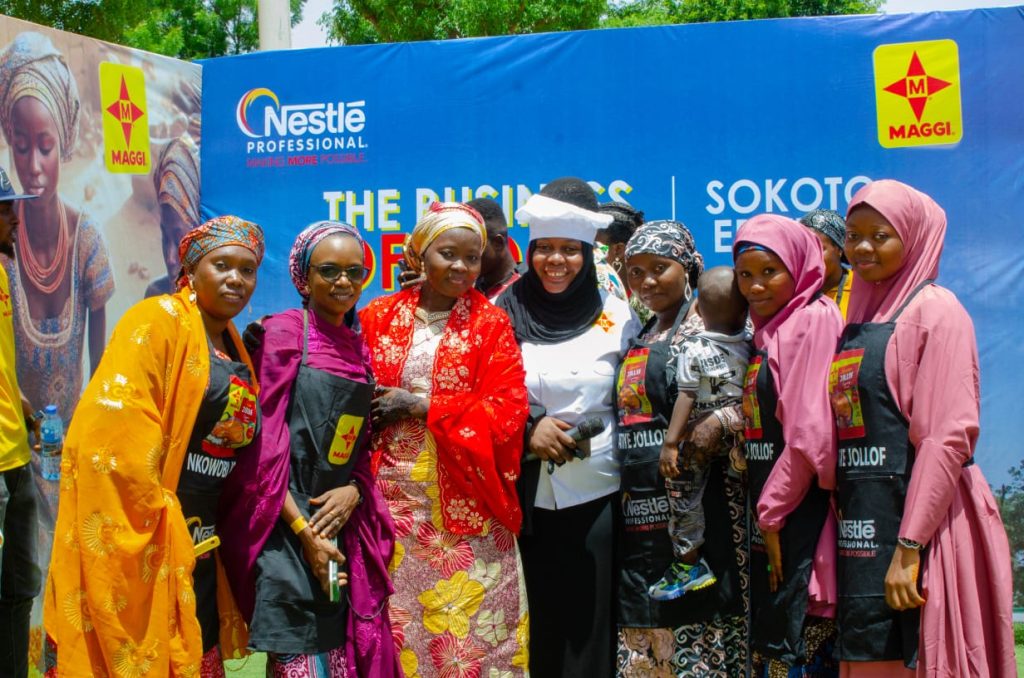
For Nestlé Nigeria, the Empowering Rural Women Initiative is an expression of its Creating Shared Value philosophy, which seeks to connect business growth with positive social impact.
Victoria Uwadoka, Corporate Communications, Public Affairs and Sustainability Lead at Nestlé Nigeria, has consistently highlighted the company’s commitment to supporting women as an important pathway to building thriving communities.
Reflecting on the programme’s five-year journey in August 2026, she said: “The true measure of this initiative is not the support we provide on the day, but what the women go on to build with it. Five years on, we are seeing women sustain their growth, expand their businesses and create greater economic security for themselves and their families.”
From Bauchi to Enugu, Cross River to Ogun, and now Kaduna, the stories may differ, but the underlying aspiration remains the same: to build businesses that provide sustainable incomes, support families and create better opportunities for the next generation.