



FG moves to strengthen private sector role in youth job creation
By Eberechi Obinagwam
The Federal Government has moved to strengthen private sector participation in youth employment through the development of a Private Sector Engagement Strategy for the National Youth Employment Action Plan (NIYEAP) 2025–2030.
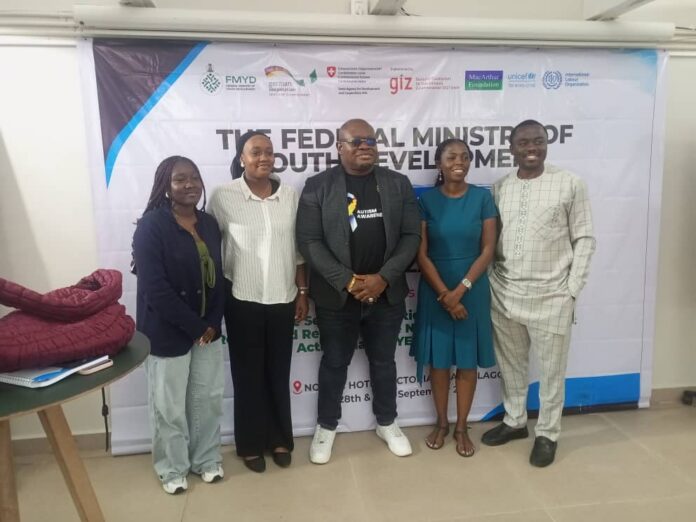
The Minister of Youth Development, Ayodele Olawande, stated this in his opening remarks at a two-day Private Sector Strategy on Youth Employment Workshop held in Lagos from September 28 to 29, 2026.
Speaking through the ministry’s Deputy Director, Ebiho Agun, Olawande said lessons from NIYEAP and other interventions had shown that the private sector must be central to efforts to create sustainable jobs for young Nigerians, describing businesses as major drivers of enterprise growth, investment, productivity and employment.
“The private sector is a major engine of enterprise growth, investment, productivity and job creation. Businesses understand market demand, changing technologies, productivity requirements and the skills that employers need. They are therefore indispensable to any credible and sustainable strategy for youth employment,” he said.
He said one of the gaps identified in previous frameworks was the absence of a sufficiently developed and coordinated private sector strategy focused specifically on youth job creation, adding that the workshop provided an opportunity to develop such a strategy “with the private sector, rather than for the private sector.”
The workshop which was attended by representatives of the private sector, International Labour Organisation (ILO), GIZ, MacArthur Foundation, Nigerian Economic Summit Group (NESG), development partners, government institutions and youth-focused organisations, Olawande said was necessary because NIYEAP recognised that addressing youth employment could not be the responsibility of government alone. “It requires the collective efforts of government, the private sector, civil society, youth organisations and development partners,” he said.
According to him, the engagement would identify sectors with the greatest potential for youth employment, examine skills gaps and barriers to hiring young people, and consider measures to help small and medium-sized enterprises grow into stronger generators of jobs.
He said participants would also discuss the transition from education to work, investment and financing for high-potential sectors, labour-market trends over the next five to 10 years, and measures to ensure that employment opportunities were accessible to young women, persons with disabilities and other groups facing barriers to labour-market participation.
Olawande said the workshop would also strengthen the Private Sector Technical Working Group launched by the ministry in 2024, describing it as a platform for sustained government-private sector engagement. He urged participants to provide practical recommendations on policies, reforms, incentives and other measures needed to improve the business environment and support job creation.
He said the ministry was committed to ensuring that the outcome of the process produced a practical, evidence-based strategy responsive to labour-market realities, adding that the Technical Working Group would sustain the dialogue, coordinate implementation and support measurable results for young Nigerians.
Speaking also, Director of the ILO Office for Nigeria, Ghana, Liberia and Sierra Leone at the International Labour Organisation, Dr Vanessa Phala, said reforms, incentives and an enabling business environment were essential to attracting investment, expanding businesses and creating jobs.
The director, who was represented by the ILO Abuja Country Office, Augustine Erameh, said the best way to advise the government on the policies required was to identify the policies, regulations, reforms and incentives needed to reduce the risks of doing business.


