



Enough of the FBI file saga: Nigeria must stop outsourcing its political destiny
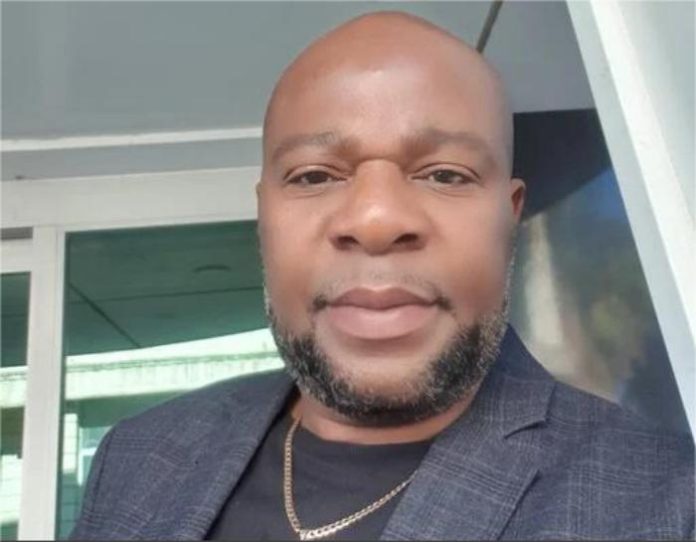
By Ogechi Okoro
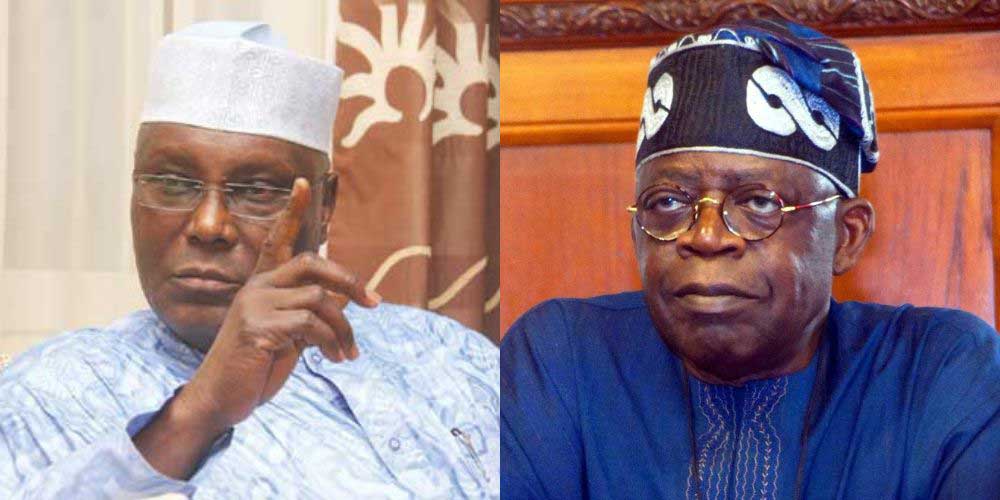
The obsession with the FBI file of President Bola Ahmed Tinubu is, at best, ridiculous and, at worst, a revealing symptom of an opposition that appears increasingly unsure of how to defeat him politically. The Waziri and other opposition leaders deployed the same issue during the 2023 elections. It did not work. So, what exactly makes them believe that resurrecting the same argument in 2027 will suddenly produce a different electoral outcome?
There is another, even more troubling dimension to the 2027 conversation: the expectation that President Donald Trump should somehow intervene and swing Nigeria’s election in favour of the opposition. Seriously? How did a sovereign nation of Nigeria’s size, complexity and strategic importance arrive at the point where some of its political actors believe that Donald Trump should determine who governs Nigeria?
Elections are won by Nigerians, at Nigerian polling stations, not in Washington. Trump has more than enough political battles of his own. The idea that the outcome of Nigeria’s 2027 election would rank high on his list of priorities is fanciful. Yet we have seen celebrities and political actors appealing to him, sometimes even in the context of local Nigerian political contests, as though Nigeria has lost the capacity to determine its own political future. This should concern every Nigerian, regardless of political affiliation.
The real crisis facing Nigeria is not the FBI file. It is the erosion of public confidence in our institutions. Over the past decade, faith in virtually every major institution has weakened. Political, electoral, judicial, and media institutions, as well as the broader civic infrastructure, have struggled to command citizens’ confidence. Arguably, the institution that continues to enjoy significant trust is religion, not necessarily because it has solved people’s problems, but because it continues to offer something increasingly scarce in Nigeria: hope. That institutional crisis cannot be solved by inviting a foreign power to determine our political destiny. So, what exactly is the FBI file supposed to achieve?
Let us return to the much-discussed FBI file. What exactly would its release accomplish in 2027? I am not a lawyer, but I struggle to understand the political logic behind treating the document as some kind of electoral nuclear weapon. If the argument is that the file contains evidence of wrongdoing, then the relevant question is whether that evidence establishes an actual offence, whether it remains legally actionable and, ultimately, whether Nigerian voters consider it relevant to their decision. Even where historical allegations exist, political campaigns cannot indefinitely substitute old controversies for a coherent argument about the future. And that is precisely where the opposition risks getting itself into trouble.
President Tinubu is certainly not the first politician in history to have a complicated past. Politics, almost everywhere, is populated by people whose biographies contain controversy, contradictions and difficult chapters. That does not make scrutiny illegitimate. Far from it. Leaders should be held accountable. But there is a difference between legitimate scrutiny and political fixation.
If every attempt by Tinubu to govern is met with another excavation of his past, the opposition risks communicating a very dangerous message: we have nothing compelling to offer Nigerians about their future. That is a political problem. Defeat Tinubu at the polls. If I were advising the opposition, I would tell them to stop looking for salvation in Washington and start looking for votes in Nigeria.
The tools required to defeat a president are already available to them. They have political parties. They have candidates. They have access to voters. They have the opportunity to articulate alternative economic policies, address insecurity, present credible solutions to unemployment and poverty, challenge government performance, and persuade Nigerians that they can govern better. That is politics.
Going to the FBI, appealing to Trump and hoping that some external intervention will fundamentally alter Nigeria’s electoral trajectory looks less like strategy and more like desperation. No foreign government can manufacture the political legitimacy that an opposition cannot build at home. The expectation that Trump should use executive power to release a document concerning Tinubu also reveals something deeper about Nigeria’s political class: an alarming willingness to surrender agency.
America is a superpower. Nigeria is a sovereign country. The United States can influence international affairs, but Nigeria’s electoral future ultimately belongs to Nigerians. We should be deeply uncomfortable with any political strategy built around the expectation that an American president will determine our domestic political outcome.
And even if the file were released, what then? Would Nigerians suddenly forget everything they already know or believe they know about Tinubu’s political history? Would the cost of living disappear? Would insecurity vanish? Would unemployment fall? Would the opposition suddenly acquire the organisational structure, credibility and grassroots machinery required to win an election? Of course not.
A document is not a political strategy. The opposition’s real challenge is not Tinubu’s past. It is its own ability to convince Nigerians that it represents a better future. If the opposition believes Tinubu can be defeated, then it should campaign relentlessly. Build coalitions, organise at the grassroots, present credible candidates, develop compelling policies, and convince voters. That is how democracy works. The alternative of waiting for Washington to produce a political miracle is both undignified and unrealistic.
There is also a geographical and sociopolitical reality that cannot simply be wished away. Nigeria is an extraordinarily complex federation, with deep regional, ethnic, religious and political identities. Any attempt to manufacture a nationwide political tsunami from outside the country is fundamentally detached from the realities of Nigerian electoral politics. Ultimately, Nigerians, not Trump, not the FBI, not Washington, will determine Nigeria’s next president.
And the Jagaban? Whether one likes Tinubu or not, it is difficult to deny his political staying power. He has survived controversies, electoral battles, political realignments and formidable opposition. He has demonstrated an extraordinary understanding of Nigeria’s political machinery and how power is built, maintained and deployed. History will judge his presidency. It will judge his policies, his successes and his failures. It will judge the consequences of his reforms and the burdens they have imposed on Nigerians. But history will also judge the opposition. And the opposition should be careful not to become so consumed by Tinubu’s past that it fails to construct a compelling argument for Nigeria’s future.
Perhaps, in the fullness of time, Tinubu, the Jagaban, will indeed be remembered as one of Nigeria’s most consequential political figures, perhaps even one of its best. That judgment, however, should be left to history and Nigerians. For now, the opposition’s task is far more straightforward: take its case to the Nigerian people and win their votes, not appeal to the FBI, Trump, or Washington.
Enough of the FBI file saga…
- Dr. Ogechi Okoro, a political and social analyst, writes from Hamilton, New Zealand.


