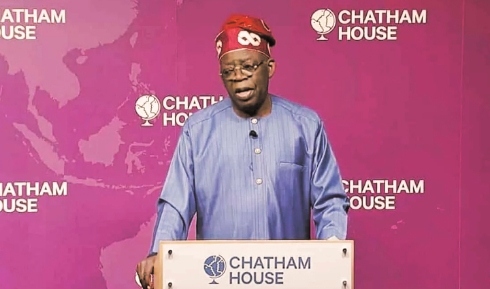
Chatham House says Tinubu’s global outreach yet to deliver domestic gains for Nigerians
Chatham House has questioned the effectiveness of President Bola Tinubu’s high-profile foreign diplomacy, arguing that despite active global engagement—including his recent state visit to the United Kingdom—it has yet to deliver meaningful improvements in Nigerians’ daily lives.
In an analysis published on March 22, 2026, titled “Tinubu’s UK state visit: diplomacy alone won’t fix Nigeria’s problems,” the London-based think tank notes that Tinubu’s approach has been “rhetorically polished” and often strategically astute. It positions Nigeria as a regional power and Commonwealth leader while opening channels for economic and security cooperation. However, nearly three years into his presidency, the report concludes that this “visibility-driven foreign policy” has produced limited domestic gains.
Tinubu’s frequent international travel and summits across Europe, the Middle East, Asia, and Africa have drawn criticism for their costs amid rising poverty, hunger, and declining purchasing power at home. While agreements like the UK-Nigeria Enhanced Trade and Investment Partnership aim to attract investment, persistent challenges—economic hardship, insecurity, limited electricity access, weak public services, and structural bottlenecks—continue to dominate citizens’ realities.
The report highlights that growth remains concentrated in capital-intensive sectors like finance and technology, while agriculture—a major employer—suffers from violence and logistical issues. Reforms such as fuel subsidy removal, naira devaluation, and tax adjustments have eased some macroeconomic pressures (e.g., inflation dropping from over 30% in 2024 to around 15% recently, naira stabilization, removal from the FATF grey list, and positive S&P outlook shifts). Yet Chatham House argues these have not significantly reduced poverty, food insecurity, or weak consumer spending, drawing parallels to the painful 1980s structural adjustment programs under Ibrahim Babangida, which imposed long-term social costs without inclusive growth.
Without parallel advances in governance, justice, and local security, external partnerships—including counterterrorism and maritime security cooperation with the UK—will yield only marginal results. The think tank warns that prioritizing international optics over domestic realities risks fueling public discontent ahead of the 2027 elections.
This critique coincides with the United States unveiling a major shift in its Africa policy under the Trump administration, moving from traditional aid and “public moralising” to pragmatic, transaction-based partnerships focused on trade, investment, and mutual benefit.
In remarks titled “America First in Africa” delivered by Senior Bureau Official Nick Checker at the Powering Africa Summit on March 19, 2026, the U.S. Bureau of African Affairs outlined a reset emphasizing commercial diplomacy, restructured foreign aid, and conflict resolution. Checker stressed that engagement respects sovereignty, avoids imposing values, and prioritizes U.S. national interests—such as boosting exports, securing supply chains, and accessing critical minerals (cobalt, copper, graphite, rare earths) from Africa.
With Africa hosting nine of the world’s 20 fastest-growing economies and a projected population of 2.5 billion by 2050 (with consumer spending potentially exceeding $16 trillion), the U.S. views the continent as a vast commercial opportunity rather than an aid recipient. The administration has supported deals worth over $25 billion since taking office and aims to increase U.S. investment in mining for transparent, sustainable partnerships that create jobs and counter opaque foreign dominance.