



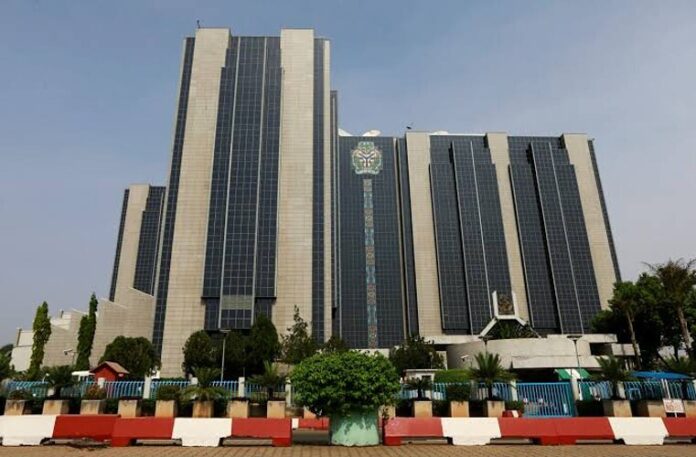
CBN probes 19.7m dormant bank accounts holding up billions of naira
By Jeph Ajobaju, Chief Copy Editor
Dormant bank accounts in Nigeria are now more than 19.69 million, according to the latest figures released by the Nigeria Inter-Bank Settlement System (NIBSS) that keeps industry customer database.
The data, which tracked monthly account statuses throughout 2024, shows a steady rise in inactive accounts, coinciding with new regulation by the Central Bank of Nigeria (CBN) requiring commercial banks to publish details of dormant accounts.
The CBN has announced plans to warehouse funds in bank accounts that are dormant for years.
The current total amount in dormant and closed accounts in not known.
But former Finance Minister Zainab Ahmed previously enthused that the government would have access to as much as N850 billion from the special trust fund of unclaimed dividends and dormant account balances.
The CBN directive on publication, issued to enhance transparency and return other unclaimed funds to rightful owners, comes amid concerns that a significant number of accounts have remained idle for extended periods.
The NIBSS disclosed that dormant accounts have remained above 19 million every month since February 2024, with December closing at 19,697,125 – per The PUNCH.
This is an increase of 1,205,000 from 18,492,169 in January 2024, a 6.51 per cent rise over the year.
The peak was in May and June when the number of inactive accounts reached 20.57 million before dropping slightly in the second half of the year.
The data shows that there was an increase of 2.08 million dormant accounts in the first six months of 2024 before the CBN issued the directive on such accounts in July.
That month, many bank customers affected by the new CBN guidelines rushed to their banks to reactivate the accounts.
It led to a 1.59 million decrease in the number of dormant accounts, according to NIBSS data. After the decline, there was a fluctuating increase for the remaining months of the year.
Closed accounts also showed a consistent upward trend, reaching 25.48 million in December, up from 21.71 million in January. For the entire year, 3.78 million accounts were closed in 2024, according to NIBSS data.
Active accounts also grew over the same period, from 209.31 million in January to 311.65 million in December, an increase of 102.3 million accounts or 48.9 per cent growth.
The CBN earlier reaffirmed its directive to all banks and other financial institutions to publicly disclose details of dormant accounts, unclaimed balances, and other financial assets on their official websites.
A dormant account refers to a bank account that is inactive for at least one year.
The latest directive was outlined in a circular issued on Monday, signed by Michael Akuka on behalf of the Director of CBN Financial Policy and Regulation Department.
The circular, titled “Guidelines on Management of Dormant Accounts, Unclaimed Balances, and Other Financial Assets in Banks and Other Financial Institutions in Nigeria”, specifies that financial institutions must display key details such as the names of individuals authorised to operate the accounts, type of account, and the branch where it is domiciled.
This information must be made available on their official websites. For other financial institutions that do not have dedicated websites, the CBN mandated that the information be published on the websites of their respective industry associations.
The circular said: “In furtherance thereof, and in response to enquiries from stakeholders regarding the possible breach of the Nigeria Data Protection Act, 2023 (NDPA), banks and other financial institutions are required to note the following.
“1. Section 25 (b) of the NDPA permits justifiable deviations from the general principles of the Act. Also, Section 72. (ii) of the Banks and Other Financial Institutions Act mandates the Central Bank of Nigeria to issue Guidelines on the administration of unclaimed funds in banks and other financial institutions.
“2. Information to be published on banks’ websites, as well as the association’s website (where applicable), shall include the name of the account, the type of account, the name of the bank, and the branch where the account is domiciled ONLY.
“Information to be published annually in at least two national daily newspapers or the premises of State and Unit microfinance banks shall also convey the details as listed in (2) above.”
This directive follows an earlier order issued by CBN on 19 July 2024 that
- Banks and other financial institutions are to transfer unclaimed balances and dormant account funds to CBN designated accounts.
- All dormant accounts and unclaimed balances with banks for at least 10 years will be warehoused in in the CBN in a dedicated account known as the Unclaimed Balances Trust Fund Pool Account.
- The funds from dormant accounts, and unclaimed balances may be invested in Nigerian Treasury Bills and other government securities.
However, the CBN explained that the new guidelines, a review of those issued in October 2015, exempt dormant accounts and unclaimed balances under litigation and investigation.
The guideline said: “CBN shall treat unclaimed balances (dormant accounts and financial assets) as follows:
“Open and maintain the ‘UBTF Pool Account’, maintain records of the beneficiaries of the unclaimed balances warehoused in the UBTF Pool Account.
“Invest the funds in Nigerian treasury bills (NTBs) and other securities as may be approved by the ‘Unclaimed Balances Management Committee.
“Refund the principal and interest (if any) on the invested funds to the beneficiaries not later than 10 working days from the date of receipt of the request and where it is imperative to extend the timeline, a notice of extension shall be communicated to the requesting FI stating reasons for the extension.”
CBN Governor Olayemi Cardoso justified the initiative, saying monies in dormant accounts in banks are susceptible to fraud.
“With respect to dormant accounts, what I found personally is if you leave accounts dormant in banks, in fact, most times, they are more susceptible to fraudsters copying your identity and trying to gain hold of the system to grab your money. So, that is a problem I think most money banks face,” he explained.
“The policy and the directive are meant to ensure that all those monies come to the Central Bank for safekeeping and it is at zero cost to the beneficiaries.
“All that will happen is that the Central Bank will manage the money within our possession and when the rightful owner surfaces, the money is returned plus whatever income is accrued to you.”
Read also:
US Ambassador agrees with Ogebe, says no evidence USAID funds Boko Haram


