



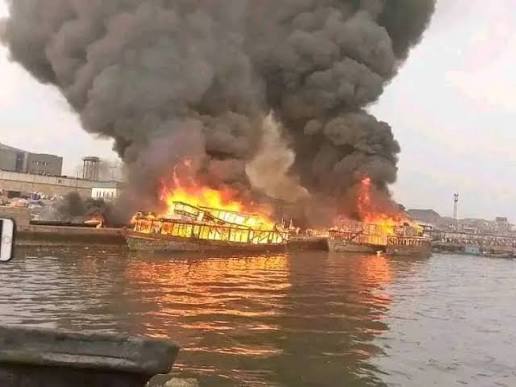
Bille explosion: Spaces for Change demands probe into alleged longstanding gas leakage
Spaces for Change (S4C) has called for an independent technical investigation into an explosion in Bille Kingdom, Degema Local Government Area of Rivers State, amid longstanding reports of gas leakage and seepage in the community.
The explosion, which occurred on Thursday, September 3, 2026, in a residential room, left a woman with severe burn injuries.
According to Spaces for Change in a statement signed by Executive Director Victoria Ibezim-Ohaeri, said an incident report reviewed by the organisation indicated that the woman was the only occupant of the room when the explosion occurred. The force of the blast reportedly pushed the room’s window outward, while the occupant sustained severe burns requiring urgent medical attention.
The organisation said the actual cause of the explosion had yet to be established and should be determined through a competent and independent technical investigation.
However, it said the incident could not be viewed in isolation from persistent complaints by residents about gas odours, gas bubbling through waterways and the presence of gas around residential and other community spaces.
Spaces for Change warned that the reported conditions could pose serious risks of fire and explosions while potentially affecting drinking-water sources, public health, fisheries and livelihoods.
The organisation called for an independent Environmental and Legacy Liability Assessment (ELLA) covering Bille Kingdom and other affected communities.
It said the assessment should establish the source, concentration and migration pathways of the reported gas and determine the condition of affected air, soil, surface water, groundwater and sediments.
The investigation, according to the group, should also assess the potential risks to human health, community safety, fisheries and the livelihoods of residents who depend heavily on fishing and other natural resources.
Spaces for Change further urged investigators to examine relevant petroleum operations and infrastructure in the area and identify historical and outstanding environmental liabilities.
It said the process should determine remediation, ecological restoration, decommissioning and abandonment obligations, including their estimated costs and the parties responsible for meeting them.
Where evidence supports a connection, the investigation should also establish whether environmental gas emissions are linked to incidents such as the September 3 explosion.
Spaces for Change said the investigation must be independent, scientifically credible and participatory, with affected communities meaningfully involved in the process.
It also called for the findings to be transparently disclosed and for responsible authorities and operators to undertake time-bound remediation and restoration where environmental hazards or damage are confirmed.
Such measures, it said, should include effective monitoring, independent verification and adequate financial safeguards to ensure that remediation obligations are fulfilled.
The organisation said communities located alongside oil and gas infrastructure bear the consequences of environmental degradation through threats to safe water, food security, fisheries, livelihoods, health and personal safety.
It described the Bille incident as a reminder of the need to place community safety, environmental remediation, corporate accountability and environmental justice at the centre of petroleum-sector governance.
The group also raised concerns about changes in ownership of petroleum assets and restructuring within the oil and gas industry.
It warned that the divestment or abandonment of petroleum assets must not become a mechanism for obscuring, underfunding or transferring historical environmental liabilities to host communities or the Nigerian public.
“Changes in asset ownership must not mean the disappearance of environmental responsibility,” the organisation said.
Spaces for Change said it was taking the concerns arising from Bille into broader policy and advocacy discussions on environmental accountability, energy justice and extractives governance in the Niger Delta.
As part of that effort, the organisation said it would convene stakeholders in Port Harcourt from September 29 to 30, 2026, to discuss environmental remediation, energy and extractives justice, host-community protection and policy responses to persistent environmental challenges in Nigeria’s oil-producing communities.
The organisation urged the Nigerian Government, relevant petroleum-sector regulators, operators and other stakeholders to urgently support an independent technical investigation into the Bille explosion and establish its cause without prejudgment.
It also called for scientific investigation of the reported gas leakage and seepage to determine their source, concentration, migration pathways and associated risks.
Where environmental damage or risks are established, Spaces for Change said responsible authorities and operators should ensure effective remediation, ecological restoration and emergency support for affected persons, including medical assistance where necessary.
The organisation stressed that the people of Bille and other host communities in the Niger Delta deserve credible scientific investigations, transparent determination of environmental liabilities, effective remediation and meaningful protection from continuing environmental risks.


