



Are we back to the era of nukes: From Hiroshima and Nagasaki to Iran: When “peace” speaks the language of annihilation. The United States argues that its military power protects the international order. Iran argues that resistance protects its sovereignty. Other countries argue that their nuclear weapons deter attack. So the cycle continues. One nation builds weapons because it fears another. Another nation threatens war because it fears those weapons. The threatened nation then seeks greater military capability because it fears invasion. The wheel turns again. Fear manufactures weapons. Weapons manufacture more fear. This is not security. It is a permanent architecture of insecurity.
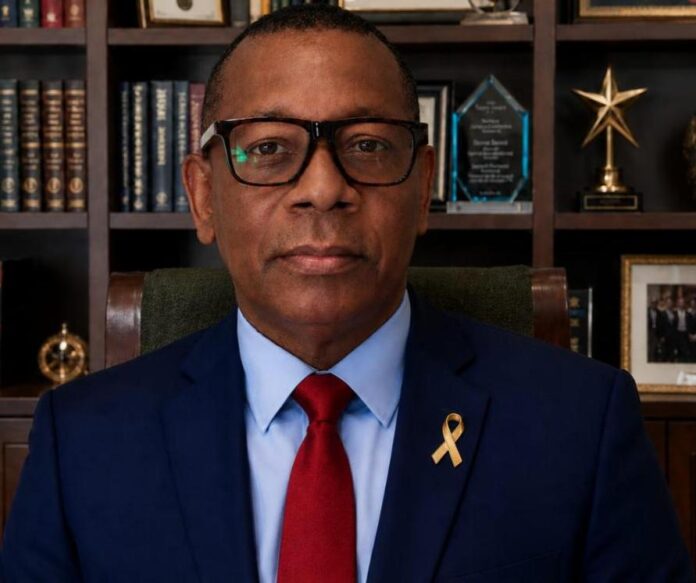
Uche J. Udenka
Have we learnt nothing from Hiroshima? Have we forgotten Nagasaki? Have we forgotten the mushroom cloud rising over Japan, carrying not victory alone but a warning to humanity about what happens when technological power outruns moral restraint?
In August 1945, the United States dropped atomic bombs on Hiroshima and Nagasaki. The United Nations says the attacks and their aftermath killed hundreds of thousands of people, while leaving survivors with terrible radiation-related suffering. The horror was so profound that nuclear disarmament became one of the earliest priorities of the United Nations. Yet, in 2026, the vocabulary of annihilation has returned to the centre of international politics. At the United Nations General Assembly on September 22, President Donald Trump warned that he could “annihilate” the Islamic Republic of Iran if a deal was not reached, while simultaneously insisting that Iran must never possess a nuclear weapon.
That is the contradiction the world must confront. How does a civilisation dedicated to preventing nuclear catastrophe speak so casually about annihilating another nation? To be clear, “annihilate” is not the same as explicitly threatening nuclear use. But in an age in which thousands of nuclear weapons remain in existence, the language of total destruction from a nuclear-armed superpower cannot be treated as ordinary political rhetoric.
The UN estimates that more than 12,000 nuclear weapons remain globally. The question is therefore not simply whether Iran should have a nuclear weapon. The deeper question is: Who gets to decide who may possess ultimate destructive power—and by what moral or legal standard? America says Iran cannot be trusted with the bomb. There is a legitimate international interest in preventing nuclear proliferation. There is also a legitimate international interest in preventing powerful nations from turning military superiority into a licence for unlimited coercion. One cannot defend humanity from nuclear weapons by normalising the language of annihilation.
That is where the ghosts of Hiroshima and Nagasaki return. The lesson of 1945 was supposed to be that humanity had crossed a terrifying threshold. Nuclear weapons were no longer merely weapons of war. They were instruments capable of destroying cities, generations and the environment in moments. The International Committee of the Red Cross warns that any nuclear detonation would produce catastrophic humanitarian consequences, mass casualties, long-term radiation effects and an escalation risk for which there is no adequate humanitarian response.
Why are we again hearing the vocabulary of obliteration?
Why does international diplomacy so often begin with the threat of bombs and end with the language of peace?
Why does the world seem to accept one standard for the powerful and another for the vulnerable?
These questions extend beyond Iran.
They take us through Iraq, Libya, Afghanistan, Venezuela and other theatres where American military or political power has played a major role, but history must be precise. Saddam Hussein was captured by U.S. forces in Iraq in 2003. Muammar Gaddafi was killed in 2011 during Libya’s armed uprising after NATO intervention; Libya subsequently descended into prolonged political fragmentation and conflict.
Nicolás Maduro – The Trump administration has described its Venezuela operation as removing Maduro from power, while Trump’s UN speech referred to the operation as a raid. Then also Ayatollah Khomeini assassinated in February.
If Iran supports armed groups that attack civilians, that deserves scrutiny.
If Iran’s nuclear programme creates proliferation concerns, those concerns deserve verification.
If the United States attacks infrastructure affecting civilians, that too deserves scrutiny. None requires annihilation!
Human Rights Watch reported in July that both the United States and Iran had threatened attacks affecting civilian infrastructure and warned that attacks on such infrastructure could violate international humanitarian law. That is the uncomfortable truth: War does not become moral simply because the missile carries an American flag. Nor does Iranian violence become acceptable because it is committed in resistance to American power. Civilian blood has no nationality.
A dead Iranian child does not become less innocent because Washington calls Tehran a threat.
A dead American soldier does not become less human because Tehran calls him an invader.
A Palestinian child, an Iraqi child, a Libyan child, an Afghan child, a Yemeni child, an Iranian child or an American child does not belong to different categories of humanity. Children do not have foreign policies.
They have mothers. They have fathers. They have dreams. They have names.
When bombs fall, none of them knows whether the missile came wrapped in the language of democracy, security, resistance or revolution. This is why the world must resist the dangerous transformation of international politics into a contest of who possesses the bigger weapon. The United States argues that its military power protects the international order. Iran argues that resistance protects its sovereignty. Other countries argue that their nuclear weapons deter attack. So the cycle continues. One nation builds weapons because it fears another. Another nation threatens war because it fears those weapons. The threatened nation then seeks greater military capability because it fears invasion. The wheel turns again. Fear manufactures weapons. Weapons manufacture more fear. This is not security. It is a permanent architecture of insecurity.
The United Nations has repeatedly identified nuclear disarmament as a fundamental global priority. Yet the world still possesses thousands of nuclear weapons. The real question before humanity, therefore, cannot simply be: “Should Iran be allowed to have a nuclear weapon?” It must also be: “Should any nation have the power to annihilate another nation?” If the answer is no, then the principle must be universal.
No exceptions for America. No exceptions for Russia. No exceptions for China. No exceptions for Israel. No exceptions for India or Pakistan. No exceptions for Iran. No exceptions for anyone.
The moment nuclear morality becomes selective, morality itself becomes another weapon. The world does not need another Hiroshima.
It does not need another Nagasaki.
It does not need another Iraq justified by intelligence later disputed.
It does not need another Libya whose political collapse continues to haunt its people.
It does not need another generation of Afghans growing up amid the ruins of wars whose original justifications have faded from memory.
It certainly does not need a world in which the leaders of nuclear powers stand before the United Nations and speak casually about annihilating nations.
The United Nations was created after the ashes of the Second World War to save succeeding generations from the scourge of war. It must not become the theatre where the powerful announce the next war.
The answer to nuclear proliferation cannot be nuclear intimidation.
The answer to insecurity cannot be permanent war.
The answer to terrorism cannot be the destruction of civilian societies.
The answer to political disagreement cannot always be regime change.
Diplomacy is not weakness. Negotiation is not surrender. International law is not an obstacle to security. Restraint is not cowardice. The greatest power on Earth should be measured not only by the number of aircraft carriers it possesses, the missiles it can fire, or the cities it can destroy. Perhaps the greater measure of power is this: Can you possess the ability to destroy—and still choose not to? That is the real test of civilisation. Hiroshima is not merely history, I know because I went to see the Hiroshima Museum of Peace, it changed my perception of humanity. Nagasaki is not merely history.
They are warnings.
They are graves.
They are memories written into the conscience of humanity. As the world watches Washington and Tehran confront each other, humanity must ask one final question:
Are we building a safer world—or merely rebuilding the road to Hiroshima? Because once the mushroom cloud rises again, there will be no victorious civilisation standing beneath it. There will only be survivors asking the question that history should have answered long ago: Why did we allow power to become more important than human life?
- Arc. Uche J. Udenka, social and political analyst – #AfricaVisionAdvancementTrust – is the C.E.O. Igbo Renaissance Awakening.


