By Jeph Ajobaju, Chief Copy Editor
Black employees earn 20 per cent less at Lloyds Bank, the biggest bank in the United Kingdom, and there are no Black executives at the biggest companies in the country.
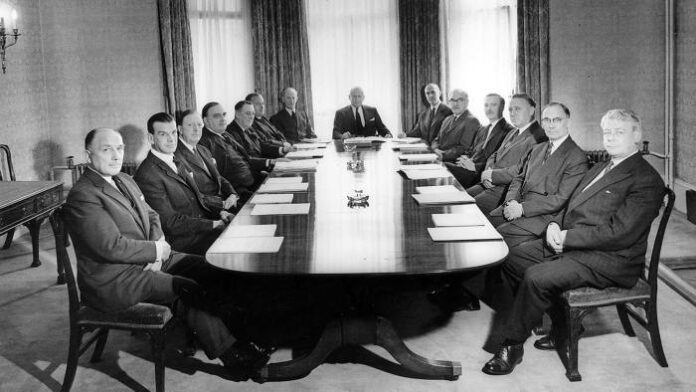
But women now occupy at least one seat on the board of every major British company after a 50 per cent increase in participation rates over five years, according to a report published on Wednesday.
While men still dominate the upper ranks of top UK firms, the Hampton Alexander Review found that women now occupy 1,026 board seats at the 350 biggest companies listed on the London Stock Exchange (LSE), up from 682 in 2015.
Per CNN reporting, the number of companies with at least a third of board positions held by women has quadrupled to 220 over the same period.
“It’s hard to believe that as recently as 2011, 43 per cent of the FTSE 350 [index] still had all-male boards,” Mary O’Connor, acting senior partner at KPMG UK, said in a statement.
“Thankfully the representation of women on boards and in leadership positions has significantly improved in recent years, with this review having played a critical role in realizing that,” she added.
The government-backed review was launched in 2016 to encourage UK-listed companies to voluntarily appoint more women to their boards and into leadership positions.
The latest review found that the number of boards with only one woman fell from 116 in 2015 to 16 as of last month.
But there’s still a long way to go, CNN adds.
Among the 100 most valuable companies listed on the London Stock Exchange (LSE), only two have more women on their boards than men: drinks maker Diageo (DEO) and Severn Trent (STRNY).
The water utility company is also one of only three FTSE 100 (UKX) firms with a woman CEO and chair, the other two being rival Pennon Group and insurance company, Admiral (AMIGF).
In general, the review found that progress is lacking when it comes to appointing women into the most senior executive roles, such as CEO positions.
“The lack of women in the boardroom is where it all started a decade ago, and it’s the area where we have seen the greatest progress. But now we need to achieve the same, if not more, gains for women in leadership,” said Hampton Alexander Review CEO, Denise Wilson.
This isn’t just a British problem.
For example, CNN explains, America’s Fortune 500 has just 38 female CEOs, while none of Germany’s biggest companies are led by women, according to the Allbright Foundation.
In a landmark moment for Europe’s biggest economy, Germany’s coalition government agreed mandatory quotas for women on boards last November.
Companies in Britain and elsewhere are facing increasing pressure from investors and the public to tackle the lack of gender and racial diversity in senior leadership.
The UK Investment Association, whose 250 members manage £8.5 trillion ($12 trillion) in assets, on Wednesday outlined plans to increase pressure on companies to improve ethnic diversity at board level.
It said in a statement that it will flag to shareholders FTSE 350 companies that do not disclose the ethnic diversity of their boards or do not have a plan to hire at least one board director this year who does not identify as White.
No Black execs at the top of UK’s biggest companies
CNN also reports that the number of Black executives at the very top of the biggest companies on the LSE has fallen to zero.
There are no Black CEOs, CFOs or chairs in the FTSE 100 (UKX) index for the first time in six years, according to a study published on February 3 by Green Park, an executive recruitment and diversity consultancy agency.
No progress has been made on diversity since Green Park began researching the issue. Only 10 of 297 people in the three top leadership positions do not identify as White, the same proportion as in 2014, the research found.
“The snowy peaks of British business remain stubbornly white,” Trevor Phillips, the chair of Green Park, said in a statement. “We know there is no shortage of qualified candidates to fill these roles if companies are willing to look,” he added.
UK companies have faced growing pressure to tackle racial injustice in their own ranks in the wake of the killing of George Floyd last May, which sparked Black Lives Matter protests across the United States, Britain and elsewhere.
It also saw a string of organizations, including the Bank of England, apologize for historic ties to slavery.
Phillips, who used to lead Britain’s Commission for Racial Equality, said that shareholders, consumers and employees needed to “start questioning whether Black Lives Matter is just rhetoric rather than reality.”
Research by Green Park shows that the percentage of Black executive directors and non-executive directors in the FTSE 100 has slipped to 1.1 per cent from 1.3 per cent in 2014. This compares with increased percentages for Asians and other groups who do not identify as White.
The number of Black people in the leadership pipeline has also fallen over the past year, dimming the prospects for future increases in Black representation at the highest levels of British business.
“Corporate leaders need to stop telling us how much they care and do something to show us that Black lives really do matter,” Phillips added.
The FTSE 100 is made up of the 100 most valuable companies listed on the LSE. The index is dominated by UK firms, but it also includes a handful of companies based outside the country.
United States cruise ship operator Carnival (CUK), which is led by Arnold Donald, exited the FTSE 100 in June following a reweighting of the index, which meant it lost its only Black CEO.
In the US, there are now just three Black CEOs of Fortune 500 companies after Tapestry’s Jide Zeitlin resigned in July last year.
Ethnicity pay gaps
Low numbers of Black people in senior leadership positions at UK companies is an important factor behind pay disparity.
For example, Lloyds Bank (LLDTF) disclosed last December that the median pay gap between Black employees and their peers is 19.7per cent, while the median bonus gap is 37.6 per cent.
The company said that this was driven by lower representation of Black people at senior grades.
Lloyds, Britain’s biggest retail banking group, is the only UK lender to break out pay gap data for Black employees. Barclays (BCS) and NatWest have previously published combined data for Asian, Black and other workers who do not identify as White.
While many UK banks have signed Business In The Community’s Race at Work Charter, which obliges companies to collect and publish data on staff diversity and pay, a Reuters review published on February 3 found that eight of the 14 top banks had not yet published any ethnic diversity data as of December 2020.
Morgan Stanley, Goldman Sachs, Deutsche Bank, Credit Suisse and Bank of America, which have signed the charter, all said they collected diversity data, but declined to disclose it, according to Reuters.