
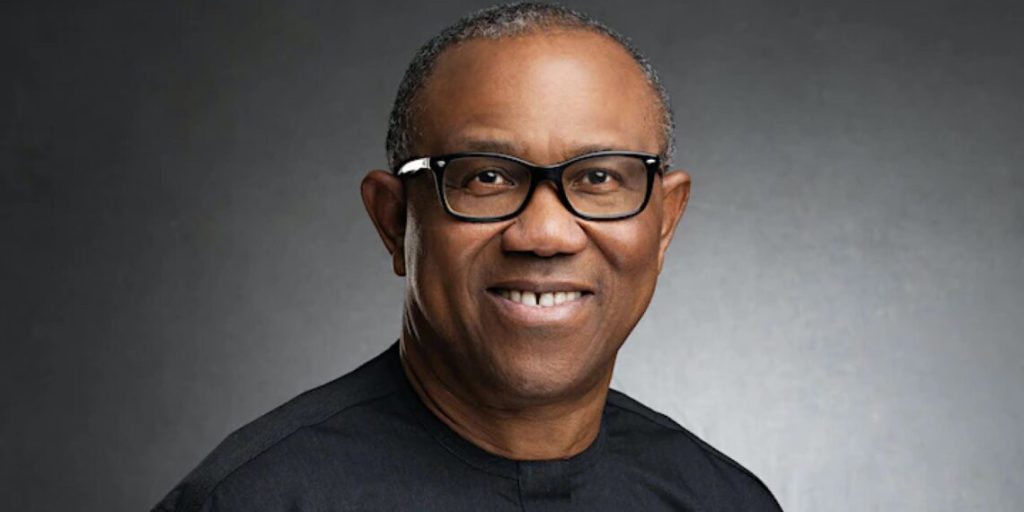
ADC, opposition politics, and Peter Obi: Peter Obi stands out as the most acceptable opposition figure in Nigerian politics today. With a maniacal following across the length and breadth of the country, millions of Nigerians see him as the perfect political figure to lead the country to Eldorado. Will the country immediately transform into a paradise if Obi ascends the throne in Aso Rock? Perhaps not, but millions of Nigerians know that with him in the saddle, the redemptive process will commence in earnest with the immediate eradication of profligacy, corruption, and an economic revival that would compare to that of the UAE and Singapore. As a private individual, Obi has built businesses and understands the nuances of economic mathematics, unlike many politicians whose claim to fame is tied to politico-entrepreneurship. Politics is the only industry they know.
By Promise Adiele
Many people have interpreted the gathering of the African Democratic Congress (ADC) and other opposition parties in the ancient city of Ibadan in different ways. While the All Progressives Congress (APC) and its sympathisers view the gathering as a group of frustrated persons desperate to acquire power by all means, millions of Nigerians, disillusioned and utterly lacerated by the current government’s resolve to lead the country to damnation through economic terrorism, have attributed epic heroism to the gathering, especially the composition of the ADC. It revives the mood in the country before the 2015 elections, when Nigerians wanted anybody but Jonathan.
Presently, Nigerians are ready to vote for any candidate as long as the present government does not continue beyond 2027. Given the exponential growth of poverty in the country and its vanquishing potential among the populace, the current government’s existence beyond 2027 will perpetuate a vicious circle of socio-political and economic turmoil. Therefore, all eyes are on the opposition to rescue the country from the impending catastrophe. But the big question is: can the opposition successfully wrest power from the incumbent APC? Can the opposition succeed? That raises the all-important question from Shakespeare’s Hamlet – To be or not to be.
Undoubtedly, millions of Nigerians are not deceived by many of the characters who populate the opposition parties. They view them as recycled politicians who have nothing to offer the country. Yet, among all the politicians, without equivocation, Peter Obi stands out as the most honourable of the lot. While he may not necessarily be perfect, because perfection only resides in the realm of divinity, he stands head and shoulders above all the politicians posturing for relevance in 2027. Peter Obi has conquered greed and avaricious tendencies. His documented, frugal disposition is antithetical to the hedonistic and venal attributes of many Nigerian politicians.
Yet, he finds himself among a coterie of politicians with whom he must work with for political reasons. The ADC as an opposition party will solve one major problem for Nigeria – to dislodge the present macabre orchestra in Aso Rock through a determined political transformation of the Nigerian landscape. While this may be a herculean task given the documented perfidy of the ruling party, it is achievable depending on the sagacity demonstrated by the opposition. Today, the greatest threat faced by the opposition is individual aspirations and ego. Everyone wants to be a presidential candidate.
The ruling APC will celebrate if certain characters emerge as the presidential candidate of the opposition ADC. Bola Tinubu and his APC will win the election before noon if some persons emerge as the flagbearer of the ADC. It will be a case of Nigerians choosing to stay with the devil they know than the angel they do not know. This is reminiscent of the biblical account when the Israelites preferred to return to Egypt and die in the hands of Pharaoh rather than die in the wilderness. However, the ruling APC also knows that should Peter Obi emerge as the flagbearer of the ADC, it will completely alter the political equation and commence Nigeria’s journey to socio-economic redemption.
Although Peter Obi is not yet a presidential flagbearer of any political party, the ruling APC and all its journeymen live in mortal fear of his emergence. Should Peter Obi, who has consistently been at the forefront of opposition politics since the last election, emerge as the main opposition presidential flagbearer, Nigerians would really have a choice to make and perhaps, commit tenaciously to that choice to the extent that INEC allows. The biggest question is – why is Obi the target of attack of the ruling APC and their urchins when he is not officially the presidential flagbearer of any party? Why are political attackers not interested in Atiku, Amaechi, Kwankwaso and the rest of the opposition figures?
To be sure, some politicians in the opposition camp do not have any definitive template or prognosis to deliver the country from its present grotesque realities beyond acquiring power for the sake of power. The emergence of such persons will ultimately be an extension of the current procession to Golgotha for ultimate crucifixion. Nigeria does not need such kinds of persons. Their antecedent reeks of a putrid past, which can conveniently suffocate any social order. Any opposition to the present government must be better than the present government in terms of history, records, moral integrity, and empathy towards Nigerians. Opposition politics must go beyond the rhetorical embodiment of resistance informed by vengeance for being sidelined in the present political equation.
Many people in the opposition are motivated by a vendetta against Bola Tinubu for ignoring them in the general political scheming in his government. For such persons in the opposition, their promise of lifting the country from its present morass is insincere, a mirage and a wicked illusion. Nigerians must be wary of such opposition figures in sheep’s clothing. If many of the opposition figures can be truthful to themselves, if only they can, in moments of critical introspection, examine the prevailing political psychology of Nigerians, they would realise, and easily too, where the pendulum would swing and give their support.
Peter Obi stands out as the most acceptable opposition figure in Nigerian politics today. With a maniacal following across the length and breadth of the country, millions of Nigerians see him as the perfect political figure to lead the country to Eldorado. Will the country immediately transform into a paradise if Obi ascends the throne in Aso Rock? Perhaps not, but millions of Nigerians know that with him in the saddle, the redemptive process will commence in earnest with the immediate eradication of profligacy, corruption, and an economic revival that would compare to that of the UAE and Singapore. As a private individual, Obi has built businesses and understands the nuances of economic mathematics, unlike many politicians whose claim to fame is tied to politico-entrepreneurship. Politics is the only industry they know.
A few people criticise Obi for jumping from one political party to another. Yet, many Nigerian politicians, including major actors in the current leadership protocol, have also jumped from one party to another. It is a legitimate political behaviour to change political platforms as long as the ideological impetus does not change. Peter Obi’s ideological kernel has not changed since his entrance into politics. With his documented commitments of doing good across the country through philanthropic gestures, we can borrow a leaf from Bertolt Brecht’s The Good Woman of Setzuan and confidently call Peter Obi The Good Man of Nigerian Politics.
Rabiu Kwankwaso is a cult hero in Northern Nigeria, especially in Kano State, where he served as a governor twice. His populist political ideology has endeared him to millions of people in Northern Nigeria. Although his political influence has not broken the barriers of ethnic and religious sentiments, many people see him as a radical mind whose commitment to the plight of the poor would accelerate and redefine the country’s skewed leader-people orientations. Like Peter Obi and many Nigerian politicians, Kwakwanso has moved around the country’s different political platforms and like Obi, his ideology has not changed. He has, over the years, distinguished himself as a people-inclined politician not ready to compromise his standards for crumbs from the devil’s table. Although he has not been vociferous as an opposition politician, he has demonstrated a few times that he is ideologically robust with a clear vision to positively change the lives of the people within his sphere in a leadership position.
Seyi Makinde, the current governor of Oyo State, stands out as a profound political heavyweight who demonstrates the real Omoluabi ethos. In Ibadan, during the famous declaration by opposition politicians, he spoke with the conviction of a Spartan warrior, one determined to rewrite the mangled political propensity of the brave people of Yoruba, badly battered by isolated cases of tragic characterization. The Yoruba have produced distinguished personalities with pristine qualities. That spirit is currently rekindled by Seyi Makinde – young, bold, intelligent and with a verifiable antecedent. The transformation in Oyo State is evidence of his commitment as an honest, responsible and committed leader.
While many have criticised Makinde’s reference to ‘Operation Wetie’, a dark patch in the political history of South Western Nigeria in the early 60s, it underscores his resolve to resist electoral marauders within his enclave in 2027. Indeed, his warrior ethos is never in doubt. Makinde may yet rekindle the Omoluabi ethos, which has defined the hardworking, honest, fearless, and prudent Yoruba personality on a national scale. Although he may not be as popular as Obi and Kwankwaso, he holds the potential to reconfigure the Yoruba political culture, founded on populism, accountability, and mass education as demonstrated by Awolowo, Bola Ige and Lateef Jakande.
Unfortunately, politics is a ritual that does not always require the best hands for its propitiatory procedures. Politics, in most cases, always asks for the worst characters among men. On rare occasions, the best always emerge victorious, especially under a climate of like-minded and resistance-tested, radical populace. If the political heavyweights in the opposition camp truly love Nigeria, if they are committed to becoming the heroes of the struggle to dislodge the present superstructure, they must concede to the three musketeers above, with Peter Obi leading the line. The kingmaker also deserves a place in history, sometimes a better place than the king. Atiku Abubakar, Rotimi Amaechi, David Mark and the rest, a word is enough for the wise.