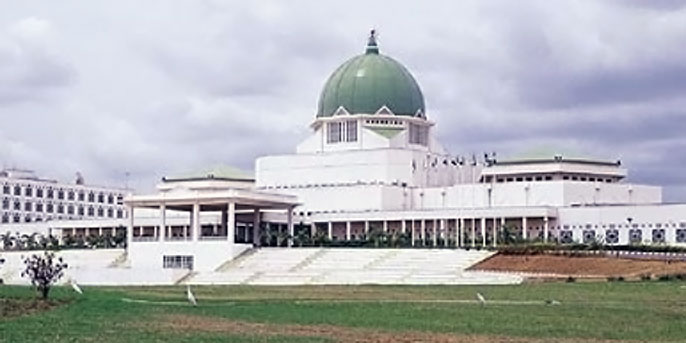
The Court of Appeal, Abuja Division yesterday gave go-ahead to the National Assembly in its bill seeking to re-order the sequence in which the 2019 general elections are to be conducted by the Independent National Electoral Commission (INEC).
The court, while delivering judgement in an appeal filed by the National Assembly, set aside the judgement of the Federal High Court, which restrained the National Assembly from legislating on sequence of election for the commission.
In a unanimous judgement delivered by President of the Court, Justice Zainab Bulkachuwa, the court held that the case of the Accord Party, which led to the judgement of the High Court, was premature at the time it was filed.
The court further held that the decision of the High Court in entertaining the suit by the Accord Party amounted to a breach of the doctrine of separation of powers as enshrined in the 1999 Constitution of the Federal Republic of Nigeria.
The court consequently nullified the judgement of the lower court.
Justice Bulkachuwa held that the suit of the Accord Party on the legality of the powers of the National Assembly on election reordering was an academic exercise because the party has no power to have instituted the action in the first instance.
Specifically, the court held that the party failed to establish how its rights and obligations were adversely affected by the election reordering bill of the National Assembly higher than that of the general interest.
The court further held that a bill has no legal effect to expose it to being challenged in court on the basis of the violation of the constitution of the country until it has been passed by the two chambers of the National Assembly and assented to by the appropriate authority.
“The constitution does not envisage that a suit would be filed to challenge a bill at the embryonic stage of legislation because it has no binding effect until it has been assented to,” the court held.
The Attorney General of the Federation (AGF) had written a letter to the Appeal Court, informing it that the controversial election reordering provision had been deleted by the National Assembly and thus the appeal overtaken by the deletion of the provision. But the appellate court disagreed that the matter was overtaken by event because the appeal case has life in itself.
Justice Bulkachuwa, therefore, upheld the powers of the National Assembly to legislate on election reordering and dismissed the appeal of the Accord Party, AGF and INEC.
Accord Party had, through its counsel, Chief Wole Olanipekun (SAN), dragged the National Assembly before the Federal High Court in Abuja, challenging the legality of the powers of the two chambers of the National Assembly to legislate on election reordering for INEC.
The trial judge, Justice Ahmed Mohammed, had, in his judgement delivered on April 25, stopped the National Assembly from legislating on election sequence for INEC.
The court held that INEC, having been established by law, has powers to decide on sequence in which elections in the country are to be conducted.
Not satisfied, the National Assembly, through its counsel, J.B Daudu (SAN), approached the Court of Appeal.
Meanwhile, the Senate President, Dr. Bukola Saraki, has lauded the judgement of the Court of Appeal.
Saraki in a statement by his Special Adviser (Media and Publicity), Yusuph Olaniyonu, stated that the judgement has further reinforced the belief of Nigerians that the judiciary remains the hope of the country in strengthening democracy, resolving conflicts between various arms and levels of government as well protecting the rights of individuals.
He added that with the judgement, it is now clear that the National Assembly was right when it passed the bill stating the sequence of elections.
The Senate President said that the legislature reversed its decision on the issue, after President Muhammadu Buhari refused assent to the bill, in the interest of peace and to forestall any legal obstacle on the way of the 2019 elections.
“I have always believed in the need to test our laws in court by seeking judicial interpretations on contentious issues. By doing so, we will be expanding the scope of our laws, sharpening the rough edges of legislation and asserting our faith in the judiciary as a fundamental arbiter,” Saraki said.