



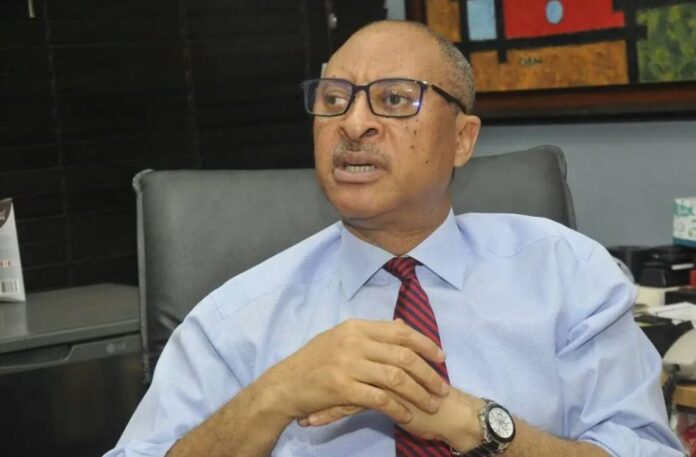
A collapsing elite and the obligation of leaders as Nigeria falters
By Pat Utomi
I arrived New York on my first visit to the US in 1976, as they celebrated the Bicentennial of America’s Independence, and was soaked in tales of the heroism of the founding fathers. When I came last week, as America 250 activities gathered steam, it reminded me of half a century of my reflections on the example of America. I could not but think of concern for the future as central to leadership essence.
In 2014, I was in India spending a week at an Ashram in Bangalore to relax and reflect when a candidate for Prime Minister, Nehindra Modi came to visit the Guru in the Ashram. I was so struck by his dream for India I went out the next day and bought his autobiography.
Today I can see how the Modi leadership has changed India for good.
But I look at my country. In an election year when the public sphere would have become a true market place of ideas from rational public conversation on how best to solve the myriad of problems facing Nigeria, we are consumed by distractions; like frustrating the peace of other political parties, judicial over reach which point all towards anarchy and the deepening of troubling insecurity; hate speech and stoking divisions between people who share in the misery of their state of living and their common desire to prosecute a great escape from the track to serfdom.
Who will bring us back to what matters? Often times this responsibility is laid down at feet of the fourth estate of the realm, the media, which research around the world suggest are most influential in the setting of the agenda of the society.
Questions of what the press can do, and Media influence, in general, have been around, and influenced academic research for a long time. In the early part of the last century in the US the influence of media was assumed as direct as medication delivered by a hypodermic needle injection. But that thesis ran into trouble when candidates endorsed by powerful media like the New York Times lost local elections. Modifications showing a two-step flow of influence that moderate the view of media took over research tradition. In the end it was agreed that a good part of media influence derives from the fact that so many things of consequence happen but those the media choose to focus on invariably become public agenda items. The media thus sets the agenda of society.
So has the media in Nigeria failed to set a redemptive agenda away from the distractions from progress of propaganda and machine politics obsessed with capturing power over purpose?
Is the expectation that the end justifies the means now so deeply rooted in culture that even Journalists are so caught up in emotions as against reason, and just flow with widening the gap between us and them, into machine politics which side tracks issues?
Thankfully we can say that a number of journalists still show sensitivity to the shrinking democratic and moral space. Their effort is most edifying.
I see stout pursuit of moral ambition in the writings of Femi Ojodu who went from journalism to the arena of public life, as I see in some columnists, including those of the Nigerian Tribune. A few TV talk show hosts also continue to try to set the agenda.
What can be agenda for the agenda setters in the current situation in Nigeria?
The first is holding power to account. The second is to query the capacity of aspirants to be effective stewards. The third is interrogating a vision of a greater tomorrow for all from all who desire to shepherd. The fourth is probing the values of those who seek a place in the public arena, not from what they say but how they have lived.
As evidence abounds to indicate that leadership matters and that leaders set the tone of culture, which in turn, along with institutions, shape human progress, probing the character of leaders and holding them accountable should be central for agenda setting.
What did those in power say when they were running? Estimating the gap between promise and performance and explaining the variance is charge not only for journalists but elite.
People who have privilege have obligations to society. Those obligations include concern for those less fortunate and commitment to the advance of the common good.
As a teacher of management I know that consequence management is one of the ways you build a learning and growing organization. Nigeria will not grow leaders until we learn to make people in authority accountable. The imperative of consequence for conduct is key to behaviour modulation.
So what did incumbents promise on power, economy, insecurity, education, health care and infrastructure. They must be reminded and be so judged.
Some trends and issues are also so salient that not to bring them to the front burner is a disservice to society. They include food security, reviving manufacturing and profiting from the ocean beside us.
I have anxiety about agriculture where the policy response has been food imports which might bring relief to win elections but leave a damaged sector unable to assure future food security. I have suggested alternatives in other commentary.
I am sad that noise was made about Blue economy and know that with a little discipline the resources of the sea, ocean facing cities, and tourism assets from our long coastline could power a multiplication of jobs being created, and a catapulting of income per head in the country.
But has the elite been able to challenge those who seek power for a blue print to show how you transform with such endowments?
Accountability is not limited to those in authority. It should encompass the duty of citizens, particularly elite.
As citizens and media we fail in our duty when we neglect to remind power of the obligation of princes. The Sunni Berber scholar, Muhhamad Abdal-Karim al-Maghili (1425 – 1505), reminded us six hundred years ago about the importance of the obligation of princes. We must remind ourselves today of the obligation of elite.
- Pat Utomi, political economist and professor at the Lagos Business School, is founder of the Centre for Values in Leadership


