An Igbo politician does not need permission to disagree
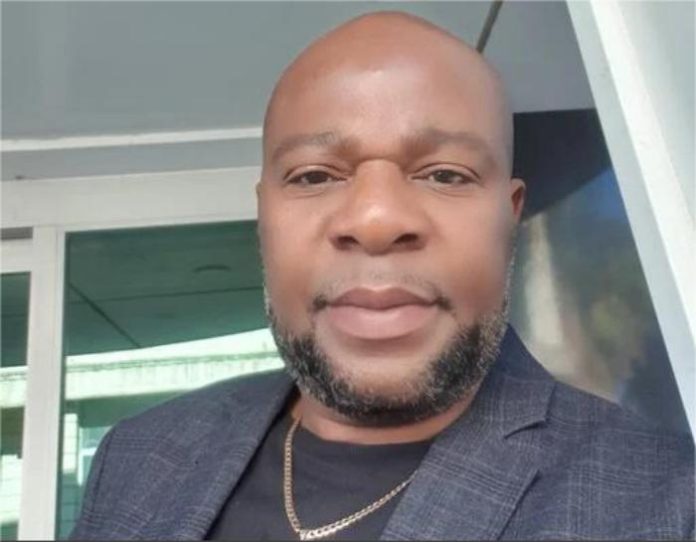
By Ogechi Okoro
Growing friction among prominent Igbo politicians as Nigeria moves toward another election is generating plenty of commentary. Some see a crisis. Others see betrayal. I see a simple truth: politicians disagree.
We should stop pretending that politicians from the same region, ethnic group, or even family must belong to the same political camp. Politics is a contest for power, influence, and competing interests. Where ambitious people occupy the same political space, rivalry is inevitable. The Igbo are not uniquely divided. Shifting alliances, bitter contests, and unexpected partnerships have always characterised Nigerian politics. That is politics.
Political alliances are formed, broken, and rebuilt according to circumstances. Politicians who attack one another today can embrace tomorrow when their interests converge. Those who appear inseparable today can become opponents when the political mathematics changes.
There is nothing uniquely Igbo about this. What is troubling, however, is the tendency to interpret political disagreement as moral failure. Once an Igbo politician supports a candidate outside some people’s preferred Southeast political choice, the accusations can begin: betrayal, selfishness, lack of patriotism, or worse. But who appointed anyone the guardian of another person’s political conscience?
If Peter Obi commands significant support in the Southeast, that political reality should be acknowledged. Many people will support him because of his identity, political record, personal appeal, or assessment of his suitability for the presidency. They are entitled to that choice. But another Igbo person is equally entitled to reach a different conclusion.
An Igbo politician supporting Bola Ahmed Tinubu does not become less Igbo. Supporting another candidate does not suddenly sever their connection to the Southeast. Ethnicity does not come with a compulsory political voting instruction. Being Igbo is an identity. It is not a political party. This is where our political conversation must mature.
I have listened to politicians at the centre openly mobilising around President Tinubu’s political future. Supporting an incumbent is not inherently undemocratic. Politicians have every right to campaign for the candidate they believe should lead the country. But the same principle should apply to everyone else.
If Abuja politicians believe in democracy, they should defend a political environment in which competing candidates can campaign freely. Supporting the incumbent should not mean treating those who support his opponents as enemies of the state or enemies of their own people.
And politicians from the Southeast who choose to support Tinubu should not be required to apologise for doing so. The same courtesy must be extended to those supporting Obi or any other candidate. There is also value in allowing political diversity within a region.
A region that puts too much of its political weight in one basket risks losing influence when its preferred political arrangement does not prevail. Multiple political relationships can provide different channels of engagement with the centre. That is political strategy, not betrayal.
The Nwodo family of Ukehe provides an interesting example of how political differences can exist without necessarily destroying family identity. Members of the same family have operated within different political spaces while maintaining their broader relationships. There is a lesson here for the rest of us: political disagreement does not have to become personal warfare. We should also be realistic about political language.
Politics is a contest in which opponents often exaggerate, attack, reframe facts, and sometimes make claims that do not withstand scrutiny. This is not an Igbo invention. It is a feature of political competition in many places. That is why citizens must become more discerning.
We should ask politicians for evidence. We should examine records. We should challenge propaganda, whether it comes from our preferred candidate or the person we oppose. And perhaps most importantly, we should stop assuming that every political decision is motivated by money.
People enter political alliances for many reasons: ideology, ambition, conviction, relationships, strategic calculations, regional interests, personal history, and their assessment of what serves the country. Some motivations may be questionable; others may be legitimate. We should judge them on evidence, not assumption.
The 2027 election will test more than political parties and candidates. It will test our ability as Nigerians to disagree without destroying one another. The Southeast does not need every politician marching in the same direction. It needs politicians who can disagree, negotiate, compete, and, when necessary, cooperate.
Let the politicians fight their political battles. Let families remain families. Let citizens make their own choices. And let us stop confusing political disagreement with ethnic betrayal. Nigeria is too complex for one political camp, one region, or one ethnic group to claim ownership of political wisdom. The most dangerous thing we can do is demand political loyalty where democracy requires freedom of choice. An Igbo politician does not need permission to disagree.
- Dr Ogechi Okoro, a political and social analyst, writes from Hamilton, New Zealand.