




Life in the diaspora: Pump it yourself – the self-service petrol station experience
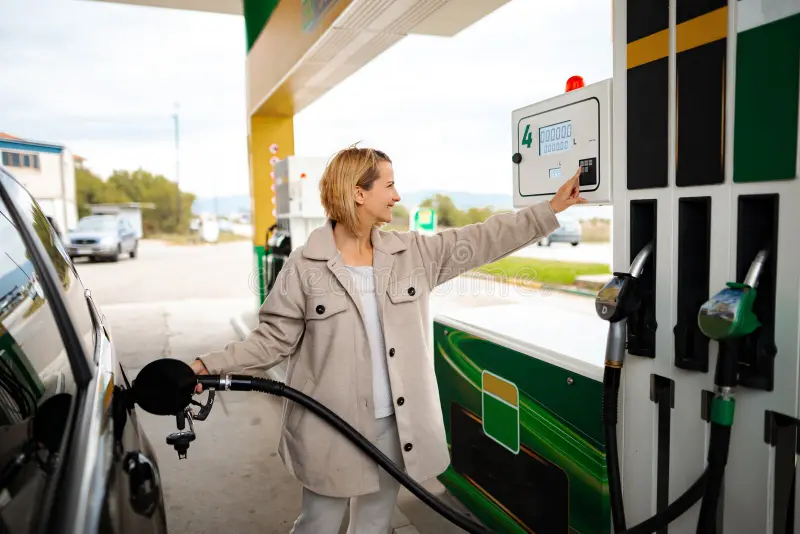
A woman helping herself at a UK petrol station: Self-service is the norm
By Mary Opii
One of the everyday experiences that can surprise Nigerians when they first settle in the UK is the expectation that you will usually fill your own car with fuel. At many petrol stations, there is no attendant waiting by the pump to serve you. You park, choose the correct pump, fill the tank yourself, and then proceed to pay.
For someone accustomed to a different experience in Nigeria, this can take a little getting used to.
In Nigeria, particularly at many traditional filling stations, customers often remain in their vehicles while an attendant comes to the pump, asks how much fuel they want, fills the tank and takes payment. The customer does very little beyond communicating what they need.
In the UK, the process is much more hands on. You are expected to know which fuel your vehicle requires, operate the pump correctly, and make your payment according to the station’s procedure.
I remember the first time I had to do this myself. I approached the pump and suddenly realised that nobody was coming over to ask what I wanted. I had to figure it out for myself. I checked the fuel type, selected the pump, removed the nozzle and began filling the tank. It was a simple task, but it was another reminder that everyday life in the UK often requires a greater degree of independence.
The process is generally straightforward once you understand it.
You normally park beside the appropriate pump and check the fuel type before inserting the nozzle into your vehicle. After filling the tank, you either pay at the till inside the petrol station or use a payment facility at the pump, depending on the station.
Some stations also have pay at pump facilities where you insert or tap your bank card before or after fuelling. Others require you to go inside and pay at the counter. Increasingly, contactless payment makes the process even quicker.
There is an important lesson here for anyone new to the UK: always check what fuel your vehicle requires before filling up. Putting the wrong fuel into a vehicle can cause serious problems and potentially result in an expensive repair.
Another interesting aspect is that the price displayed on the large sign outside the station usually tells you the price per litre rather than the total amount you will spend. This means you need to pay attention to the pump display as the amount increases while you fill the vehicle.
The first few times can feel unfamiliar, but it quickly becomes routine. You get out of the car, fill up, replace the nozzle, pay and leave.
The experience also reflects a wider feature of British life: self-service. From supermarkets and car parks to petrol stations, people are often expected to complete ordinary transactions independently. The system provides the equipment and instructions, while the customer takes responsibility for completing the process.
For Nigerians in the diaspora, this is another small adjustment that gradually becomes second nature. What initially feels like a task that someone else should be doing eventually becomes just another part of owning and driving a car in the UK.
It also teaches you to be more attentive. You become familiar with your vehicle, learn the difference between fuel types, understand how much fuel you normally need and become comfortable operating the equipment yourself.
These may seem like minor things, but diaspora life is often made up of such small lessons. You learn to navigate systems that may initially seem unfamiliar, and eventually they become part of your normal routine.
And before long, filling your own car becomes so ordinary that you no longer think twice about it.
You simply pull up to the pump, take out your card, fill the tank and drive away, another small example of how living in the UK teaches you to become increasingly self-reliant.


