



The architecture of rebirth: An open letter to Dr. Chidi Amuta
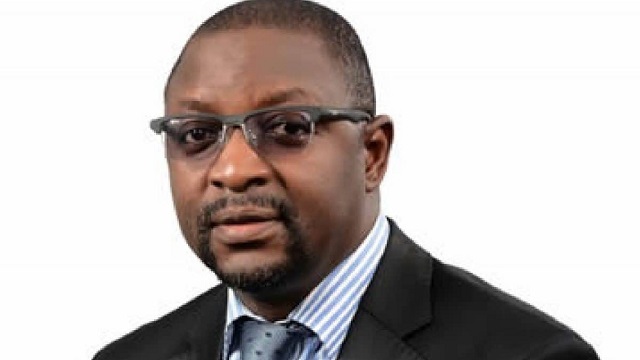
By Sunday A. Dare
I read your recent piece, “Abuja’s gangster chronicles,” with the deep reflection I reserve for those who have spent decades in the sacred vineyard of Nigerian commentary. You wield a sharp pen, and your prose has long captured the imaginations of those who debate our national destiny. But as I absorbed your vivid metaphors — of Hollywood scripts, criminal syndicates, and a state in terminal decay — I was struck not by the weight of your indictment, but by the profound, tragic gulf between the view from your study and the actual, painstaking labour of rebuilding a nation.
You depict the seat of government as a hollow enterprise, a stage where governance has surrendered to “primitive accumulation” and systemic failure. You offer our citizens a darkly entertaining melodrama. But as an intellectual, you know that sensationalism is not analysis, and cynicism is not statesmanship.
Let us dispense with cinematic tropes and speak directly to the structural, economic, and security realities of our Republic.
The burden of truth and fiscal courage
When President Tinubu took the oath of office on May 29, 2023, he did not inherit a smoothly running machinery of state that simply required routine maintenance. He inherited a nation standing at the very edge of a fiscal precipice. Nigeria was spending over 90 percent of our national revenue servicing debts. We were sustaining a ruinous petrol subsidy regime that drained trillions of naira annually into the pockets of non-state actors while starving our schools, hospitals, and roads of basic capital. We were operating a multi-tiered, artificial foreign exchange market that rewarded unproductive currency speculation while suffocating genuine manufacturing and local production.
If we must talk about a criminal enterprise, Dr. Amuta, let us look at that long-standing structural rot: an unsustainable system that mortgaged the future of unborn generations under the guise of temporary public comfort. That was the real racket.
The Tinubu administration came to power not to manage the decline of Nigeria, but to reverse it. And arresting decades of systemic decay requires stoic, uncomfortable, and far-reaching surgery.
READ ALSO: Abuja’s gangster chronicles
When he made the hard choice to remove the petrol subsidy and unify our foreign exchange windows, he knew the initial shockwaves would be severe. He knew inflation would pinch our households, and he knew the beneficiaries of the old, corrupt order would fight back with fury and media campaigns. But true leadership is not a popularity contest. It is the courage to administer the bitter medicine that saves the patient’s life.
Today, those agonising structural decisions are yielding the foundation of a resilient economy. Non-oil revenues have expanded significantly, enabling the government to fund critical public services without relying on destructive ways and means financing. Foreign direct investments are returning because global investors respect fiscal discipline, legal clarity, and predictable market mechanisms over artificial stability.
Reinventing the security architecture
You write that the Nigerian state has lost its capacity to protect its people, becoming vulnerable to “terrorists, bandits, and freelance scammers.” You paint a picture of a helpless state outgunned by its adversaries.
Yet, you ignore the most sweeping overhaul of Nigeria’s national security architecture in our modern history. Security is not achieved by empty presidential declarations; it is built through structural reform, intelligence integration, and relentless hardware acquisition.
For decades, visionary Nigerians demanded the decentralisation of our policing structure. This administration did not just pay lip service to local policing; we moved the needle. Working hand-in-hand with the National Assembly and sub-national governments, President Tinubu transmitted and championed the State Police Constitutional Amendment Bill. He launched the Presidential Working Group on the National Policing Bill to establish a dual policing framework that empowers states to secure their communities, police their forests, and protect their rural economies. This is genuine, operational federalism in action.
At present, President Tinubu has systematically re-armed and modernised our Armed Forces, equipping our military and security agencies with advanced aerial surveillance platforms, automated intelligence systems, long-range drone technology, and heavy armoured capabilities. Our military forces are actively clearing forests that were once written off as lawless zones and ungoverned territories, neutralising top insurgent commanders, and rescuing thousands of abducted citizens.
To claim that no one respects or fears the Nigerian state today is to erase the daily sacrifices of our brave men and women in uniform who are taking the battle directly to terror enclaves across the country.
Rebuilding the national skeleton: Infrastructure
You argue that projects remain perpetually on the “to-do list,” swallow continuous budgets, and leave an avalanche of uncompleted works.
Look across the landscape of our nation today. We are not managing uncompleted projects; we are completing critical national lifelines and initiating historic infrastructure corridors that previous administrations deemed impossible.
The Lagos-Calabar Coastal Highway and the Sokoto-Badagry Superhighway are transforming trade, regional integration, and economic connectivity across the coastline and northern hinterlands. Railway expansion projects, port modernisation, and deep-sea port integrations are turning Nigeria into Africa’s maritime and logistics hub.
Highway networks across the North-Central, South-East, and North-East are being aggressively paved to ensure that our agricultural belt can move produce seamlessly to urban markets. This is not the mark of a state in decline. This is the physical, tangible skeleton of a nation being built to sustain a 21st-century economy.
Addressing the broader concerns of governance
You touch upon legislative allocations, budgetary friction, and the friction of political power. But in a vibrant constitutional democracy of over 220 million people, legislative independence, public debate, and political jockeying are not signs of “gangsterism”; they are the necessary noise of a free society.
The true test of democratic governance is whether the state possesses the institutional capacity to self-correct. Under this administration, discretionary revenue leakages are being plugged through digital public finance management, independent anti-graft institutions operate without executive interference, and administrative procedures are continually streamlined to prevent arbitrary exercise of power.
To mistake the friction of democratic governance and the active dismantling of old patronage networks for state failure is a fundamental error of perspective. It is like looking at a construction site littered with scaffoldings and dust and declaring that the building is collapsing. The dust you see is not the onset of destruction; it is the messy, necessary process of rebuilding.
A call to patriotism over pessimism
Chidi Amuta, in your rush to construct a sweeping indictment, you have succumbed to a fashionable pessimism that mistakes cynicism for intellectual depth. You write as though the structural rebirth of a complex, diverse nation can be achieved through neat academic formulas, without friction, resistance, or temporary turbulence.
Abuja is not a Hollywood set, and Nigeria is not a doomed enterprise. Our country is a resilient, ambitious Republic in the midst of a historic transition. We are moving away from an economy built on unproductive consumption, patronage, and rent-seeking toward a nation anchored on production, local industrialisation, security, and fiscal integrity.
I do not expect you to applaud every policy of this administration. The critic’s duty is to question, and this administration welcomes rigorous, constructive engagement. But I do expect a commentator of your standing to rise above caricatures that disparage the collective effort of millions of Nigerians who are working tirelessly to build a better country.
History will not judge this administration by the sensational headlines of weekly columns or the passing noise of political commentators. History will judge this administration by the permanence of the foundations it lays today. When the dust of these necessary, difficult reforms settles, and when a prosperous, secure, and solvent Nigeria emerges, the record will show that the Tinubu-led administration did not flinch, did not pander, did not surrender to despair and did not falter.
The door to constructive debate remains wide open, Dr. Amuta. But while you write the chronicles of our past struggles, we will remain focused on the urgent, unyielding work of securing Nigeria’s future.
- Sunday Dare is Special Adviser to President Tinubu on Media and Public Communications


