
Radda’s ultimate gift to Katsina’s poor: Not all reforms are visionary. But Governor Radda’s reforms are not just driving transformation but in real time. What is going on in Katsina today is a Radda-engineered education revolution. Many peeping from outside the state may not have noticed. But it is a revolution that will, sooner than later, take the entire country by storm. Radda’s ultimate gift to the poor children of Katsina is digital education that unlocks the awesome possibilities that tomorrow offers those who prepare for it.
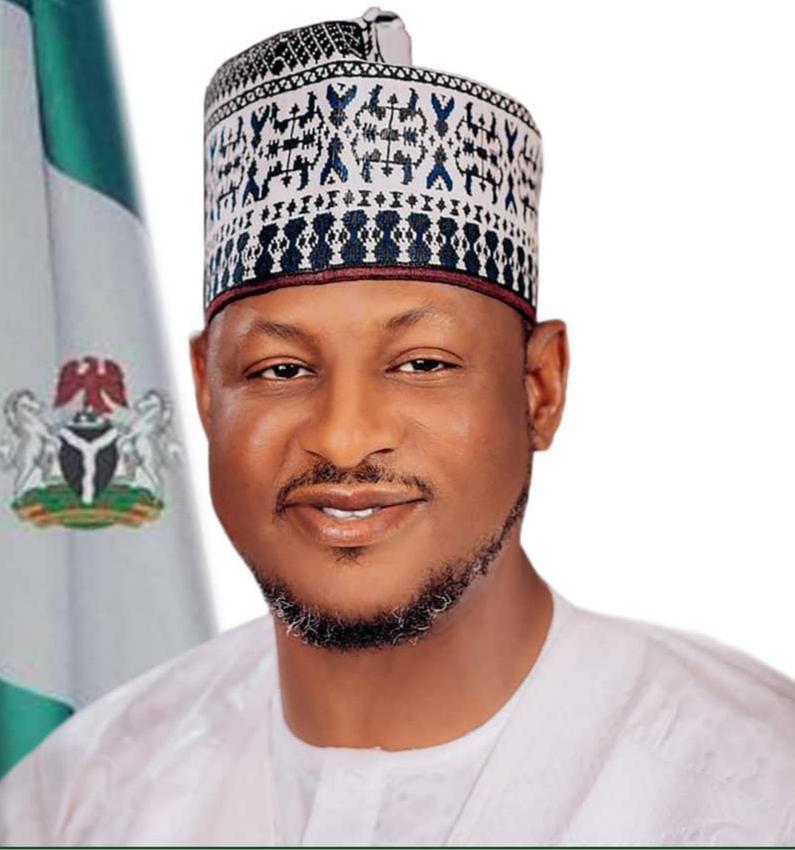
By Ikechukwu Amaechi
When I told a couple of friends on Saturday that I was going to Katsina State, they asked the same question: Must you go? My affirmative answer elicited a rather familiar, yet impish admonition: I hope you made adequate security arrangements.
That is how scared most people, particularly from the southern part of the Nigerian divide, are right now about making a trip to Katsina, a State that has been in the news for too long for the wrong reason – insecurity. And they have no blame, particularly after the controversial community-driven peace deals with bandits, which started mid-2025, failed catastrophically.
But it is not only national psyche that has been brutally scarred. The locals are equally inflicted with lasting emotional and psychological damage as a result of their severe traumatic experiences in the hands of terrorists.
To be sure, there is still insecurity in Katsina. Terrorists are still maiming, killing and kidnapping people for ransom and for many, it is sorrow, tears and blood, to borrow a phrase from the landmark 1977 song by Afrobeat maestro, Fela Anikulapo-Kuti.
But it is not all doom and gloom. The Katsina insecurity paradox is a single story, which, while not necessarily untrue, nevertheless, as the novelist Chimamanda Adichie noted in her 2009 TED Talk helps in reducing the State to one narrative, thereby creating a harmful stereotype. The point being that to view Katsina State only from the prism of insecurity is tantamount to making one story become the only story.
The other side of the Katsina story is that in less than three years, Governor Dikko Umaru Radda has engineered a digital revolution particularly in education by building smart schools that most states in the South can only dream of.
On Tuesday, May 5, 2026, one of them, Radda Special Model Secondary School in Radda town, Charanchi Local Government, was commissioned by Kwara State Governor, Mallam Abdulrahman Abdulrazak.
The project is a spectacle. Smart in every sense, the school has state-of-the-art teaching and learning facilities to foster 21st century digital literacy. No expense was spared. Yet, it is not just one project but three – one in each of the three senatorial zones. The other two located in Jikamshi and Dumurkul towns are at different stages of completion, to be commissioned before the end of the year.
The school principal, Dr. Lawal Shehu, explained that the idea is to leverage on the power of technology to give the students an education experience comparable to anywhere in the world. In security scarred Katsina, digital education assets have been deployed in every classroom of the Radda Special Model School for flexible teaching and high quality learning.
For starters, the school admitted about 900 students into the junior classes. There are presently 42 classrooms with a maximum 40 students in each. Each of the classes has smart teaching boards with installed learning management systems and open ecosystem algorithms. There is also a 500-capacity examination hall with digital examination boards and cutting edge science laboratories. With power from solar, national electricity grid and generators, the school has a 24-hour electricity supply and internet services. To forestall incidents of security breach, the entire school environment features state-of-the-art security systems – very modern and sophisticated.
All the students live in the boarding house and the teachers also live in well-furnished staff quarters. And not only are the students on full scholarships, they are paid a termly stipend of N15,000 as pocket money.
But as awe-inspiring as the school project is, it only feeds into the broader and layered Katsina Directorate of Information and Communication Technology project ably superintended by Engr. Naufal Ahmed, which has effectively positioned the state in the global digital ecosystem.
Typically, a school of this quality will be the exclusive preserve of the children of the rich. But not under Governor Radda’s watch. All the pioneer students went through a transparent and rigorous admission process that involved competitive entrance examination. The idea was to find, identify and give special attention to exceptional and gifted students. The consequence was that most of the students are actually from very poor families, many of who had never left their villages before. The teachers also went through the same recruitment process. The jobs were publicly advertised and applications were submitted through an online application portal. Those pre-selected undertook Computer-Based Tests (CBT), and physical interviews.
The fact that all the students were drawn from public primary schools across all the 360 political wards of the state, reflecting the inclusive and equitable nature of the admission process, aligns with Governor Radda’s unwavering commitment to fairness and equal educational opportunities for children, irrespective of their geographical or socio-economic background just as the establishment of the model schools is a clear demonstration of his vision for special schools tailored to meet the diverse learning needs of children.
But, make no mistake: While the Radda Model Secondary School is the crown of the governor’s giant strides, it only stands on a foundation of hundreds of such investments made quietly, across every local government, for every child in Katsina State. These are investments not necessarily made for today. The idea is to secure the future of the young ones by giving them a head start in life with eyes firmly trained on generational dividends.
Speaking at the commissioning of the model school on Tuesday, a visibly elated Governor Radda reiterated the commitment of his administration to improving the quality of education in the state through the provision of innovative digital facilities to aid teaching and learning activities.
He said the students will not only “study in modern, fully-equipped classrooms,” they will also “conduct experiments in state-of-the-art science laboratories… read in a library stocked with the knowledge of the world… compete on sports fields that will develop their bodies and their discipline.”
“They will be mentored by dedicated teachers who live among them, in staff quarters designed to attract and retain the best educators we can find,” he avowed.
Reiterating that the school was built in promise, dedicated in purpose, and offered with love to the children of Katsina and to the future they will build, he said the idea was a school for the brightest irrespective of the financial standing of their families.
It bears restating that the greatest investment any government can make is not in brick and mortar, but in positively developing the minds of the children. That is what Radda is doing with his digital education blowout.
That is why he insists that the project is not just a school. “It is a statement of intent,” which “says to every child in Katsina State — wherever you come from, whichever local government, however humble your home — that your government sees you, believes in you, and is prepared to invest in your future. It says to the daughter of a subsistence farmer in Batsari, to the son of a widow in Jibia, to the bright young girl in Dutsin-Ma who has no one to pay her fees — we built this for you.”
If the look on the faces of the JSS 1 students on Tuesday, proudly holding their tablets even as the teacher demonstrated her skills in the use of digital teaching gadgets was anything to go by, then Katsina State is, indeed, on the cusp of a transcendental and life-changing reimagining of what really matters in the lives of a people hitherto held down by age long values not meant to uplift.
In his article titled, “Katsina and the prospect of subnational renewal,” Dr. Dakuku Peterside wrote: “Governor Radda’s governing philosophy is anchored in the “Building Your Future” agenda, a strategic framework that links today’s emergencies with tomorrow’s possibilities. Its importance does not lie merely in its title but in its logic.”
I agree! And nowhere is this logic more profound than in education and ICT. Values matter. When positive values are reinforced as it is now the case with Katsina, the society is the better for it.
Radda, no doubt, is a reformist and background as a classroom teacher brings coherence his reform agenda. An investment of over ₦120 billion — about a quarter of the annual budget — as Peterside further noted “shows that education is seen not as a token but as the foundation for mobility and competitiveness.”
Not all reforms are visionary. But Governor Radda’s reforms are not just driving transformation but in real time. What is going on in Katsina today is a Radda-engineered education revolution. Many peeping from outside the state may not have noticed. But it is a revolution that will, sooner than later, take the entire country by storm. Radda’s ultimate gift to the poor children of Katsina is digital education that unlocks the awesome possibilities that tomorrow offers those who prepare for it.