



$6b loan or $6b liability? Nigeria’s dangerous debt spiral deepens
By Anthony Ejiofor
The recent approval by the Nigerian Senate of a $6 billion external loan requested by President Bola Ahmed Tinubu should trouble every thoughtful observer of the nation’s economic trajectory. Not merely because of the size of the loan, but because of what it represents: a continuation of a deeply entrenched pattern of borrowing without accountability, ambition without structure, and policy without consequence.
At first glance, the loan appears to be a necessary fiscal intervention. Government officials have framed it as essential for infrastructure development, budget support, and the refinancing of existing debt. A portion of the facility—approximately $1 billion—is reportedly earmarked for the rehabilitation of Nigeria’s ports, including Lagos Port Complex and Tin Can Island. The remaining $5 billion, however, is structured under a Total Return Swap arrangement, a complex financial instrument that few Nigerians understand and even fewer have been given the opportunity to scrutinize.
This lack of clarity is not incidental—it is symptomatic. Beyond the limited reference to port rehabilitation, there is no publicly available, itemized breakdown of projects tied to this loan. Instead, what emerges is a familiar and troubling picture: a significant portion of the borrowing is effectively budgetary support, intended to plug fiscal gaps rather than drive measurable, productivity-enhancing investments. In other words, Nigeria is not merely borrowing to build; it is borrowing to survive.
READ ALSO: The debt that eats tomorrow
This distinction is critical. Loans tied to clearly defined capital projects—power plants, rail networks, hospitals—carry at least the theoretical promise of economic return. But loans used to finance recurrent expenditure or stabilize budgets often leave behind little more than a heavier debt burden. Nigeria’s current debt profile, already exceeding $110 billion, suggests that the country is approaching a dangerous threshold where borrowing is no longer a tool of development but a mechanism of postponing crisis.
What makes this moment even more concerning is that it is not new. Nigeria has, over the past two decades, secured multiple loans under similarly compelling narratives. Billions have been borrowed for power sector reforms, yet electricity supply remains erratic at best. Massive sums have been allocated to transportation infrastructure, yet critical roads remain incomplete and rail systems underperform. Agricultural interventions have absorbed significant funding, yet food insecurity continues to rise. The pattern is unmistakable: funds are mobilized in the name of development, but outcomes consistently fall short.
Where, then, does the problem lie? Increasingly, it is difficult to avoid the conclusion that the issue is not borrowing itself, but governance. Nigeria operates an expansive and expensive presidential system that centralizes fiscal authority while diffusing accountability. The structure incentivizes political patronage, encourages contract inflation, and shields decision-makers from meaningful scrutiny. In such an environment, public funds—whether internally generated or externally borrowed—are perpetually at risk of diversion.
To inject $6 billion into this system without first addressing its structural weaknesses is to ignore the root cause of the problem. It is akin to pouring water into a vessel riddled with holes and hoping that, this time, it will hold. Without reform—constitutional, institutional, and procedural—there is little reason to believe that this loan will produce outcomes different from those that came before it.
Equally troubling is the manner in which the loan was approved. Reports indicate that the Senate granted approval in less than four hours. Such speed, in the context of a decision that will bind the nation’s finances for years, if not decades, raises serious questions about due process. Was there a comprehensive debate on the terms of the loan? Were independent experts invited to provide analysis? Did lawmakers interrogate the risks associated with the Total Return Swap structure? Or was this yet another instance of legislative compliance dressed as oversight?
In functioning democracies, borrowing at this scale is subjected to rigorous scrutiny. It involves public hearings, detailed committee reviews, and transparent engagement with stakeholders. It is not rushed through in a single sitting. The speed of approval in this case does not inspire confidence; it suggests a troubling alignment between the executive and legislative arms that undermines the very principle of checks and balances.
Perhaps the most alarming dimension of the loan is the government’s indication that part of the funds will be used to service existing debt. This introduces Nigeria to a dangerous cycle of debt substitution: borrowing new funds to repay old obligations. Without corresponding increases in productivity or revenue generation, this cycle becomes unsustainable. It shifts the burden forward, leaving future generations to contend with the consequences of present decisions.
Meanwhile, the needs of the country remain stark and undeniable. Nigeria requires massive investment in power generation and distribution to unlock industrial growth. Its transportation networks—roads, rail, and ports—demand urgent modernization. The healthcare system is in dire need of revitalization, as is the education sector, which continues to struggle under the weight of underfunding and neglect. Security challenges persist, requiring both technological and institutional responses. These are areas where targeted, transparent investment could yield transformative results. Yet, they remain largely absent from the explicit framework of this loan.
This absence speaks volumes. It suggests that the issue is not a lack of ideas or even resources, but a lack of commitment to disciplined, accountable execution. Until that changes, every new loan risks becoming another missed opportunity.
Nigeria stands, once again, at a crossroads. It can continue down the path of opaque borrowing and cyclical debt, or it can choose a different course—one defined by transparency, structural reform, and genuine accountability. The choice is not merely economic; it is moral and generational.
A loan, in itself, is not inherently dangerous. But in the absence of clarity, discipline, and oversight, it becomes something far more troubling: a burden transferred to the people, with benefits captured by a few.
If history is any guide, the question is not whether Nigeria will repay this $6 billion. It will. The more pressing question is whether, years from now, there will be anything to show for it beyond another entry in the ledger of debts—and another reminder of opportunities lost.
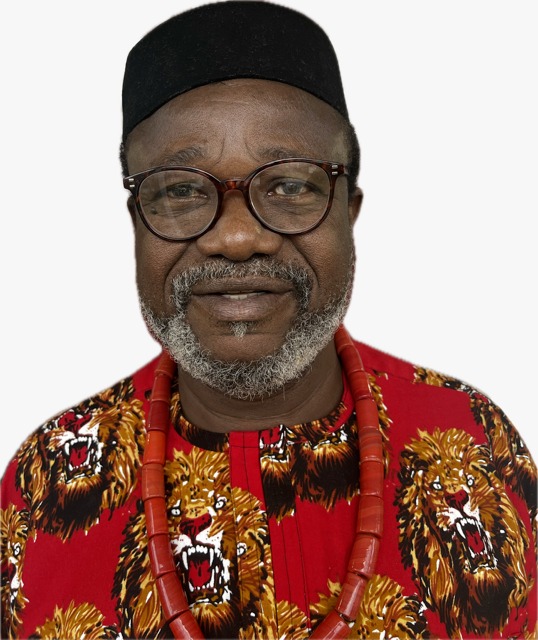
- Prof Anthony Ejiofor, a public affairs analyst and good governance advocate, writes from Nashville, U.S.


