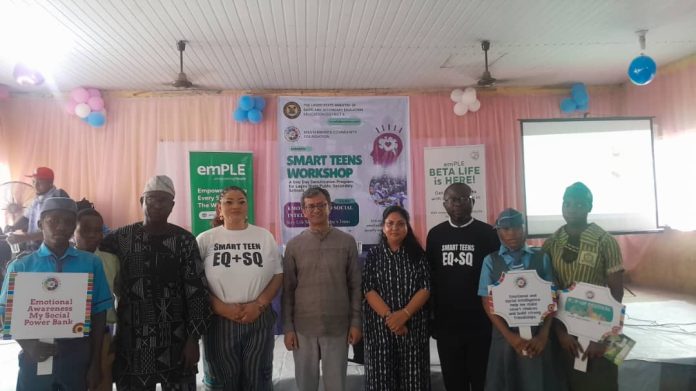
Masterminds Foundation, Lagos Education District 6 host ‘Smart Teens Workshop to promote emotional intelligence
In a bid to equip public secondary school students in Lagos State with essential life skills for the 21st century, Masterminds Community Foundation in collaboration with the Lagos State Ministry of Basic and Secondary Education, Education District 6 has organised a one-day sensitisation program designed to foster emotional and social intelligence among teenagers.
The workshop with the theme: “Emotional and Social Intelligence: Key Life Skills for Today’s Teens,” brought together experts, leaders and students for an immersive, practical and interactive experience.
Vivian Oghene, convener of Masterminds Community Foundation, opened the program with a compelling reflection on the state of modern education. She reminded students that while schools equip them with knowledge in subjects like mathematics, biology, and literature, very few lessons focus on understanding emotions or managing them positively.
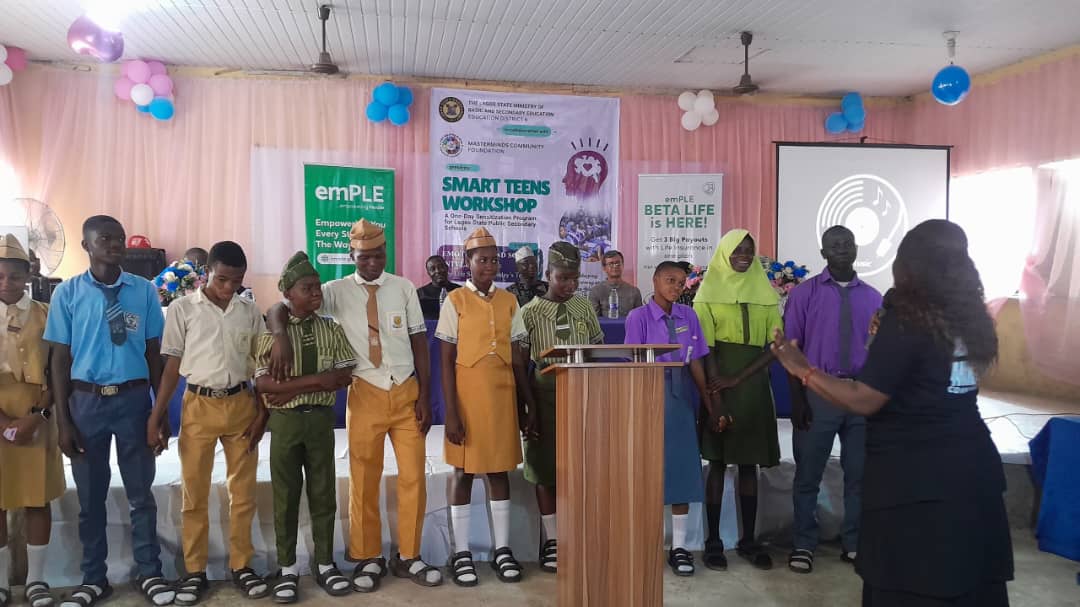
“True education is not about passing exams,” she said. “It is about building character, empathy, and social awareness. The world today does not just need people who went to school. It needs people who are emotionally and socially intelligent, those who can connect, communicate, and care in a diverse world.”
Oghene emphasised that emotional intelligence (EQ) as crucial as intellectual intelligence (IQ), especially in an era increasingly dominated by artificial intelligence. “While machines can process information faster than us, they cannot empathise, understand, or connect. Emotional and social intelligence are what set humans apart and define true leadership,” she said.
She urged teachers, leaders, and corporate partners to prioritise emotional literacy and social growth, noting that the strength of a nation lies not just in knowledge, but in the emotional intelligence of its people. “The future will not belong to the brilliant alone but to those who are kind, self-aware, and emotionally intelligent,” she concluded, setting the stage for the day’s sessions.
Olalekan Oyinlade, Managing Director, emPLE General Insurance, expanded on Vivian’s points, stressing the critical importance of emotional intelligence in personal and professional life. He argued that while artificial intelligence can provide solutions and perform tasks, it cannot feel, empathise, or connect with others.
“If a man can see and develop all we are using in AI, why should we outsource our thinking to it?” he asked. “AI will answer you. AI will do those things. But it does not have feelings, it cannot think independently, and it has no connection with people.”
Oyinlade highlighted that academic brilliance alone is insufficient for success. “You might be a first-class graduate, but without the ability to manage people, control your emotions, mediate crises, and act as a solution provider, your potential will remain limited,” he explained.
He introduced the concept of the “pause skill,” encouraging students to take a moment to process their thoughts before reacting to challenging situations. Using real-life examples, he demonstrated how this simple practice could prevent conflict, sharpen judgment, and build social intelligence.
Another expert from emPLE, Bukola Thomas, the Chief People Officer, spoke passionately on kindness as a core component of emotional intelligence. She described kindness as having the “ripples effect,” impacting both individuals and communities.
“Kindness is not about being nice for recognition or reward. It is about genuine concern for others,” she explained. Thomas elaborated on the scientific benefits of kindness, noting that acts of kindness can trigger hormone responses in the body that reduce stress, regulate blood pressure, and promote overall well-being.
She connected kindness to empathy and leadership, emphasising that tomorrow’s leaders must cultivate this skill intentionally. “To display the highest forms of empathy, you must develop kindness,” she said.
Thomas also challenged students to perform daily acts of kindness for a week, reflecting on their personal and communal impact.
Through interactive discussions, she helped students differentiate kindness from being nice, highlighting that kindness is intentional and selfless, while niceness may sometimes carry an agenda. Her session underscored that emotional intelligence is incomplete without empathy, social awareness, and genuine care for others.
There was a concentration and awareness exercise led by Sukant Pal, Senior Wellness Trainer, The Art of Living who guided students through mindfulness exercises, including breathing techniques and concentration games, to enhance focus, self-awareness, and internal calm.
His session emphasised the importance of mental clarity and mindfulness in supporting emotional intelligence and decision-making.
The Smart Teens Workshop provided a holistic platform for Lagos State students to explore emotional and social intelligence alongside practical tools for everyday life.
Through these expert-led sessions, reflective exercises, and interactive discussions, the students gained insights into managing their emotions, practicing kindness, and building meaningful connections.
The workshop reinforced a powerful message: academic knowledge alone is not enough; the leaders and changemakers of tomorrow must cultivate empathy, social awareness, and emotional intelligence to thrive in an increasingly complex world.