Nigerian women in politics: Why our daughters need to see themselves in leadership
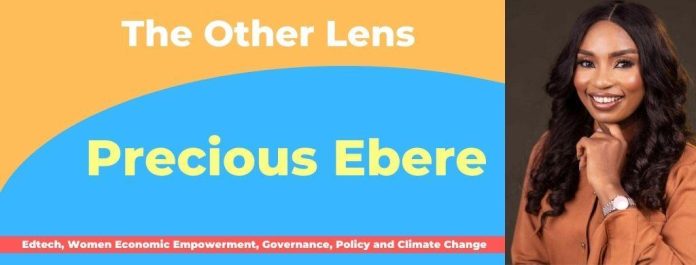
By Precious Ebere-Chinonso Obi
In Nigeria, the absence of women’s voices in political leadership isn’t just a statistic, it is a national crisis with profound consequences for our future. When young Nigerian girls look at our National Assembly, what do they see? A landscape where women are largely absent, where their perspectives are missing, and where decisions affecting millions of Nigerian women are made without adequate female representation.
The stark reality of Nigerian politics
The numbers tell a troubling story. Despite women constituting 49% of Nigeria’s population, female representation in our political institutions remains among the lowest globally. In the current National Assembly, women hold only 3.4% of Senate seats and 4.1% of House of Representatives positions. At the state level, the situation is even direr, only 44 of 990 state assembly seats are occupied by women.
This underrepresentation persists despite evidence from the National Bureau of Statistics showing that states with higher female political participation tend to have better outcomes in education and healthcare. When women are excluded from political decision-making, critical issues like maternal healthcare, girls’ education, and gender-based violence receive inadequate attention.
Barriers beyond the ballot box
The challenges Nigerian women face in politics are systemic and deeply entrenched. Research by the Independent National Electoral Commission (INEC) reveals that female candidates often encounter:
Financial barriers: The high cost of nomination forms and campaign expenses disproportionately affect women
Cultural resistance: Persistent traditional beliefs about women’s roles in leadership
Violence and intimidation: Female politicians report higher rates of political violence and harassment
The experience of former Minister of Finance Dr. Ngozi Okonjo-Iweala illustrates this paradox.
READ ALSO: EdTech for social and economic inclusion: The digital divide multiplier
While her international stature as Director-General of the World Trade Organization inspires millions, her political journey within Nigeria faced significant resistance and scrutiny that male counterparts rarely experience.
Glimmers of hope and progress
Recent developments suggest potential for change. The 2023 elections saw increased female voter participation, with women constituting 47% of registered voters according to INEC data.
The success of female appointees in technical roles from the Minister of Finance to the Director-General of NAFDAC shows that when women break through barriers, they deliver exceptional results. These achievements provide powerful counter-narratives to stereotypes about women’s leadership capabilities.
Transforming our educational foundation
The solution begins in our classrooms and communities. By the time Nigerian girls reach secondary school, many have already internalized limiting beliefs about gender and leadership.
The National Council on Education reports that only 12% of secondary school principals are women, creating a shortage of female leadership role models in educational institutions.
Schools can become catalysts for change by:
- Integrating women’s political history into curricula, highlighting figures like Funmilayo Ransome-Kuti and Margaret Ekpo
- Creating student government programs that actively encourage female participation
- Partnering with organizations that provide leadership training for young women
- Challenging gender stereotypes in career guidance and counseling
Building a new political culture
We need more than just increased numbers; we need to redefine political leadership itself. The qualities often associated with women’s leadership consensus-building, empathy, and inclusive decision-making are precisely what Nigeria needs to address our most pressing challenges.
True representation must also account for Nigeria’s diversity, ensuring that women from different ethnic groups, religions, and socioeconomic backgrounds have equal opportunities to participate in political leadership.
The way forward
The recent constitutional review process presents an opportunity to address structural barriers through measures like: Gender quotas in political party nominations; Public funding for women candidates; Stronger enforcement against political violence targeting women.
But legal reforms alone are insufficient. We need cultural transformation that begins in homes, schools, and communities. When parents encourage their daughters’ political ambitions, when teachers nurture girls’ leadership potentials, and when communities support women candidates, we create an ecosystem where female political participation can thrive.
Conclusion: Our collective responsibility
The underrepresentation of women in Nigerian politics isn’t just a women’s issue, it’s a national development issue. Every daughter who cannot see herself in leadership, every community that fails to benefit from women’s perspectives, and every policy debate that lacks women’s voices represents a loss for our nation.
As Nigeria strives to achieve its potential, we must recognize that empowering women in politics isn’t about token representation. It’s about harnessing the full talents of our population to build a more inclusive, effective, and equitable democracy.
The time for change is now. Let us work together to ensure that the next generation of Nigerian girls grows up in a country where they can see themselves not just as voters, but as leaders shaping our nation’s future.