



Analysing HolonIQ’S recent “Education in 2030” report
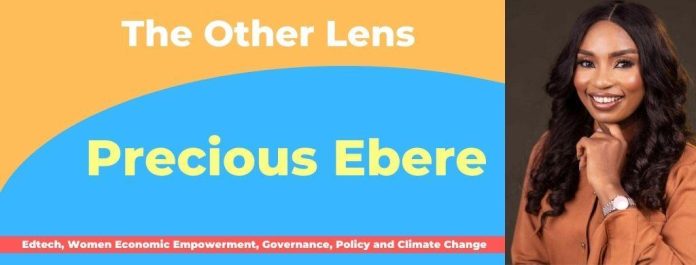
By Precious Ebere-Chinonso Obi
HolonIQ’s recent “Education in 2030” report presents five compelling scenarios for the future of learning and talent in a rapidly transforming world. While their analysis of the global education landscape heading toward a $10 trillion industry by 2030 is comprehensive, it prompted me to reflect on how these scenarios might unfold differently across West African contexts and what critical perspectives might be missing from primarily Western-oriented future planning.
As someone who has spent four years designing educational technology solutions through DO Take Action across Nigerian and West African ecosystems, I find myself both inspired by their vision and concerned about the gaps between global scenarios and local realities.
The missing sixth scenario: “Community-rooted innovation”
HolonIQ’s five scenarios – Education-as-Usual, Regional Rising, Global Giants, Peer to Peer, and Robo Revolution – each capture important trends. But from my experience working to mobilize collective action through educational technology in Nigeria, I believe there’s a sixth scenario that deserves equal consideration: Community-rooted innovation.
This scenario acknowledges that the most transformative educational changes in regions like West Africa don’t emerge from scaled technology solutions or institutional reforms alone, they come from innovations that honour existing community structures while strategically introducing technological tools that amplify local knowledge systems.
What this looks like in practice
Through developing solutions like The STEM Tree (which leverages behavioral patterns by connecting STEM cultivation to climate adaptation behaviors), Allo (an inclusive audio-visual instructional device with pre-recorded lessons), and Edu-Data (an open-source portal for real-time educational data analysis), I’ve observed that successful interventions often combine:
- Traditional knowledge systems with modern pedagogical approaches.
- Community networks as the primary infrastructure for learning, rather than institutional structures.
- Mobile-first technologies designed for intermittent connectivity and shared device usage.
- Local language integration that goes beyond translation to honour different ways of conceptualizing knowledge.
Regional rising: The West African reality check
HolonIQ’s “Regional Rising” scenario resonates most strongly with what I’m seeing across West Africa, but with crucial differences in how regional collaboration actually works on the ground. The report notes that “Asia and Africa are likely to drive the biggest changes in education attainment over the next decade,” with Africa expected to deliver nearly 90 million more primary educated people through to 2030. But these numbers tell only part of the story.
The infrastructure innovation gap
While the report mentions that approximately 4 out of 5 secondary schools in Africa lack electricity access and over 90% lack appropriate science labs, it underestimates how this constraint has become a catalyst for innovation rather than just a barrier.
In my work across Nigerian classrooms, I’ve seen educators develop remarkably sophisticated offline-first pedagogical approaches. For example, Allo, our inclusive audio-visual instructional device—enables learner-centered experiences with pre-recorded interactive lessons that work without electricity or internet. When combined with the STEM Tree methodology, we’ve found that girls in northern Nigeria often master complex STEM concepts by first understanding them through behavioral patterns they already recognize from environmental practices.
This suggests that the “Regional Rising” scenario in West Africa won’t just be about building traditional educational infrastructure, it will be about creating entirely new models of technology-enhanced learning that work within existing social and economic realities.
Global Giants vs. Local Champions
HolonIQ’s “Global Giants” scenario envisions technology giants capturing the $10 trillion global education market through “ubiquitous brand recognition and the scale to achieve significant efficiencies.”
From a West African perspective, this scenario raises critical questions about educational sovereignty and cultural relevance that the report doesn’t fully address.
The cultural localization challenge
During my Master’s studies in Social and Public Policy at Cardiff University, I became acutely aware of how global educational solutions often fail to account for fundamental differences in how knowledge is constructed and transmitted across cultures.
In northern Nigeria, for instance, where net attendance rates for girls are below 50%, the most effective educational interventions I’ve seen don’t rely on global platforms. Instead, they leverage existing social structures, women’s cooperatives, religious networks, and extended family systems to create learning opportunities that parents and communities actually support.
This means the future of education in West Africa may be less about Global Giants scaling solutions and more about Global Giants learning to genuinely partner with local innovators who understand cultural contexts.
The Peer-to-Peer Promise and Peril
The report’s “Peer to Peer” scenario, describing learning through “rich, personalized human to human experiences,” aligns with traditional West African educational approaches in interesting ways.
However, the report’s focus on blockchain credentialing and global knowledge marketplaces misses how peer-to-peer learning actually functions in resource-constrained environments.
Community-driven credentialing
Through my current CISA training, I’ve learned to think systematically about how information and credentials are verified and trusted. In West African contexts, trust often operates through community networks rather than technological systems.
The most successful “peer-to-peer” educational initiatives I’ve observed combine technological tools with existing social verification systems. Through developing Edu-Data, our open-source portal that mines and visualizes real-time educational data, we’ve learned that data-driven insights are most powerful when they can be understood and acted upon by entire communities, not just institutional administrators. When young women in our STEM Tree programs demonstrate technical skills to their mothers and grandmothers, that community validation often carries more weight than formal certificates.
Robo Revolution: Leapfrogging vs. Bridging
HolonIQ’s “Robo Revolution” scenario envisions AI driving “a complete reversal in ‘who leads learning,’ with virtual tutors and mentors structuring learning paths.” While this technological transformation is already visible in West African contexts, it’s happening in ways that might surprise Silicon Valley observers.
AI as community amplifier
Rather than replacing human teachers (which would be impossible given our teacher shortages), I’ve seen AI tools work best when they amplify the collective intelligence of learning communities.
For instance, Allo, our audio-visual instructional device demonstrates how pre-recorded, interactive lessons can function as AI-enhanced tutors that work offline and in local languages. These tools help entire families engage with educational content together, particularly in numeracy and literacy. The technology doesn’t replace the grandmother’s wisdom about traditional medicine; it helps connect that knowledge to modern scientific frameworks through the STEM Tree approach.
The financial reality behind the scenarios
The report projects massive growth in education spending, with global expenditure reaching $10 trillion by 2030. But it doesn’t adequately address how this growth will be financed in regions where families often spend 20-30% of their income on education while still struggling to afford basic school supplies.
Designing for financial sustainability
At DO Take Action, we’ve learned that any educational technology solution must have a clear path to financial sustainability that doesn’t exploit users or perpetuate dependency. This often means:
- Revenue models aligned with community outcomes rather than individual user payments
- Partnerships with local businesses that see educated workers as valuable investments
- Government collaboration that strengthens rather than bypasses public education systems
Looking forward: A West African Vision for 2030
While HolonIQ’s scenarios provide valuable frameworks for thinking about global trends, the future of education in West Africa will likely be shaped by hybrid approaches that don’t fit neatly into any single scenario.
What success looks like
By 2030, I envision West African educational ecosystems that combine:
1. Mobile-first technologies like Allo designed for intermittent infrastructure and shared device usage
2. Community-rooted pedagogies like the STEM Tree that honour traditional knowledge systems while introducing global competencies
3. Regional collaboration networks enhanced by tools like Edu-Data that share successful innovations while respecting local variations
4. Financially sustainable models that strengthen rather than replace existing social structures
5. AI-enhanced learning that amplifies human wisdom rather than replacing it
The path forward
The most exciting developments won’t come from implementing global scenarios in local contexts. They’ll come from West African innovators creating entirely new models of technology-enhanced learning that other regions ultimately adopt.
As the report notes, Africa’s youthful population is projected to comprise over a quarter of the global labour force by 2050. The question isn’t whether global education scenarios will work in Africa, it’s whether global education leaders are prepared to learn from the innovations already emerging from African contexts.
The future of education may well be written not in Silicon Valley boardrooms or European policy centers, but in the creative problem-solving happening every day in classrooms across Lagos, Accra, and Abuja.


