



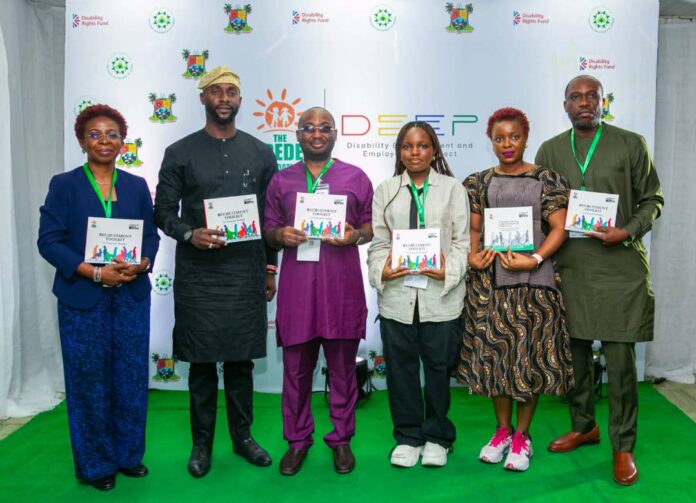
The Irede Foundation unveils recruitment toolkit for Persons with Disabilities
By Eberechi Obinagwam
The Irede Foundation has unveiled Recruitment Toolkit for Persons with Disabilities that seeks to bridge the policy practice gap by translating broad government policies into clear, actionable steps that can be implemented on the ground and ensure that legal mandates are not just theoretical but result in real change.
The unveiling took place at the DEEP conference 2025 Agenda with the theme: ‘Driving Inclusive Employment Through Partnership, Innovation, and Policy Action.’ in Lagos.
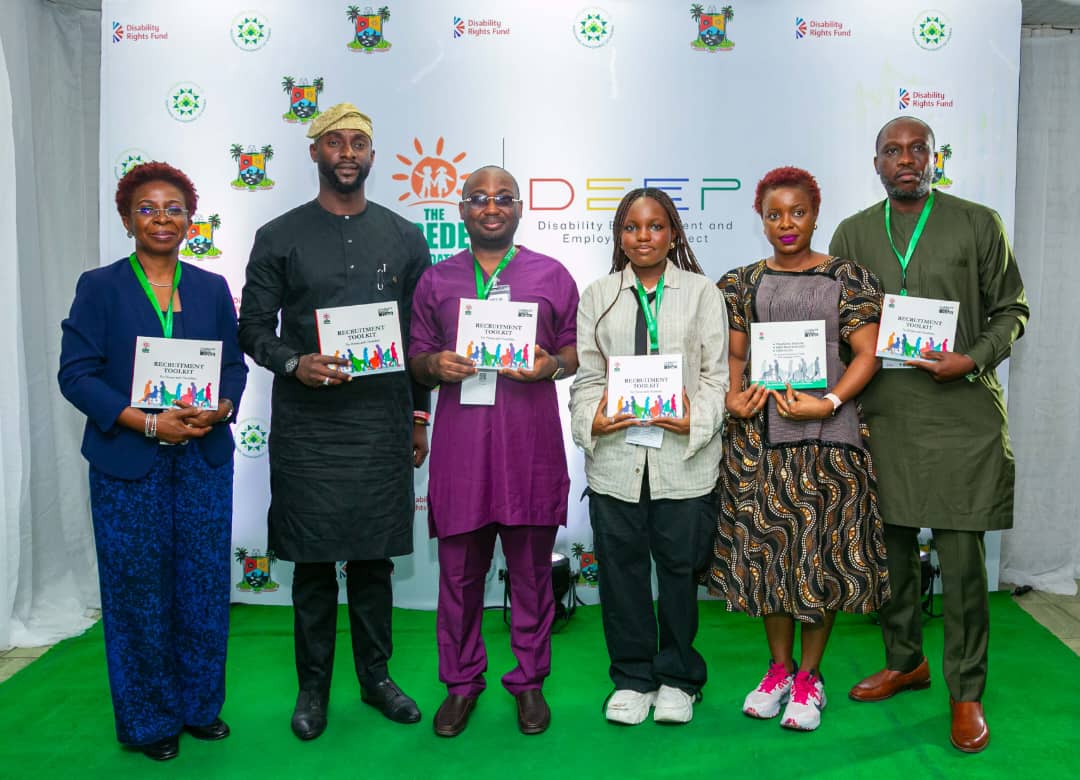
The Recruitment Toolkit which also aims at providing detailed guidelines for employers, hiring managers and HR professionals from designing inclusive job advertisements to managing the recruitment process and ensuring that every step is accessible to and inclusive of Persons with Disabilities (PWDs) offers practical recommendations for creating comfortable and functional workplace accomodations, that guarantee that once hired, employees with disabilities have the necessary support and facilities to excel.
Adenike Oyetunde-Lawal, General Manager, Lagos State Office of Disability Affairs (LASODA) said the conversation on inclusion has changed lives, especially when it comes to employment and employability realities with paedophiles. ” There is a lot of work to be done away from the opportunities and the environment that we must create. And I know that organisations like The Irede Foundation have continued to invest to improve the mental health of paedophiles when it comes to employment and employability. Our position at the agency places us in very interesting spots, where almost every time, in about 10, I need a job, only two want to retain a job.
“And the reasons vary from person to person. So when opportunities of this nature come up, you will find me in my personal capacity, share, listen, learn and know how we can change that narrative and increase the credibility. As we speak today, Lagos State still has the highest employer of paedophiles across Nigeria,” she said.
According to her, “We want to increase the level of PWDs in paid employment. Most of those who are employed unfortunately are low level employees. Teaching has also a high percentile, but we want that to increase, both in banking, medicine, finance, and telco.”
She urged PWDs to ensure that they put forward their best when the opportunities come, “That way the reality is easier for our employers to ask do you have more people who you can refer to us. I see it fails almost on a monthly or biannual basis when PWDs are exceptional in their jobs. And they come out to say we want this kind, we don’t want the other kind. And to be honest with you, the reasons why PWDs may not retain the employment differ from person to person.
“It’s one thing for employers to hire persons with disabilities and another to show full commitment to their inclusion,” she said.
Adenike disclosed that Lagos and other states are working on getting massive grants and loans from governments so that they can increase the number of PWDs that they employ. “So, the conversation is ongoing. It’s not a conversation that can be left solely for the government. Lagos has a little over a hundred and something thousand in high quality employment and civil service.”
Mobolaji Ogunlende, Commissioner for Youth and Social Development, Lagos, said disability inclusion in the workforce is not a privilege, it is a fundamental right and an absolute necessity for sustainable social economic growth.
He said: “We cannot overemphasise this and we know that as a government, as a people, as organisations, there’s a lot more we can do. A lot are trying their best, just as an example, as a government we have been very intentional to say new buildings coming up should ensure that they cater for people with disability.
Again to emphasise that there’s always room for improvement and the more we are able to spot it, identify it and take action, then we know that we are on the right path. Disability inclusion like I said in the workforce is not a privilege, it is a fundamental right and an absolute necessity for social economic growth. As we envision the future of work, we must ensure that people, that persons with disabilities are not just considered but actively included.”
Mobolaji said the conference brings together a diverse and crucial group, policy makers, most importantly the HR professionals, organisations of persons with disabilities, civil society actors and private sector leaders and more importantly all those that are involved. “We’ll see this at some point online because we are in the social media space. Our collective presence here is to spark dialogue and catalyse concrete actions towards disability inclusive employment.”
He said the multi stakeholder collaboration is vital for bridging gaps and dismantling the barriers that have for too long hindered meaningful inclusion.
“As a government, we remain deeply committed to championing youth and disability inclusion, which again is the reason why I’m here and the reason why the General Manager is here. And through progressive policy reforms, strategic partnerships and targeted empowerment programmes, we are actively building a more inclusive society where every individual, regardless of ability, can contribute meaningfully and thrive in our society.”
Speaking regarding the recruitment toolkit, he said is a game changer.” It will provide practical frameworks to support employers in implementing truly inclusive hiring processes, guiding both public and private sector employers to open doors wider for qualified persons with disabilities.
“As we continue on this crucial journey of inclusion, it is very vital to remember that true empowerment demands more than just opportunities. It requires all of us, all of us in here, to create environments that are genuinely accessible, to provide reasonable accommodation, to actively eliminate stigma, and crucially to focus on immense strengths and unique perspectives that persons with disabilities bring to the table.”
Crystal Chigbu, Executive Director, The Irede Foundation, said initially the journey for them was more of one to just ensure that the children find themselves in schools.”But beyond schools, we realised that the world is actually bigger than just being in schools and after they are done with schools, they need to get employment and after they have employment, some of them would choose to marry, some would choose to have babies. And so the question for me was how do we connect the dots and ensure that children, young people with disabilities are catered for.
“And so, the catering is not one of sympathy and giving alms. We started thinking of ways to ensure that this support was more of removing barriers and we do have a lot of partners here present in the room and people that have joined us online that have made this very possible.
Today is one of reflections for you to think about how you engage with persons with disabilities and we do have HR managers in the room, employers of labour and different people that can change the narrative when it comes to employment of young persons with disabilities.”
She added that the Conference served as a vibrant platform for multi-sector collaboration, where stakeholders from the public, private, and civil society sectors pledged to adopt inclusive hiring practices and utilize the toolkit to increase disability representation in the workforce. “The DEEP Conference is not just a conversation, it’s a call to action. We are building a future where talent is not limited by disability, but empowered through opportunity.”
She also used the medium to thank everyone that have believed in them, from ACT Foundation to Disability Rights Fund, etc.
Shuhda Muhammed, Managing Director, Tripoint Travels Ltd, added that there is a super power in persons with disabilities and urged that they look out for them “Once ability to do something is taken from you, a super power is given to you generally. So, what I tell them when they come to me is that there is a super power in you that you may not be able to know, so, I want to see them in you.”
She urged organizations, individuals to help ensure that people with disabilities find those super powers in them.
The conference concluded with commitments from several organizations to implement the toolkit and begin employing PWDs, marking a bold step forward in the movement for disability inclusion in Nigeria’s labor market.


