



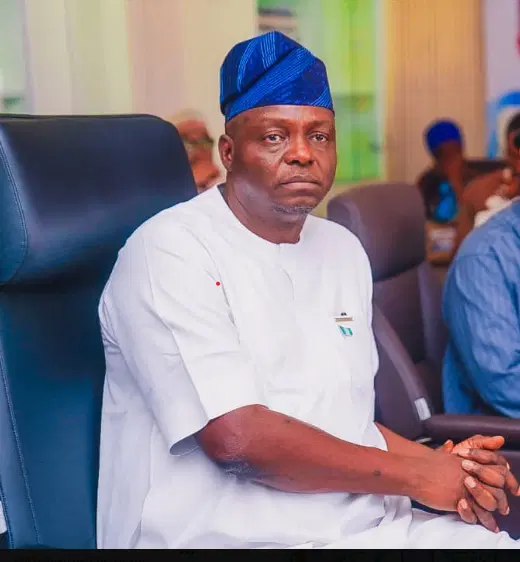
With the emergence of Humanitarian Minister, Professor Nentawe Yilwatda as National Chairman of the All Progressives Congress (APC), another chapter has opened in the unstable politics of the party’s chairmanship and leadership structure.
By Emeka Alex Duru
With the emergence of Humanitarian Minister, Professor Nentawe Yilwatda as National Chairman of the All Progressives Congress (APC), another chapter has opened in the unstable politics of the party’s chairmanship and leadership structure.
Yiltwada, former Resident Electoral Commissioner (REC) of the Independent National Electoral Commission (INEC) in Benue State, was elected by the National Executive Committee (NEC) of the party on Thursday, July 24. He replaces erstwhile Kano state governor, Dr Abdullahi Ganduje, who resigned on June 27.
Chairman of the Progressives Governors Forum (PGF), Governor Hope Uzodinma of Imo State, made the nomination for Yiltwada’s election and he was seconded by the Speaker of the House of Representatives, Dr Tajudeen Abbas. The election was not a product of robust politicking but in line with the desires and thinking of President Bola Ahmed Tinubu.
The emergence followed same path as that of his predecessor, Ganduje, whose nomination followed a forced resignation of the erstwhile National Chairman, Senator Abdullahi Adamu, in August 2023, barely three months after the inauguration of the Tinubu administration.
In the 2023 episode, the Senate President Godswill Akpabio had at the commencement of the meeting moved a motion for an amendment of the agenda to empower the National Working Committee (NWC) to make realignments and take care of some vacancies in the party’s leadership structure. The suggestion was initially greeted with strong resistance. However, Governor Uzodimma, calmed frayed nerves and then seconded Akpabio’s motion to the effect that NEC should only fill the chairmanship and secretary positions, while leaving the rest for the NWC.
Aside President Tinubu and Vice President Kashim Shettima, some of those who attended the meeting were pioneer National Chairman of the APC, Bisi Akande; Secretary to the Government of the Federation, SGF, Senator George Akume; Chief of Staff to the President, Femi Gbajabiamila; Senator Ahmad Lawan; Senator Aliyu Wamakko; Dr Abdullahi Ganduje; Senators Jibrin Barau, Adams Oshiomhole, Ali Ndume and Opeyemi Bamidele.
READ ALSO:
UPDATED: Prof Yiltwada, ex-Benue REC, Humanitarian Affairs Minister, is APC’s new national chairman
Governors at the event were Yahaya Bello (Kogi), Babajide Sanwo-Olu (Lagos), Uzodimma (Imo), Abdulrahman Abdulrazaq (Kwara), Umara Zulum (Borno), Mai Mala Buni (Yobe), Uba Sani (Kaduna), Hyacinth Alia (Benue), Lucky Ayedatiwa (Ondo Acting Governor), Umar Bago (Niger), Biodun Oyebanji (Ekiti), Dapo Abiodun (Ogun) and Deputy Governors of Nasarawa and Ebonyi.
Ganduje up, Abdullahi Adamu down
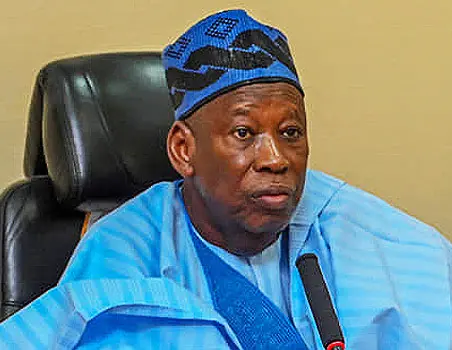
In his acceptance speech, Ganduje, promised to lead the party with integrity, and that the affairs of the party would no longer be business as usual. Pledging to ensure greater commitment to internal democracy and reform, he said he would deploy high-end technology for membership registration, adding that the party cannot have over 41 million members and yet managed to score a little over 8 million in the presidential election.
He promised to promote party unity, ensure internal democracy, carry out reforms in alignment with the current political landscape, deploy higher technology for membership registration, and ensure a level playing field for all party members that want to contest elections under the party’s platform
The choice of Ganduje as APC national chairman, drew large scale criticisms against the backdrop of stinking corruption and bribery allegations against him – a development the Peoples Democratic Party (PDP) said, confirmed that the APC is a cesspit of corruption and a haven for thieves, bribe takers and treasury looters. Notwithstanding, the former Kano governor, took over, ending the turbulent period of Abdullahi Adamu as chairman.
Adamu’s ouster was procured by Governor Uzodimma at the instance of President Bola Tinubu, on Sunday, July 16. The removal was the high point of the crisis of confidence between Tinubu and the erstwhile Chairman. It was a carry-over of the rift between the two since the 2022, presidential primary of the party during which Adamu supported former Senate President, Ahmed Lawan, for the party’s ticket in the February 25, 2023 presidential election. Tinubu never forgave Adamu for that action.
The impasse continued after the election, with Adamu complaining of being sidelined in many strategic decisions affecting the party. It therefore, did not come to many as a surprise that the President and his henchmen eventually moved against the former Nasarawa governor
Adamu, emerged the national chairman at a convention held at the Eagle Square in Abuja, on March 26, 2022. His selection was by consensus as many aspirants stepped down in deference to the then President Muhammadu Buhari. Other officers of the party were thrown up in the same manner.
Adamu in, Oshiomhole out
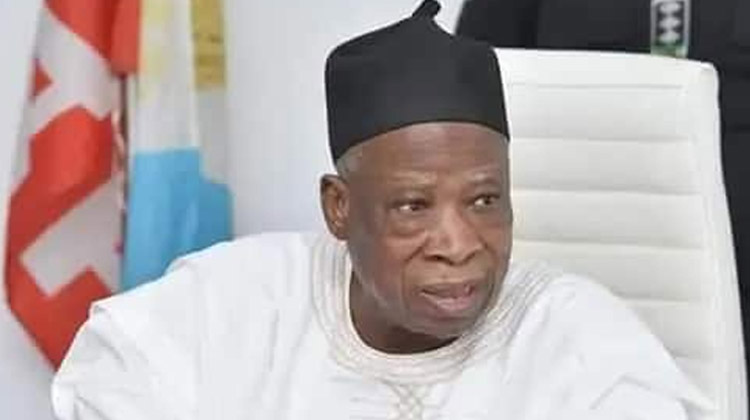
The exercise took place nearly two years after the Senator Adams Oshiomole-led National Working Committee (NWC) was dissolved in breezy circumstances. Adamu, who was at the time, a senator representing Nasarawa West was President Buhari’s choice for the job. Clinching the post was thus, an easy run for him, following the withdrawal of his co-contestants.
With his election, Adamu replaced Oshiomhole who was sacked in June 2020. Between the time Oshiomhole was kicked out and when Adamu took over, former Yobe state governor, Mai Mala Buni was appointed to administer the affairs of the party.
Oshiomhole upstages Odigie-Oyegun
On the June 23, 2018 Oshiomhole was selected as the national chairman of the party in same way his successor, Adamu emerged. Oshiomhole’s emergence was already known to Nigerians three weeks to the convention.
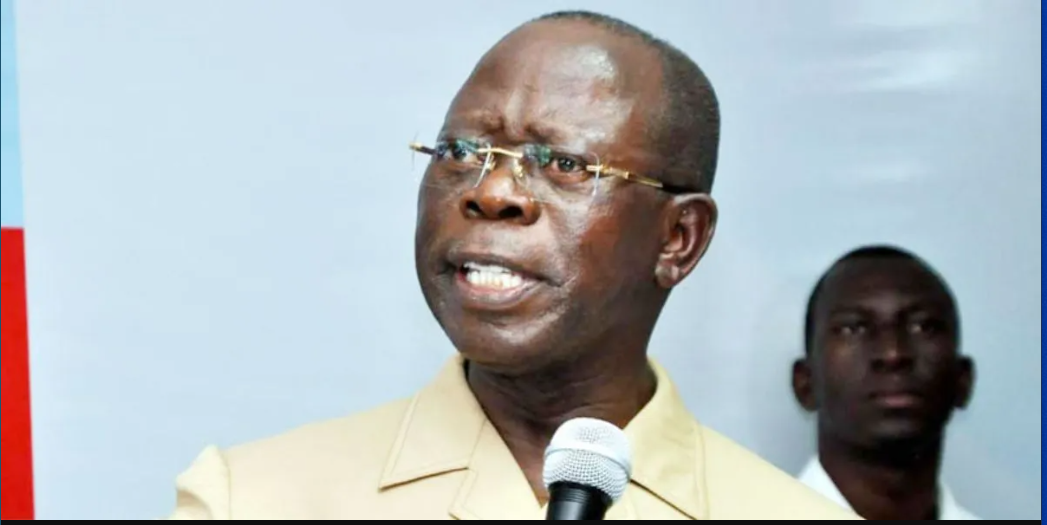
In the outing that was characterised by undisguised coercion, the pioneer National Chairman, John Odigie-Oyegun, was forced to withdraw from going for a re-election, to clear the coast for Oshiomhole, who just exited as Edo State governor. As in the case of Adamu, Oshiomhole was flaunted as President Buhari’s favourite for the position.
Oyegun, who pulled out of the race, said he was doing so in the interest of the party, stressing that though he would have loved taking another shot at the office, he was opting out so as not to be part of the problems confronting the party. “I do not intend to be part of the problem for APC to solve. It is for this reason that I hereby declare that I will not be seeking re-election as the national chairman”, Oyegun remarked. The former Edo governor eventually resigned him membership of the APC recently and has reportedly joined the emerging coalition of opposition political parties, the African Democratic Congress (ADC). The ruling party has ever since not had a competitive national convention for election of its principal officer, preferring rather with selection, endorsement and consensus candidacy.
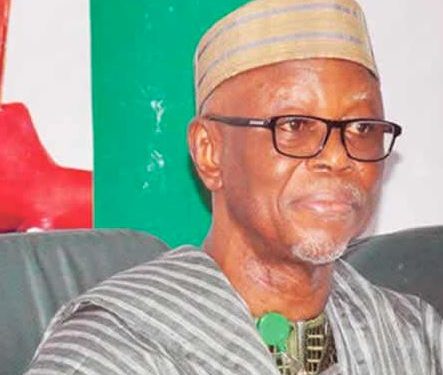
How far can Professor Nentawe Yilwatda go?
There is no suggestion of the new chairman toeing a different path from his predecessors. He attained his position at the behest of the President and will remain in office as long as he continues to enjoy his support. APC like the massively shrinking PDP has no exciting record of internal democracy. The President’s disposition determines the tenure of any elected or appointed member of the party and the government.
Professor Yilwatda has glittering record as a distinguished academic and passionate advocate for humanitarian and poverty reduction initiatives. Born on August 8, 1968, in Dungung, Kanke Local Government Area, he hails from a lineage of service, being the son of the Late Rev. Toma Yilwatda.
He attended Boys’ Secondary School, Gindiri, where he laid the foundation for a lifelong pursuit of knowledge. His academic journey saw him obtain his first degree from the Federal University of Agriculture, Makurdi, followed by a master’s degree from Abubakar Tafawa Balewa University (ATBU), Bauchi, and a doctorate from the University of Nigeria, Nsukka, specializing in Electronic and Computer Engineering.
Yilwatda was a teacher at his alma mater, the Federal University of Agriculture, Makurdi, where he served for over 26 years. He had also played a pivotal role in the digital transformation of Nigeria’s public and private sectors. His consultancy work spans multinational organizations and global development partners such as the European Union, UNICEF, the World Bank, and TECHVILE USA.
He was appointed Resident Electoral Commissioner with the Independent National Electoral Commission (INEC) in 2017.
Among his admirers, Prof. Nentawe Goshwe Yilwatda is not just a leader, but he is a catalyst for change, a bridge between technology and governance, and a beacon of hope for millions striving for a better future. How far he can bring this outstanding resume in reforming the intrigue-infested ideology-barren APC, remains another thing.


