



Restructure Nigeria now! Electing a new regime on the foundation of the flawed 1999 Constitution will be like pouring new wine into old wine bottle.
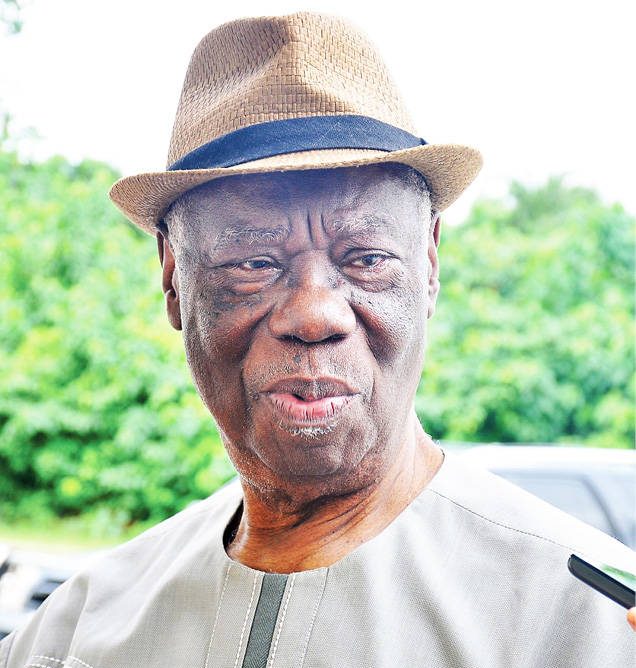
By Dr. Uma Eleazu
The way things are going security wise, this country will be completely ruined by 2023. Without prejudice to the suggestions by the conclave of Elders, gathered for the Inclusive Security Dialogue, organized by Vision Africa and the Global Peace Foundation ( see Sunday Vanguard, Jan, 23, 2022). There is now no doubt that this country is in a mess. Only those who do not wish this country well will allow her to drift into a national election as being planned by the Buhari government and the political parties. The issue of Reconciliation, Marginalization, Inclusion – whether of ethnic nationalities, women, youth or what have you, has been bandied around for a long time.
President Jonathan spent our hard earned billions of dollars to hold a conference on Reconciliation and peace building in the nation. What happened? The present Buhari administration simple ignored it. Now, the above mentioned gathering of eminent Nigerians is proposing yet another National Reconciliation Conference. I disagree. The rot in the Nigerian political system was already apparent under Jonathan, hence the 2014 Conference. We don’t have money to lavish again. But we cannot be postponing the evil day. The Psalmist asked, “ If the foundations be destroyed, what can the righteous do?” The time to RESTRUCTURE IS NOW. Electing a new regime on the foundation of the flawed, discredited and undermined 1999 Constitution will be like pouring new wine into old wine bottle. You know what will happen; when the new wine ferments, the old wine skin will burst. !
WHAT NEEDS TO BE DONE?
I believe that all those dignitaries who attended this last Inclusive Security Dialogue love Nigeria and will want Nigeria to continue to be ONE political COMMUNITY.
Many people who speak against Restructuring the country tend to think restructuring means dismembering Nigeria. It is not. Yes, it will involve the present geopolitical demarcations, depending on the number of ethnic nationalities that will want self governing status within the Nigerian political community. It will involve redistribution of powers between the General. Or Federal Government and the constituent ethnic-states within it. In saying that, some have emphasized either the landmass or the distribution of powers among the different tiers of government , (devolution of powers) as opposed to separation of powers between different sections of the government – legislative, executive and judiciary. Restructuring must encompass all the above and more.
It must also take into consideration, the demographics, the economic and social history, the geography of the country and the colonial social fabric that produced our earlier leaders who started seeing themselves as “Nigerians” . It will involve redefining on a philosophical or ideological level, who is a Nigerian?.
Read Also: Elections: Putting the cart before the horse
What we are witnessing is a steady erosion of the values inherent in the system we inherited. Besides, the structures (systems and Processes) that the British built to hold this country together have been destroyed – the socio- cultural fabric, (schools and the native administration system) , infrastructural installations (like roads, railways and habours), Public services,(the bureaucracy, military, police, a judiciary etc) and not the least, the normative order embodied in the framework of laws and ordinances, that undergirded the constitution inherited at Independence are all lost. The notion of a Democratic Representative and Responsible Government is lost on the present generation of legislators both at national and state levels. Public funds are treated like personal property while ministries, Departments and agencies are turned into fiefdoms by cabals.
The generation in the National Assembly today do not know when we received what was termed internal self government in 1956 for the Western and Eastern Regions and 1959 for the Northern Region, and practiced parliamentary democracy otherwise known as Responsible Government. I will be surprised if there is any legislator in the whole of the National Assembly today who knows anything about or participated in the parliamentary system of government of those days. I e prior 1966. Alh. Tanko Yakasai can bear me out. What they know and have experienced is military dictatorship and the short-lived Presidential system of Alhaji Shehu Shagari. The urbane, humane, polite debating approach to politics has withered. Therefore any attempt at restructuring the country has to be holistic in approach; it is more or less a fresh start on a clean slate to build a civic culture of democracy. We need to go back to the basics to lay the foundations for the next generation what democratic governance is all about.
Current Reality:
- The cost of governance, we must admit , is simply too much and we must redesign and adopt a less expensive system.
- There is currently a lack of unifying national identity. Ethnic identity is very strong. In the last twenty years, there has emerged more cleavages than our in- born tribal proclivities. Neither Islam nor Christianity has been able to override ethnicity. Besides there has appeared new divisions within Islam and Christianity. Ethnicity has acquired such political salience that even within what was considered one ethnic group, there are now a resuscitation of “ancient kingdoms” struggling to be recognized as entities within the body politic.
Our brief history and experience in the past hundred and twenty years, show the depth of the chasms that divide us and also the potentiality of crafting a common co-existence as a people. . In addition to this, we have varied cultural norms and values underlying how different ethnics perceive issues and interpret events. Past attempts at creating socializing mechanisms to weld future generations together – unity schools, National youth service corps, federal character principle et cetera, have been desultorily implemented or even abandoned.
3 . We have no collective vision of who we are or where we are going with this contraption called Nigeria. Political leaders in the so called political parties which should have by their ideology midwifed the emergence of a collective vision of the future as a people, are busy in primitive accumulation of wealth which is frittered away in frivolities in foreign lands; with no thought for the future of our children or nation.. The horizon of the typical Nigerian politician is four years – next election. Thus the last sixty years of living together since Independence has not produced a Nigerian identity nor a unifying ideology. So, the sooner we give ethnic nationality some level of constitutional recognition, the better for us.
- Lack of TRUST between the people and their political leaders. On the level of practical politics, because of our inability to conduct credible elections, people tend to lose interest in things political; leaders are seen as economic predators that swoop down every four years, scatter palm fronds and the electorate, like sheep follow the man carrying the palm fronds. Once elected , they disappear and migrate to Abuja. That perception is not entirely wrong, unfortunately. There is no political nexus between the people and their so called representatives. As a result leaders really do not know the problems at the grassroots let alone effectively represent them in the legislature. The electoral commission unfortunately is not saddled with the responsibility of checking the qualifications of contestants – personal character, educational or otherwise. In fact the INEC is not mandated to check into the eligibility or otherwise of candidates. I don’t know how that function was left to political parties.? Concepts like integrity, responsibility, political competence, past experience and track record in community affairs are not considered. A centralized electoral system is not good for a federal system as large as Nigeria. It needs to be decentralized.
5 When elections are not credible, and people know that the results announced by INEC or through the judicial system, do not reflect the wishes of the people as expressed in their votes, people tend to see the government as illegitimate, and in turn they are ready to use illegitimate means to exercise their own “bit of the action” – which is the origin of thuggery and criminality in politics. On top of that, when an illegitimate government is unable to govern, that is, cannot effectively collect taxes ; cannot provide the very basic needs – health facilities, educational resources, roads, transport etc, cannot protect lives and property, people resort to self help which is costly; in short, a government that cannot manage the complexities of modern governance, the result is systemic failure.. The same goes for the issue of security. When a government cannot secure the lives and property of its citizens, people resort to self help which leads eventually to anarchy. That is where we are now.
In a democracy, political recruitment and leadership selection are through the electoral process , but where money determines who can run for office, there is no way the process can produce good leaders. As it is now, in Nigeria the social contract between people and government has broken down irretrievably because of series of corrupted electoral process , and compromised judicial system resulting in illegitimate, and irresponsible governments at all levels. Some governors will not even allow local government elections to hold, they prefer to appoint “transitional chairmen who will do their bidding, so that they can pocket what is allocated from Abuja to each LGA. People see all this for what it is – outright stealing from the people, but dare not speak out for fear of being snuffed out by ‘unknown gunmen’. So the stealing from the people goes on right before their eyes. People no longer trust their government because they know they have been cheated out of their votes.
The Nigerian Oligarchs (Governors and ex governors; ex-senators and representatives). all have lots of money and influence. Their source of their wealth is either prebends acquired during the military regimes or through crime ( drugs. Oil subsidy, predatory banking and “419”). Any wonder quite a number of our legislators are on FBI’s wanted list, or being chased about by our own toothless bulldogs – EFCC and CCB, and what remains of the Police CID. Any new constitution must find ways to screen such political pimps from the electoral process.
This President has barely less than sixteen months to leave office, and there is still something that can be done without doing too much havoc on the incumbent administration. It is to RESTRUCTURE this country for better administration of law, order and good governance – at least let us start the process. . I want to believe that a lot of ground work has been done by the 7th, 8th and 9th National Assembly between 2008 and now.
PROPOSED APPROACH TO RESTRUCTURING:
Presidential Action: Send an Executive Bill to the National Assembly to amend Section 153 of the Constitution by Creating a Constitutional Review Commission to be made up of 10 Retired Justices of the Supreme Court and not more than 20 Senior Advocates of Nigeria. Their main function will be to act as a review chamber , the Draft Constitution from the CDC (see below) bring together, the amendments made by the NASS so far, the Report of the 2014 Conference and any other outstanding constitutional issue, study them and produce a draft new Constitution)
By executive order, appoint a CONSTITUTIONAL DRAFTING COMMITTEE (CDC) made up as follows.
Membership of CDC: Nigeria Bar Association; (15)
Nigerian Association of Chambers of Commerce ,Industry and Agriculture (10)
Manufacturers Association of Nigeria (10)
Institute of Chartered Accountants of Nigeria (10)
Nigerian Labour Congress (20)
Academic Staff Union of Universities (10),
Nigerian Union of Journalists ; the Fourth Estate(10)
Nigerian Medical Association(5)
FIDA(5) Women in Business (3)
National Association of Nigerian Students (15) ;
Youths (20 from each of Arewa Consultative Union; Ohaneze Ndiigbo; Afenifere and Middle Belt Forum, and Lower Niger Congress )
TASK: 1. To study and review the following background papers
i) Report of the 2014 Constitutional Conference.
ii) Oputa Commission Report
iii) Original Hicks Commission Report on Revenue Allocation
iv) The 1960/63 Constitution;
v) Aburi Report and Decree 8
vi) The 1979 Constitution
vii) Reports from the Regional Assemblies
TASK 2
To put up a draft constitution (in prose) what Nigerians want and in their opinion, what will make for peace, order, good governance, economic development and the well being of the people of Nigeria.
Task of the Constitutional Review Commission : Review the work of the CDC and put same into legal phraseology
STEP THREE
2. National Assembly Action: The National Assembly to be prorogued. Members organize themselves according to their geopolitical zone (ZONAL ASSEMBLY) taking copies of the DRAFT CONSTITUTION to their respective geopolitical zones to explain, organize sensitization debates; and gather the critical responses of the people. These responses are collated clause by clause and returned to the Constitutional Review Commission to consider in producing a final draft. (Time frame – 3months)
3 . Action by INEC. INEC organizes a referendum on the draft constitution. This will take us to October -December 2022. Elections to take place as provided in the new constitution in the new year.
I am aware that there are some legal nuances which will have to be dealt with as and if they arise. If necessary, extension of the life of the present administration and the 9th National Assembly for up to six months may be considered..
End
Planning Without Facts : We need some basic facts to assist in restructuring the country. Since the British manipulated our census in 1951 and gave us a lopsided federal structure, we have been blindly basing every calculation – budget, national planning, creation of states, fiscal policy et cetera on wrong premise.
How many people actually live in Nigeria is anybody’s guess. How many Tribes (or linguistic groups) exist in Nigeria, what land area did each occupy before, during and after colonialism? Guess work.
When we say geo-political zones, what is the criteria for establishing a Zone?— cultural affinity or consanguinity; population clusters with economic viability; level of economic integration(existing or potential); language groups?
Then the issue of NATIONALITY. A nation is a people–group who have agreed to live together under one government that can protect their vital interests. A single nation can form a nation-state. A state can be made up from many nations agreeing to live under one government. A federal State is one in which several nationalities have agreed to live under a Common government for certain purposes (eg Security from outside invaders or to receive economic support), and at the same time live under their smaller government comprising only their single nation for other purposes.( eg education, welfare of its citizen) How many nationalities existed in Nigeria pre 1900? How many nationalities exist now? Are such nationalities ready to join into a Zone/Region under one federated government of Nigeria? The existential threat to these nationalities demands that each is given opportunity to protect itself from being overrun by stronger ones.
- Elder Dr. Uma Eleazu, OON, a political analyst, wrote in from Lekki, Lagos


