By Jeph Ajobaju, Chief Copy Editor
Despite the United States having the coronavirus world records of 93,594 deaths and 1,572,114 cases, only 3.8 per cent of its 329 million population has been tested, suggesting even higher rates in both categories in the coming weeks.
The Centers for Disease Control (CDC) confirmed that the US had conducted 12.6 million coronavirus tests by May 19.
Worldwide, the latest figures are 325,556 (deaths) 5,016,742 (cases) and 1,979,654 (recovered), according to worldometers.info
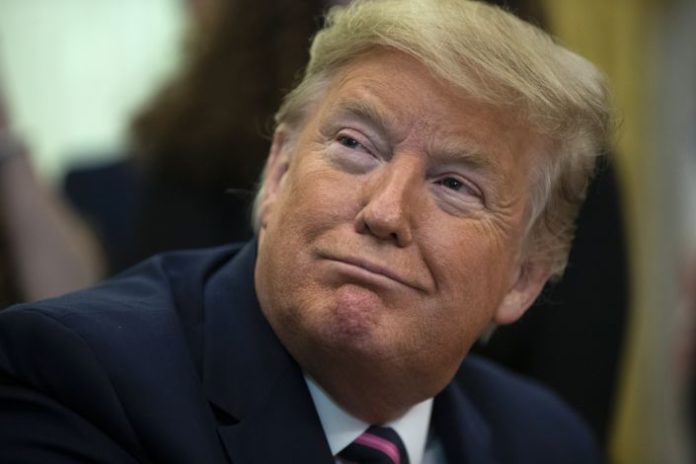
“When you say that we lead in cases, that’s because we have more testing than anybody else,” President Donald Trump told reporters at the White House on May 19.
“So when we have a lot of cases, I don’t look at that as a bad thing, I look at that as, in a certain respect, as being a good thing because it means our testing is much better.
“So I view it as a badge of honour. Really, it’s a badge of honour. It’s a great tribute to the testing and all of the work that a lot of professionals have done.”
900,000 tests required daily
The US has carried out more tests by volume than any other country, but it is not first in the world on a per capita basis, according to Our World in Data, a scientific publication based at Oxford University, United Kingdom.
Its chart ranks the US as 16th globally in terms of tests per 1,000 people, ahead of South Korea, but behind the likes of Iceland, New Zealand, Russia and Canada.
Over the past week, the US has been conducting between 300,000 and 400,000 tests daily, according to the Covid Tracking Project, a volunteer-led effort.
But Harvard Global Health Institute Director Ashish Jha two weeks ago told a congressional hearing: “The US needs more than 900,000 tests every day to safely open up again. We are doing about a third of that.”
The US has also reported the most coronavirus deaths in the world, though on a per capita basis it ranks sixth behind the likes of Belgium, the UK and France, according to Johns Hopkins University.
The BBC reports that there has been a robust ongoing debate over whether the US was adequately prepared for a pandemic and if the proper steps were taken as the virus began to appear on American soil.
Ever since mid-March, however, most government officials have acknowledged that the magnitude of the crisis required a response of enormous scope.
The unprecedented lockdowns imposed in much of the country were designed to slow the spread of the virus, prevent the nation’s healthcare system from being overwhelmed, buy time for further preparations and protect Americans particularly at-risk of serious health complications.
Below, the BBC records how some of those efforts have succeeded – and failed.
SUCCESSES
A flattened curve – somewhat
First, the good news. The patchwork of shutdowns and social-distancing across almost every US state has succeeded in stopping the exponential spread of the virus.
In hard-hit states like New York, Michigan and Louisiana, the pandemic’s growth curve has bent downward. What was once a runaway crisis in these hotspots has been controlled.
Next, the concerning news. Outside of those three states, the rest of the US has continued to see an overall rise in the infection rates, albeit not nearly as sharply as before.
Taken together, the chart of new cases in the US seems to have reached a plateau, but perhaps not a stable one.
And now some bad news. According to the Washington Post, states that have begun a partial reopening have seen their number of cases increase the most compared to those that have kept them in place.
And an unreleased Coronavirus task force report leaked to NBC News indicates that cities in the interior of the US, including Des Moines, Nashville and Amarillo, all recently have seen more than 70 per cent week-over-week increases in cases.
So while the efforts at restricting movement and business have been one of the success stories of the past six weeks, this success could be short-lived if it’s not followed by a rigorous testing programme that includes extensive contact-tracing for those found to be infected.
“I think we’re going in the right direction, but the right direction does not mean we have by any means total control of this outbreak,” Dr Anthony Fauci, head of the US National Institute of Allergy and Infectious Diseases and a White House Coronavirus Task Force member, said in Senate testimony on May 12.
Ventilator surplus
When asked to cite an administration accomplishment in its handling of the coronavirus pandemic, White House Press Secretary Kayleigh McEnany pointed to ventilators – the medical devices used to help patients breathe when they can no longer do so on their own.
“The success story is that this administration mobilised the greatest efforts since WW2, that we provided something like 4,000 ventilators to New York,” she said. “Not a single American died in this country for lack of a ventilator.”
The US government spent several billion dollars on contracts for new ventilators, and Trump used a 70-year-old law, the Defense Production Act, to prod auto manufacturer General Motors to switch to ventilator production and streamline supply-chain issues for other manufacturers.
In the end, the ventilator crunch never materialised – because of increased supply, low-use states sharing their stockpiles, lower demand and a shifting view by healthcare professionals of the machine’s benefits given the low survival rate of those who used them.
“I think they were able to share the ventilators from places that didn’t need them to places that did need them quite effectively,” says Gerard Anderson, a professor of health policy at Johns Hopkins University’s Bloomberg School of Public Health.
“There have been no place that I’m aware of that have had a severe ventilator shortage.”
In a 25 April tweet, Trump called the US “the king of ventilators” and has since offered to ship surplus machines to countries in Latin America, Europe and Africa, affirming that the ventilator supply is now a source of pride for the administration.
Hospital capacity
On 18 March, New York Governor Andrew Cuomo issued a dire warning. Within 45 days, New York City would need 110,000 hospital beds to treat those suffering from the coronavirus, and it only had 53,000 available.
Trump subsequently dispatched the hospital ship Comfort to New York to increase the city’s capacity, and the state converted the Javitz Center – the site of Hillary Clinton’s 2016 election-night party-turned-wake – into a 2,000-bed medical facility.
In the end, New York hit a peak for hospitalisations on 12 April at 18,825 – well below the worst-case scenarios. The numbers have been in decline ever since.
Across the US, the healthcare system has been strained in some states, such as New Jersey, Maryland, and Massachusetts, but it has held up to the increased demand.
“In a clinical sense, it was a tremendous success,” says Anderson. “They were able to handle all the patients that arrived. They might have had to wait, but all the patients that needed intensive care tended to get intensive care.”
The dire warnings of medical triage akin to what took place in northern Italy failed to come to pass – at least for now.
Vaccines and treatments
Multiple vaccines for the coronavirus have already begun clinical trials on humans. According to the World Health Organisation (WHO), there are more than 100 possible vaccines in various stages of development around the world.
Original predictions were that it could be more than a year and a half before one was proven effective and ready to use. Now the hoped-for date is sometime in the beginning of 2021.
“From a vaccine development, we are doing incredibly well in that we’ve got a large number of entities trying to develop the vaccine,” says Anderson. “The concern is, do we take that first one that is available, or wait for something that is probably better?”
Until a vaccine is developed and widely distributed, the best-case scenario for governments contemplating how to respond to the pandemic will be to limit its spread and protect those most vulnerable.
Life in the US – and across the world – will not be able to return fully to some semblance of normalcy until that day is reached. Fortunately, it seems, progress is being made.
Meanwhile, the antiviral drug Remdesivir has been found to shorten the average hospital stays of coronavirus patients from 15 days to 11.
“Although a 31 per cent improvement doesn’t seem like a knockout 100 per cent, it is a very important proof of concept,” Fauci said.
“What it has proven is that a drug can block this virus.” It’s the first therapeutic drug to have documented evidence of effectiveness.
MISTAKES
Overhyped treatments
For weeks, Trump – echoed by many prominent conservative commentators – touted the potential medical benefits of the anti-malarial drug chloroquine.
Some healthcare facilities and providers rushed to stock up on supplies, leading to widespread shortages.
In one nursing home in Texas, patients were administered the drug without family consent, as county public-health officials raced to try to head off an outbreak in their jurisdiction.
Further studies have since indicated that the drug is ineffective at best, however, and could lead to life-threatening complications for some who used it.
“You have to rely on the science,” says Anderson. “Pushing things too quickly into the market sphere in an emergency situation can be very dangerous.”
During a press conference in April, Trump speculated about the use of disinfectants or ultraviolet radiation to kill the coronavirus inside infected humans. He was widely criticized – and mocked – for his off-the-cuff remarks, as some states reported an increase in calls to poison-hotline numbers.
While scientists and public health officials have had a prominent role on the White House’s coronavirus task force, Trump has occasionally veered away from their guidance to offer his own armchair medical opinions.
When those views have translated into government action, or led to life-threatening behaviour, they have made the implementation of science-based policy more difficult.
Lack of PPE production/supply
When a nurse visiting the White House last week told Trump that supplies of personal protective equipment (PPEs) like gloves, facemasks and gowns have been “sporadic but manageable”, Trump replied: “Sporadic for you, but not sporadic for a lot of other people”.
For months, however, there have been widespread reports of healthcare workers having to make do without the proper protective clothing or forced to reuse existing supplies. Many Americans outside the medical profession have resorted to fashioning make-shift masks from scarves and coffee filters, as protective items are even harder for them to find.
The shortage in protective gear has been caused, in part, by virus-related disruptions in the supply chain from manufacturers in China, says Anderson.
Administration efforts to ramp-up domestic production have had mixed results. A US national stockpile, not designed for such a widespread pandemic, was quickly depleted.
Trump initially told states it was primarily their responsibility to acquire the needed supplies, quipping that the federal government was “not a shipping clerk”.
That left many states bidding against each other on the open market for protective gear and, on occasion, facing federal government seizure of shipments they had ordered for themselves.
“Project Airbridge”, a recently ended administration programme to subsidise air shipment of protective supplies from overseas manufacturers, had little transparency.
The government boasted that more than a million items were shipped, but a Washington Post investigation found little evidence of where the supplies ended up.
While domestic production of protective gear has increased in recent weeks, there are still concerns that the distribution network is uneven and needed supplies aren’t reaching front-line healthcare workers quickly enough.
Testing shortcomings
On May 11, Trump stood in the Rose Garden in front of banners declaring “America leads the world on testing” and told the gathered reporters that “we have met the moment, and we have prevailed.”
He touted the $11 billion the federal government would be giving to states to ramp up their testing programmes, and the nine million coronavirus tests that have been given in the US so far, including a current rate of more than 300,000 a day.
Although he boasted that the US now surpassed South Korea, long held up as an exemplar of coronavirus response, in per-capita testing, the cold reality is that the Koreans ramped up their testing in February and March.
The US may have caught up, but by now the virus has claimed more than 90,000 victims and spread across the nation.
“We treaded water during February and March,” Republican Senator Mitt Romney said during a Senate coronavirus hearing on May 12. “I find our testing record nothing to celebrate whatsoever.”
The administration’s case has been complicated by a pattern of overpromising on testing – only to come up short.
On 10 March, Vice President Mike Pence promised that the US would hit four million coronavirus tests a week. That number wasn’t achieved until the end of April. (Pence says he was talking about tests distributed, not processed).
In mid-March, Trump touted a public-private partnership to offer drive-through testing at shopping centres across the nation. A month later, only a handful had opened.
By May 13, the US had only tested 2.74 per cent of its population, which put it well behind many industrialised nations.
And even the current, higher rate of test is not near the mark of 900,000 a day that a Harvard University estimate indicates is necessary to reliably identify potential virus hotspots across the country before they become major outbreaks.
Inefficiency in economic aid
Since the coronavirus outbreak hit America, the US Congress has appropriated more than $3 trillion to address the crisis.
A large portion of that spending has been to soften the pandemic’s blow to the economy, in the form of lost jobs and productivity from nationwide lockdowns and closures.
These measures include hundreds of billions of dollars in low-interest loans to businesses that can be forgiven if they don’t lay off workers, direct cash payment to Americans and additional support for the unemployed.
It turns out that authorising the expenditures – done by large majorities in Congress – was the easy part. Getting the cash to the right places, on the other hand, has proven more difficult.
The rollout of the small-business programme was riddled with delays and confusion from both the private banks authorised to make the loans and applicant businesses.
There also were questions about why massive corporations, restaurant chains, wealthy universities and politically-connected businesses received funds – that is, before the money ran out and had to be replenished by another congressional appropriation.
“A big problem with the relief response in the US is that it relies on many private sector intermediaries to deliver support to individuals, including in particular large corporations including large public corporations with access to financial markets,” says Anat Admati, an economics professor at Stanford University Graduate School of Business.
“Meanwhile, the small business loans programs have created distortions in terms of who gets access to loans and under what terms, with insufficient accountability.”
The loan programme has operated smoothly compared to the state-run unemployment system, on the other hand. Some states have fallen behind in providing what should be weekly payouts to laid-off workers.
In Florida, the online registration system became so overwhelmed, the state began only accepting paper forms – and the line of applicants in some places stretched for blocks.
Francis Creighton, president of the Consumer Data Industry Association, cautions that given the massive amounts of money being spent to prop up the US economy, some difficulties were to be expected.
“The point is to get the money out the door,” he says. “I think that everything they’ve done has been really, really good. The underlying question is if anything is going to be enough given the unbelievable situation we find ourselves in.”
Democrats and Republicans in Congress have talked about a third round of economic stimulus, although both sides remain far apart on where to go from here.
The coronavirus crisis has dragged on for months now, but the government responses – both good and bad – have a long way to go.