By Emeka Alex Duru
Baring last minute deft political maneuvers and trade-ins, the Presidency and National Assembly may be headed for a major showdown – this time around – on the actual sequence for the 2019 general elections.
By Tuesday, March 13, President Muhammadu Buhari, had withheld assent to a Bill by the National Assembly, which had reordered the 2019 general elections – signifying serious crisis ahead.
It is not that the two organs of the current administration, had particularly enjoyed good working relationship. If anything, they had, at best, been lukewarm in relating with each other, since coming on board in 2015.
But the envisaged crisis which centres on who will have its way over the date for the 2019 polls, promises to be grueling.
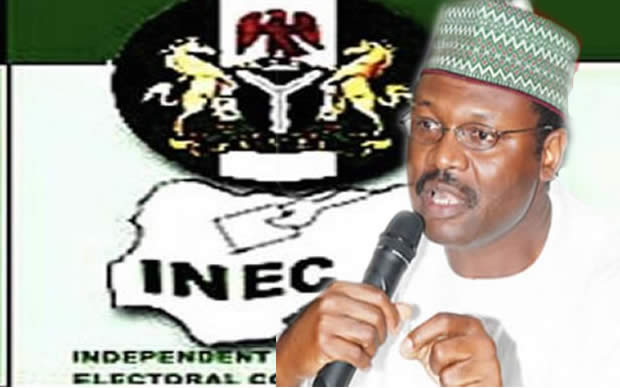
The Independent National Electoral Commission (INEC), had earlier in the year, precisely, on Tuesday, January 9, 2018, released a timetable in which Presidential and National Assembly elections are scheduled to hold on February16, 2019 while governorship and State Assembly elections are to be conducted on Saturday, March, 2, 2019.
By the arrangement, the conduct of party primaries, including the resolution of disputes arising from primaries for national and state elections should be conducted between August 18 and October 7.
But the national assembly had thought otherwise and came up with a new timetable that reordered the one released by the election umpire.
According to the NASS arrangement, the elections shall be held in the following order: (a) National Assembly election (b) State Houses of Assembly and Governorship elections (c) Presidential election.
Nigerians react
Though the national assembly in the amendment exercise swore that it was not targeted at anybody but was rather intended to add credibility to the electoral process, chieftains of the All Progressives Congress (APC) and other supporters of the President, had alleged that the move was aimed at him.
Other Nigerians had however seen the measure from different perspectives. Second Vice president of the Nigerian Bar Association (NBA), Monday Ubani, told our reporter that the National Assembly members had every right to reorder the election the way they wanted.
“Are they not the lawmakers? They are the ones that enact laws. You have elected them to make laws for the good of the country. So if you feel that any law they have made is not okay, you go to court,” he said.
On the essence of the election reordering, he explained: “The only thing is that in making such a law, they should have asked for stakeholders meeting. People should have come forward to contribute. They shouldn’t have done it without having input from members of the public because it is a law that would affect all of us. The input of members of the public should have been sought.
But Constitutional Lawyer and President of Voters Awareness Initiative (VAI), Wale Ogunade, had a contrary view, arguing that the National Assembly lacked the powers to reorder the elections.
According to him, “Section 153 gives INEC the power to organise, moderate and conduct elections. The National Assembly does not have the right to interfere with INEC’s role”.
Ogunade alleged that the action of the lawmakers was not healthy for the polity, adding that, “By virtue of section 4 of the constitution, they have the powers to make laws for the good governance of the country. But this reordering of the elections is for their selfish interest”.
Abdulaziz Ibrahim, a Kaduna based lawyer, told TheNiche that though he loved the idea of reordering the election, National Assembly lacked the powers to intervene with INEC’s duty.
“If you look at the constitution, it is strictly INEC’s responsibility to fix the election timetable. And the constitution is the grund norm. So, the National Assembly action is contrary to the constitution,” he said.
Danger lurks
Signs that the move by NASS was not going to be a smooth sail, began to emerge when even some members alleged that it was targeted at the President. In a system that sees contrary opinion to any matter linked to Buhari’s interest is seen as high offence, the action by the lawmakers was bound to be viewed with suspicion.
This is especially against the backdrop of the uncertain relations between the legislators and executive arm of the government.
What further signposted the looming war over the Bill, was the insistence by INEC to go ahead with its original timetable.
The Chairman of the Commission, Professor Mahmood Yakubu, who made the disclosure, stated that the electoral body had no reason to change the election sequence it had earlier released, based on the provision of the existing laws.
He did not, however rule out the possibility of taking another look at the sequence if there was any compelling issue.
“As far as the Commission is concerned, there is no legal lacuna for now; we are working based on existing laws.
“But if something happens tomorrow, we will come out clear and tell Nigerians, but I think we are not operating based on conjectures,” he said, in a forum with reporters in Abuja.
Opposition Peoples Democratic Party (PDP), does not seem bothered about the particular election sequence that is adopted, if INEC and NASS are in agreement.
In an encounter with its National Publicity Secretary, Kola Ologbondiyan, the party however argued that if the matter turns out a matter of constitutional disputation, the views by NASS should prevail, since by law, the members have the right to legislate on any issue in the land.
But even as INEC appeared ready to abide by whatever turns out the ultimate position of the law on the exercise, it was almost certain to analysts that the President was not going to assent to the bill that his foot soldiers had already insinuated would put him in tight corners if he runs in the election.
It thus, did not come to many as surprise, when he withheld his assent to the bill.
Eye ball to Eye ball
Incidentally, the lawmakers seemed to have anticipated the eventual turn of events and appeared working on the next line of action. For example, House of Representatives Committee Chairman on INEC, Edward Pwajok, while listing the gains of the revised election timetable, was quoted to have stated that if the bill was not given assent by the President, they, would invoke constitutional provisions at their disposal to make it see the light of the day.
According to experts in Law, every bill passed by the National Assembly needs the assent of the President to become law. The 1999 Constitution, as amended, insists on this.
They add, however, that in any particular matter when the President refuses to give his assent, and the National Assembly feels very strongly about its position on the bill, the law provides that the National Assembly can override the President’s objection by a 2/3 majority.
This is where many locate the imminent crisis that may result to a stalemate over 2019 elections. Going by his trademark cocky posture and disdainful disposition to resolutions and bills from NASS, the President may not give further attention to the bill.
In fact, to him and his handlers, the action by the lawmakers is a nullity in the first instance and dead on arrival.
Instances of such dismissive tendencies by the President over actions and resolutions of the national assembly, abound. The lawmakers, have for example, severally turned down confirmation of Ibrahim Magu as the chairman of the Economic and Financial Crimes Commission, on ground that he lacks the competence and integrity to preside over the affairs of the agency.
But Buhari has insisted on having his way, in the process, retaining Magu on acting capacity, almost two years after his appointment. There are other cases of his giving the national assembly cold shoulders over their resolutions.
There are, therefore, no signs that he would budge from that tendency this time around.
In similar vein, key members of NASS are not likely to give in, in the emerging battle of wits. With many of them not sure of getting their return tickets to the chambers on account of their frosty relations with their parties, especially those in APC, giving the President a serious fight over the matter, perhaps, remains the only way to remain relevant and possibly, win some concessions for positions in 2019. Some also do not intend to return to their positions or any other political office. They, therefore have nothing to lose in the eventual showdown, if it ever comes.
But how far the lawmakers can remain a united front in the exercise, is another thing.