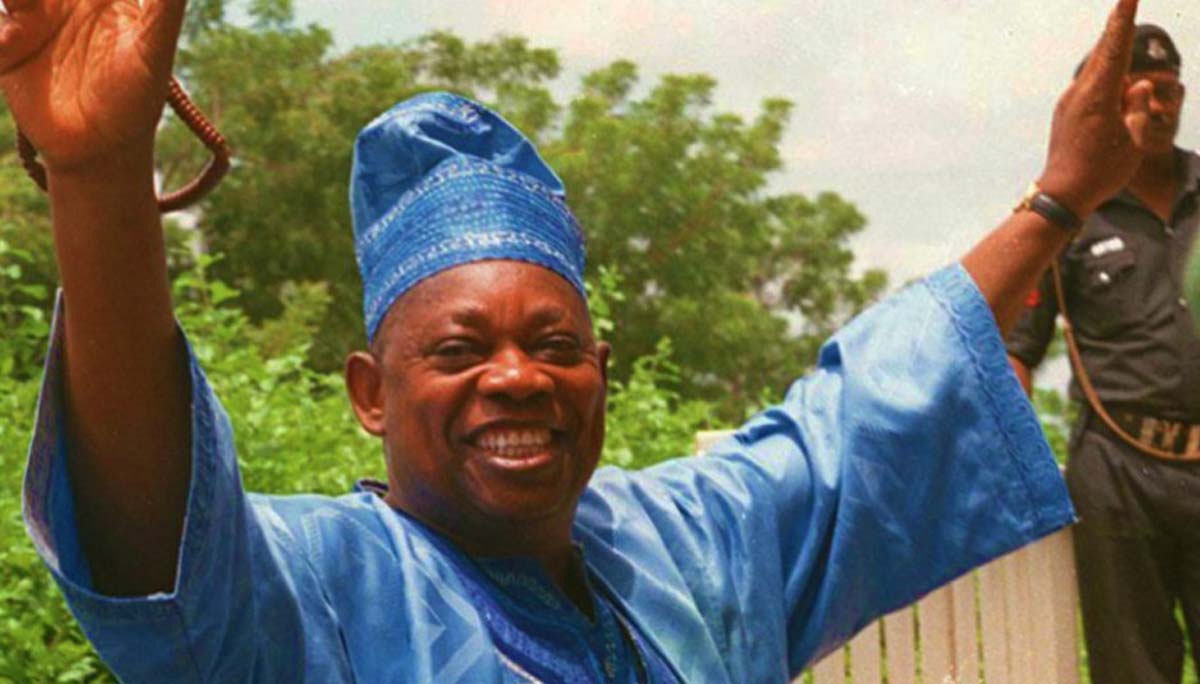
Yakubu Mohammed interview (1): In this first part of the three-part interview, veteran journalist Yakubu Mohammed talks about his relationship with late Chief MKO Abiola, publisher of the Concord Group of newspapers. “As editor of National Concord, Abiola will say, I understand you are pursuing a story, let us go together,” he told IKECHUKWU AMAECHI in a two-hour exclusive interview.
Beyond Expectations is your first book. So, why now and what is the motivation?
Well, in whatever you do, there is a time for it and I thought that the stage I have reached in my life and career, it is about the best time to write a book.
You said the book is not your autobiography. How do you mean?
It is not my autobiography. It is a sequence of events that have shaped my life thus far from primary to secondary school, university and getting to the peak of my journalism career. So, I thought it is about time to at least put my experiences in writing as a memoir. Since this is a memoir, if God still gives me more life, and other things happen to me in the future, it can still be part of another memoir or another story entirely.
Your friend and colleague, Mr. Dan Agbese, said you left out many things in your memoir. What did you decide to keep out and why?
That question should have gone to Mr. Agbese because I can’t remember what I have left out. Suffice it to say that when you have relationship with people, there are things that you don’t need to say. To remain friends, associates, family and so on, there are some things that are better left unsaid. People have asked, how come your partnership has lasted this long and I keep saying, in partnership, people come from various backgrounds and have various perspectives. Some come with very large ego, some with minimal ego and some have ego that has to be massaged.
Those things are not meant to be written about. Maybe, that is what he is referring to. There are some things you have done for people and many will expect that having done this for this man, he should do something for you in return. Some of us are not brought up that way. If you have to do something, you do it not necessarily for the sake of getting anything back but because you believe in doing it and most of the things you do, you get your reward from God, anyway. So, some people pay you back as they say in bad coins , some people have used you as a stepping stone to certain positions, not only that they don’t even recognise that you are there, they just deny it entirely. But it doesn’t stop you from helping somebody else next time. Maybe, these are some of the things he was referring to.
You attained very great heights in journalism. Who made the most impact on you?
Ah! Everyone who played a role along the line made impact on me. It is difficult to pinpoint a particular incident or a particular point in time or a particular person because nobody sat me down to say you have to pursue a career in journalism. As a matter of fact, when I started, I didn’t even know that what I was mimicking was called journalism. So, I will not be able to say that somebody had the greatest impact on me. No!
If you go through the book, you will see that when we were in primary school, we were writing short stories in the class and the Reverend Father who was in-charge of the mission and people who were running the school because it was a Catholic school, will come around to pick some of the stories. And they will go with the best ones and one day we saw they have been printed in a mimeograph form from Our Lady of Schools, a teachers college, owned by the same missionaries. And you see your story with your name and you are happy. Then, still in primary school, by the time I was in my final year, we saw a monthly newspaper in Lokoja called The Light and my teacher in Primary 7, Mr. Christian Madu, may his soul rest in peace, was encouraging me to write for that newspaper. When there is a fire incident or football match, I will write about it.
But that was not as dramatic as when I entered secondary school because even as I was writing in primary school, I didn’t understand what it was about. But at the Government Secondary School Okene, there were two publications – one was a yearly publication called The Lion and my school was called “The Lion of the North” and an occasional newspaper, which was coming out about twice in a term, called Okene Chronicle.
So, I wrote an essay in the junior category – What disgusts me most in Government Secondary School, Okene – and it was about prefects punishing junior students for offences that they too were committing with impunity. Again, most of our teachers were foreigners and they will slap a boy and wash their hands which I thought was racist. These were the things I wrote about and I got a prize of two Shillings. That was in 1967 and I was finishing my Form 3 to go home for Christmas. When the article was published in the school newspaper, the principal, a Briton, Mr. DJK Farrah, who was a serious disciplinarian, read it and sent for me.
So, I was hurled into his office and he told me that because of what I had written, they couldn’t distribute the publication to all the schools in the North. He accused me of putting the school in a very bad light and said the only way out for me was to substantiate all the allegations, otherwise, he will give me 12 lashes of the cane and expel me from the school. He gave me a sheet of paper and I was quaking but I collected it from him and went away. I didn’t know how I managed to sleep that night but the following morning, I came back to his office with the plain sheet of paper, I didn’t write anything on it. He stretched out his hand and I gave it back to him. And he asked me to get out of his office.
I left and two days later, we went home for Christmas and end of year holiday. We came back the following year in 1968 and I was now in the senior class – Form 4A or Form 4 Arts – because the class was divided into arts and science. One of the evenings, we were reading in the class and one senior student from the higher school certificate section came to the class and asked who Yakubu Mohammed was and I raised my hand. He said I should come out and I followed him out and he said that the principal had directed that I should be on the editorial board of the school newspaper.
READ ALSO: Beyond Yakubu Mohammed’s expectations
That, I think was impactful. The editorial board was for senior people and I was not quite a senior student. I was the first person in my class to be on the editorial board because of what I had written, something that would have sent me out of the school eventually earned me a seat on the editorial board. We now developed serious interest in journalism.
Every Wednesday evening, I used to look out for Daily Times to read the column of Alhaji Alade Odunewu – Allah-De – and on Thursdays, I will read Tai Solarin. I used to cut out those articles and keep in a file. When I finished from secondary school, my first employment was ministry of labour as a clerk. That is not journalism. In 1970, I was going to Mike Asaju’s house in Ilorin, he was the Kwara correspondent of the Observer newspaper. And I told him I wanted to be a journalist and in the evenings he will put me through some of the demands of the profession. Then, on weekends, he will send me to cover some sports events or prize giving days in the schools in Ilorin. Then, the New Nigerian correspondent, Mr. Emmanuel Odepe, joined and I was also doing same for him. They will put their names on the stories I wrote.
Then in 1971, I had an uncle in Radio-Television Kaduna, who was working in the accounts department, Mr. Amodu Aruwa, he and Abu Onaji working in the programmes department were doing a programme in Igala language during the civil war. Radio-Television Kaduna was noted for very vigorous propaganda and they had a programme of news, views and comments on matters of the moment called Spotlight. So, when the war ended, they wanted to sustain what they called selective language services where after news in English, they will read news in the key languages in the North.
So, these people coming from the accounts and programmes departments had to give way, they wanted to employ someone specifically for that. My uncle thought that was an opportunity for me to become a journalist. So, he sent for me and I went for interview and a whole lot of them were there, including Balarabe Musa, who later became Kaduna State governor. He was company secretary and chief accountant for Radio-Television Kaduna and at the time I had the WASCE result and I made a Division-1 which was the highest grade and the question that was upsetting to me was, why was I there, why was I not in the university, why was I not doing the HSC programme? And there were only two of us for the interview and the other guy didn’t have up to the three papers at the O’Level.
If they were looking at paper qualification, I should be better. So, I thought that would be my entrance into journalism and after the interview in February, by the end of March 1971, I didn’t have a radio though I was always interested in listening to news. I used to go to my neighbour’s house to listen to news and one evening, it was the turn of Igala Language, and the man who was reading the news happened to be the same person I attended the interview with. That meant I was not taken, my good WASCE result was a disadvantage.
That evening, I got angry with myself and everything else and went to my room and locked the door and went on my knees. I said, God, you know what has happened, I am reporting to you that I was not employed because they thought I would go to the university, so God, I want to go to the university and you are the only one who can make it possible. So, the following day, I started reading for A-Level. I was reading Literature and Government, eight months to the examination and God made it possible for me to pass very well. I got a B in Government and an A in Literature and it was the best result that year. It was even announced on radio that the best candidate was a private student.
I applied to UNN and UNILAG for Mass Communication and ABU, just in case I failed Literature, I will use my WASCE result and maybe my B in Government and do prelim. But that didn’t happen, I passed very well and both UNILAG and UNN offered me admission and I was to go to UNN because I liked the name – Jackson College of Journalism. Before then, I had neither been to Nsukka nor Lagos.
Again, as God would direct, I got through the scholarship interview with all the drama there because they insisted that I should go and read English but I said no, I applied for Journalism. But they said I need English to become a journalist and I said I need journalism to become a journalist. And they asked me, do you know that a beggar has no choice? I reclined on my seat and I didn’t know where my answer came from when I said, “I know but this beggar knows what he is begging for.” That caused a little commotion as they started laughing. And somebody asked me why I chose UNN instead of UNILAG. I didn’t have any answer. But in the night while I was sleeping, something just woke me up and said, you are going to UNILAG. And I changed my mind and went back to the Scholarship Board and told them that I have changed the place of study from UNN to UNILAG and that was how I came to UNILAG. So, in all these, I don’t know who to give the credit for the most impact in my life except God.
How did you eventually meet Chief MKO Abiola, who seems to have made a reasonable impact on your career?
I rose very quickly in the hierarchy of the New Nigerian editorial. I finished my NYSC programme which I did with them and formally started work there on August 1, 1976. And just two months after, in October, I was appointed to the position of Associate Editor. And I was sent back to Lagos where I was a student and did holiday job. I came back and the only person who I didn’t become his boss was the Associate Editor at the time, Mr. Mike Pearce, who moved up as the Managing Editor. And I took over the whole editorial department.
That was what I was doing for about two years before they sent me to Britain to study Business and Management to equip me for higher positions. I came back in 1979 and in January 1980, I was promoted Managing Editor. In February 1980, MKO started Concord newspaper. And three or four days after they started, their printing press broke down in the night.
I was living in Shomolu then and they said that the only newspaper that could print for them was New Nigerian. And some of my staff who joined Concord led them to my house including MKO Abiola. Fola Ashiru who became news editor under me had joined Abiola as special assistant and he was the one who actually called me in the night to say his chairman wanted to see me. That was how I met Abiola in February 1980 and for about four days, we were printing for them. Then, in November of that year, at about 11pm, Abiola showed up in my house and said he heard I was planning to leave New Nigerian and that if the story was true, I should join Concord as editor. He said he was giving me two weeks to make up my mind, he was travelling to the U.S. When he returned, he didn’t ask me if I had made up my mind. He simply called to say Yakubu, your letter of appointment is on the way. That was how I became deputy editor of National Concord.
What manner of publisher was Abiola?
He believed in the project. So, he was a committed publisher who expected the best from the staff, which was why, compared to other publications then, he paid them very well. He gave us a free hand as editors, believing in the integrity and professionalism of those he employed. Occasionally, he would want to argue with you, but if you stood your ground, he will just give up. In one occasion, he asked me, so this is one business I will put my money but I am not supposed to put my mouth. I told him he was right, that he can put his money but not his mouth. I told him that, “The truth is that if you fill up this whole place with chartered accountants – which was his profession – the newspaper will not come out the following day.” So, I pleaded with him to give us the benefit of the doubt and credit for being professionals in our own area and he agreed with me.
He will even go out with me on assignment. He will say, I understand you are pursuing a story, let us go together. There was a time he followed me all the way to Surulere from 10pm, I was the one driving and he was sitting with me in the car and the security man was sitting at the back and we were in Surulere pursuing a contact till 4am before we returned. That is the kind of person he was.
So, for a publisher who treated you with so much courtesy, even deference, why did you eventually leave Concord?
When I was promoted editor of National Concord in February 1982, I joined in December 1980 as deputy to Doyin Abiola who was the editor, and in 1982, when Doyin was moved up as editor-in-chief and later managing director, I was made the editor. I was first acting editor when Doyin went on leave, then a month later, I was confirmed as editor. When I became editor, I had a friend who was like an uncle to me, and who was so happy for me. But he told me it was high time we started doing something like TIME magazine or Newsweek and that he will finance it.
I told him that was not the time for that kind of project. My thinking was: what will I tell the man who had all the hope and trust in me, a man who didn’t know me from Adam and gave me this position? How could I leave because somebody wanted to fund me to do a magazine? So, I told him it was not possible and he agreed with me and that was the end.
What will you say were your achievements as editor of National Concord?
The period – 1982 to 1984 – was a critical time in Concord. I did a lot to transform the newspaper and I increased the sale of National Concord from 99,000 copies daily to over 400,000 copies in just two years. It was the National Concord that also produced Business Concord. I employed Stanley Egbochukwu, who was a graduate of Business Studies, and every Tuesday, I asked him to do a four-page pull-out in the National Concord and I called it Business Concord. And then, eventually that pull-out became a newspaper on its own.
Before I joined Concord, way back in 1980, in the New Nigerian, I went to Germany on the invitation of the German government to cover their election, I was in the company of other journalists from Africa and Asia, and I met Cameron Duodu, a Ghanaian journalist living in London and we were just talking about journalism in Africa and he asked how we could get a formidable businessman who could sponsor journalists to do something like Herald International Tribune.
When I became editor, I put Ben Onyeachonam, and said, go round the African embassies in Lagos, pick their major newspapers and major articles in the week, editorial comments, etc. and let us see how we can have a four-page pull-out and we called it Concord Africana. We were doing that every week and it became something very interesting. People liked it. And that encouraged me to want to go out and meet some of the editors and publishers in Africa. So, the first port of call was Cairo to meet the editor of Al-Ahram and Abiola said we must go together. He put his private jet at our disposal and we took off to Cairo and had very good discussions there. Then, he said we should go to Tanzania. I didn’t see any newspaper in Tanzania but we went there because he was interested. Eventually, this was developed and African Concord magazine was an offshoot of that endeavor, but we were already planning to leave Concord at that time and when the man who succeeded Kayode Soyinka as London correspondent was asked to put it together, the pilot edition didn’t quite look good and he shelved the idea. So, African Concord eventually came after Newswatch had taken off, edited by Lewis Obi in Lagos, not from London anymore.
So why did you leave Concord despite all these?
Coming back to why I left Concord, we were having crisis. With Abiola, there was no problem but his people were instigating him against the three of us – Dele Giwa, Ray Ekpu and myself – who were seen as stranger elements. Dele was not Yoruba, Ray is not and I am not Yoruba. And they kept putting ideas into Abiola’s head. In one moment, he was nice and the next moment, he was not exactly nice.
But he had a peculiar problem with Dele Giwa. Unfortunately, they lumped the three of us together. And so, whatever was affecting Dele, was affecting me and Ray. If Dele offended him, he will complain to me and I will placate him and we will resolve the issue. When Buhari came to power in 1984, I sought an interview with him, and he granted the request and I said, can I come with my colleagues – Ray and Dele – and they said that was okay. And the three of us went and interview Buhari. It was a very good interview that lasted 60 minutes. We called it 60 minutes with Buhari. When we were publishing those stories, the print run of National Concord shot up to 440,000 copies per day and the Sunday Concord topped 450,000 copies per day.
After the interview, I noticed that Abiola was cold. Then I requested for N5,000 IOU to check into New World Hotel, the three of us over night so that we can transcribe the interview and extract stories from it unencumbered. We didn’t want distractions.
What were Dele Giwa and Ray Ekpu then in Concord?
Dele was editor of Sunday Concord and Ray was chairman of the editorial board and they were all junior to me. Actually, I brought Ray to Concord. Before then, he was the editor of Sunday Times, coming from Chronicles newspaper, and he was doing fine. Then one day, they redeployed him to Business Times and he came to our office looking for Dele. They were very close. So, he came principally to tell Dele and he didn’t see him, then he came to my office. And Doyin was perching on my table. We were there talking and Ray came and excitedly said he has been moved to Business Times. And I saw some happiness on his face but I saw the whole thing differently and I said, it looks like you don’t have any issue with the redeployment. He said not at all, that he wanted to transform it into Nigeria’s Financial Times of London. But I said, these people who redeployed you from the Sunday Times didn’t doubt your competence or your professionalism, I don’t think they want you in the system. They will still remove you from there, so why not join us at the Concord?
Before Ray could even answer, I called Abiola and said, you know Ray Ekpu? He said, is he not the guy at Daily Times? What is he again at Daily Times? I said he is the editor of Sunday Times but I think he should come and join us in Concord. He said as what? I said well, he could be chairman of editorial board because my deputy, Duro Onabule, was coordinating the team writing the editorials. Abiola said, well talk to him. Doyin, my boss who was sitting there was surprised. And I said, Ray you have a job here. That was how he joined us and then the three of us became like superstars in Concord. We were riding Mercedes cars and that was a problem for some people. And Abiola started believing all the stories they were telling him about us.
And when we took this N5,000 IOU, he gave us a query. First, he sent us a petition, which was badly photocopied because it wasn’t clean; petition written by anonymous people on how we, stranger elements, were not loyal to him, that we were stealing his money.
And I replied in three paragraphs. I said yes, we took N5,000 and explained what we did with it. I said we didn’t steal the money. It was in the course of our job and the interview took the circulation figures to high heavens, a feat he was happy about. So, in what way did we err to deserve a query? He apologized, and agreed that he was being misled by people who didn’t mean well for his company. But what I sensed was that he was looking for how to get rid of Dele. So, from time to time, there was always an issue between them.
So, what did he have against Dele Giwa?
I wouldn’t know but the professional one that I can talk about is that first, he said that Dele was always attracting security men and hostile reaction to his stories and that I should talk to him. I him that Dele as the editor of Sunday Concord was not under me. Besides, he had his own personality and idea of editorship. But I equally told Abiola that instead, Doyin should play that role of talking to Dele as editor-in-chief.
When you say at the professional level, what do you really mean?
What the problem was professionally was that they (Sunday Concord) will write a story and say according to documents in the possession of Sunday Concord and these documents could belong to the government. Even if it doesn’t belong to the government but an individual, that individual would want to find out how they got his document. For all the years I edited the National Concord, I never went to the police, nobody came for me. And we were running the same kind of stories but not exactly their style. So, that was an issue and at a point when the legal bills piled up, Abiola got worried.
But the one that pained him most and that was reckless as far as I am concerned, there is a magazine in the Sunday Concord, Fashion and Fad, or something like that edited by late May Ellen Ezekiel and they organized a competition to look for the best dressed Nigerian. And there was a particular edition that featured Dele Giwa, MKO Abiola, etc., and they rated Dele Giwa as better dressed than MKO Abiola. And the man came to my office. He hit the roof and said, Yakubu, you are always defending Dele Giwa, now look at this one.
But I said to him, calm down sir. This thing is a publicity stunt that gives the impression to outsiders that we are enjoying freedom and you are a good publisher. I told him that he should just laugh at these things and forget about it. “How can anyone be better dressed than you, when you are the one giving us the money and paying us salary? You go out of your way to buy things for us when you travel or when we want to travel you give us money to buy the best suits, shoes, etc., to the point that Candido called us Benzy journalists wearing Gucci shoes, so how can anyone say he is better dressed than you?” I tried to pacify him.
He said, “But warn him.” I said, please just forget about it. And he forgot about it. But even Ray who was very close to Dele agreed that it was reckless. First, if you are doing a competition like that, no staff should be involved for credibility sake. And now you are not only involving a staff who happens to be the editor of the newspaper, you are rating him as better dressed than the publisher. Haba!