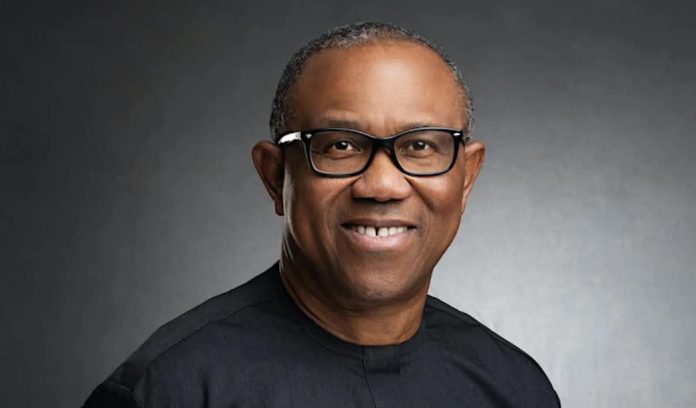
Olayinka noted that the former Anambra State governor is 17 years younger than the new Olubadan.
By Kehinde Okeowo
Lere Olayinka, media aide to the Minister of Federal Capital Territory (FCT), Nyesom Wike, has berated Labour Party (LP) 2023 presidential candidate, Peter Obi, for calling the new Olubadan of Ibadan, Oba Rashidi Ladoja, “my dear brother” in his congratulatory message.
Obi, while felicitating with Oba Ladoja in a post on X on Saturday wrote, “I warmly congratulate my dear brother, Oba Rashidi Adewolu Ladoja, Arusa I, on his installation as the 44th Olubadan of Ibadanland.
“His ascension to this revered throne is a celebration for the people of Ibadan and a source of pride for the entire Yoruba nation and Nigeria as a whole.”
Reacting via a series of posts on X, Olayinka said Obi’s message to Olubadan was disrespectful.
He further noted that the former Anambra State governor is 17 years younger than the new monarch.
He went on to say Obi’s choice of words is a demonstration of cultural ignorance and political arrogance, wondering if he could address Obasanjo or Obi of Onitsha that way.
ALSO READ: Obi calls for vigilance, says criminals are using his image to defraud Nigerians
Speaking via his verified social media handle, Olayinka wrote, “Mr One Shoe alias Agbotikuyo’s age is 64. Olubadan of Ibadanland, Oba Rashidi Adewolu Ladoja’s age is 81.
“Oba Ladoja became governor of Oyo State in 2003, Mr One Shoe became governor of Anambra State in 2006. Can you refer to someone who is 17 years older than you as my brother?
“Can Mr One Shoe address the Obi of Onitsha as my brother? Can he address President Obasanjo as my brother?”
Obi’s comment also elicited mixed reactions among Nigerians while wadding into the argument.
While some netizens saw the former governor’s action as a breach of cultural norm, others argued he did not intend to disrespect the Olubadan.
The Yoruba ethnic group is known for its respect for elders and kings, and the careful choice of words used when addressing them.