Why Nigerian universities must teach AI even without computer science degrees
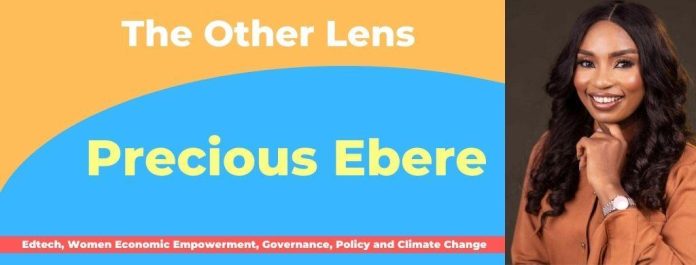
By Precious Ebere-Chinonso Obi
I recently read about Colby College establishing the “first cross-disciplinary institute for artificial intelligence at a liberal arts college.” The announcement raised a question that matters deeply for Nigerian education: What can universities struggling with resources offer in teaching AI when they can’t compete with institutions like Stanford? The institute’s director, Amanda Stent, provided a compelling answer: “AI will continue to have a broad and profound societal impact, which means that the whole of society should have a say in what we do with it. For that to happen, each of us needs to have a foundational understanding of the nature of this technology.”
This raises an urgent question: What does “foundational understanding” mean? And can Nigerian universities provide it without the advanced mathematics and computational resources that AI education typically demands? Do we need to train specialists who can build neural networks, or citizens who can navigate AI’s implications responsibly? If the former, most Nigerian universities are disadvantaged, we struggle to retain faculty with cutting-edge technical expertise. But if what society needs is the latter, Nigerian universities have something valuable to offer: teaching students to think critically about technology’s role in society, to ask the right questions even if they cannot code the answers.
Two researchers from the University of Massachusetts, Nir Eisikovits and Dan Feldman, identify something crucial: we are losing our ability to make good choices. They reference Aristotle’s concept of phronesis, practical wisdom acquired through repeatedly making choices in different situations. But algorithms are removing that practice. They choose what we watch, read, and whose opinions we encounter. When Netflix decides our entertainment and Facebook curates our news, we lose the habit of choosing. This matters beyond convenience: if we don’t practice choosing entertainment, does it affect our ability to make moral and political choices? More frightening, do we lose the ability to recognize when self-governance has been taken from us?
Nigerian universities must prepare students to confront not just how AI works technically, but what it does to us as citizens. We need students who understand both Chaucer and gradient descent- a “technological ethic” combining working knowledge of AI with humanistic understanding. This isn’t about turning historians into programmers. It’s about ensuring that when a young lawyer encounters algorithmic bias, she understands what’s happening. When a journalist confronts AI-generated misinformation, he can explain it accurately.
Nigerian universities are already overwhelmed, underpaid lecturers, inadequate infrastructure, scarce resources. Yet the cost of not teaching AI literacy may be higher. As algorithms increasingly determine who gets loans, jobs, and what information reaches citizens, youth who don’t understand these systems will be governed by them without awareness.
This doesn’t require building expensive AI labs. It requires weaving algorithmic literacy throughout existing curricula. Political science students should discuss how algorithms shape elections. Law students should examine algorithmic bias in justice systems. Business students should understand recommendation systems. Mass communication students should grapple with AI-generated content. This requires faculty training not to become programmers, but to develop frameworks for explaining AI concepts to non-technical students through metaphors and analogies.
READ ALSO: From contract to collateral: How state procurement data can unlock bank financing for women vendors
Nigerian women in politics: Why our daughters need to see themselves in leadership
We need “AI training for society that is intentionally inefficient, just as the liberal arts emphasis on breadth, wisdom and human development is inherently inefficient.” This inefficiency of refusing to reduce education to narrow technical training allows students to think critically rather than merely instrumentally. Nigerian universities, for all their challenges, can provide this. We may not produce the next generation of AI engineers, but we can produce citizens who understand AI well enough to resist manipulation, demand accountability, and insist that technology serves human flourishing rather than corporate profit or state control. The increasing complexity of tools governing our lives requires us to be intentional about which questions we ask. For Nigerian higher education: How do we teach technological literacy without resources we lack? How do we ensure algorithmic systems deployed in Nigeria serve Nigerian interests? How do we develop informed citizens who can shape AI policy rather than accept whatever systems are imposed? Nigerian universities cannot build Stanford-level AI labs. But we can ensure graduates understand AI well enough to ask whether the systems being built serve their interests and to demand better when they don’t. That may be the most important form of AI education we can provide.
- Precious Ebere-Chinonso Obi is the CEO of Do Take Action and independent consultant on edtech, climate change, public policy, and women’s procurement empowerment.