Uma Eleazu and Nigeria’s democracy ramparts: The unvarnished truth is that Nigeria is in a very bad place. Any country where the president can disappear into thin air with the citizens contemptuously blindsided, the National Assembly is foot-dragging on critical electoral reforms and the judiciary routinely delivers injustice, cannot rebuild the broken ramparts of its democracy. President Tinubu’s foibles are legion and in the last 11 years, the All Progressives Congress (APC), rather than being a vehicle for public good, has become a narcissistic private extraction enterprise, entrenching the corrosive culture of graft, in a much more venal manner than the Peoples Democratic Party (PDP) it dislodged from power in 2015. All these ought to put the president and his political party in the citizens’ crosshairs. But that is not happening. Instead, there is an inexplicable reward for perverse politics that thrives on hate, prejudice and exclusion. Countries intent on fixing their broken democracy ramparts do not travel on prebendal routes hollowed out by extreme narcissism.

By Ikechukwu Amaechi
Over time, I developed a habit: whenever Nigeria confuses me as it often does, I visit one of the country’s elder statesmen to help me get a handle on otherwise senseless situations. No protocols. All I do is visit, most times unannounced. The cathartic experience from such discussions is always profound. Sadly, many of these titans – Prof Ben Nwabueze, Rear Admiral Ndubuisi Kanu, Dr. Christopher Kolade, Dr. Pascal Dozie, etc. – have passed on. But some are still with us, healthy and as sharp as a razor, with intense mental clarity.
Right now, Nigeria does not make any sense to many. Or how else can one explain, for instance, that President Bola Tinubu has spent less than ten days in the country since the dawn of 2026? He started the year abroad, then visited Nigeria on January 17. But before anyone could say Jack Robinson, he was waving goodbye, yet again, to a bunch of fawning state officials, this time on his way to Türkiye.
As Mr. Peter Obi, presidential candidate of the Labour Party in the 2023 elections, noted on Sunday, leaders the world over prioritise domestic governance in January, but in Nigeria, Tinubu is ostensibly prioritising international engagements.
As if that is not bad enough, we now have a president who simply disappears into thin air, leaving neither trace nor explanation. After his host Recep Tayyip Erdoğan, President of the Republic of Türkiye, waived him goodbye several days ago, Tinubu is yet to return and an ever-contemptuous presidency has refused to tell Nigerians his whereabouts. That can only happen in a banana republic.
So, who is governing Nigeria in Tinubu’s absence? Apparently, we have entered another cabalistic era of surrogate presidency as we had under Presidents Umaru Yar’Adua and Muhammadu Buhari. In Nigeria, to borrow a 19th-century French proverb, plus ça change, plus c’est la même chose – the more things change, the more they stay the same.
On Tuesday, I visited Dr. Uma Eleazu, Eze Gburugburu of Asaga Ohafia, an honour bestowed on him by age, in my quest to make sense of the mess that is the Tinubu presidency. When he celebrated his 95th birthday last year, Elder Eleazu hinted of a sequel to his magnum opus, Nigeria, As I See It: Reflections on the Challenge of Leadership, where he lamented the country’s precarious state.
Two days ago, he gave me a copy of the new book – NIGERIA: DEMOCRACY UNDER SIEGE: Rebuilding the ramparts of Democracy. Divided into five parts with ten chapters, Dr. Eleazu noted that the book, which he described as a journey, “is a watchman’s voice, calling out from the tower, looking over the land, seeing what many have refused to see, and saying what many have been afraid to say.”
He gave more insight in his introductory note: “It is a voice shaped by history, sharpened by pain, and driven by hope. It is not written for experts alone, nor for politicians or scholars. It is written for every Nigerian – young and old, rich and poor, educated and unlettered – who still believes that this country can be better, and who wonders how.”
He was spot on! The book, which began with the simple question of what happened to democracy in Nigeria, dug deeper by looking at the problem of democracy itself, not just in theory, but in the Nigerian experience. It examined how the political class has undermined democracy rather than building it, how institutions have been hijacked, and how the very structures meant to protect the people have been turned against them. It “explored the formation and function of political parties, the rise of political entrepreneurs, and the mafia-like gatekeeping that keeps power in the hands of a few.”
“We did not stop at analysis,” Dr. Eleazu, a former presidential aspirant, said, noting that the book asked harder questions: What values sustain democracy? What attitudes must we cultivate? What institutions must be rebuilt?
The book examined “Nigeria’s broken value system, the collapse of moral infrastructure, and the institutions that were meant to uphold them – from INEC to the judiciary, from civil society to the media.” It studied the Constitution and the idea of constitutionalism, not as abstract legal theory, but as the foundation of a people’s dignity.
In chapter one – The problem of democracy in Nigeria – Dr. Eleazu wrote: “Of the many challenges confronting the Nigerian nation, none is more pressing, more fundamental to its survival and prosperity, than the crisis of its democratic experiment. The symptoms are glaring and universally lamented: elections that fail to express the popular will, institutions that serve the powerful instead of the public, a citizenry retreating into cynical resignation, and a governing class operating with a brazen impunity that mocks the very idea of public trust.”
He said the book’s title, Rebuilding the Ramparts of Democracy, was chosen with deliberate intent, because Nigeria’s democratic ramparts have been breached, eroded from without by the pressures of global capital and geopolitical interests and sapped from within by a political culture that prioritises patronage over principle and power over public good.
This erosion, he averred, happened because the country “imported a prefabricated structure designed for a different climate and now perplexed as it cracks and crumbles under the weight of our realities.”
The way forward, however, is not to abandon democracy as a foreign implant, but “to finally undertake the difficult work of making it truly Nigerian, of building ramparts strong enough to protect a future worthy of the sacrifices etched into our history.”
Dr. Eleazu, who was a member of the Constitution Drafting Committee 1978 for the Second Republic under the chairmanship of Chief Rotimi Willians where he also served as the rapporteur for the committee on the executive branch, insisted that Nigeria’s future cannot be charted through another round of constitution drafting performed in isolation from the ideas that give such a document meaning. “We must resist the temptation to treat governance as a technical puzzle, solvable by tinkering with clauses and procedures,” he cautioned.
Instead, he proffered that Nigerians must confront the architecture of their political imagination. “What do we mean when we speak of governance, of belonging, of collective responsibility?” he queried. “These are not mere abstractions – they are scaffolding upon which any legitimate order must be built. Without a serious engagement with the intellectual traditions that shape our understanding of authority, identity, and obligation, we risk mistaking motion for progress. Reform, in this context, becomes a ritual of avoidance – a way to sidestep the hard questions by dressing up old habits in new language. Until we reckon with the philosophical soil from which our institutions grow, we will continue to harvest dysfunction.” The book is Dr. Eleazu at his polemical best.
The nonagenarian hinted that his new offering may well be his last intervention. “I am 95 years old. This book is not a beginning – it is a culmination… A final offering in a long series of reflections on Nigeria’s political journey, beginning with Federalism and Nation Building: the Nigerian experience 1954-1966, born from my PhD dissertation at UCLA in 1969… Failed Dreams, a sobering analysis of our economic planning failures, followed by Nigeria As I See It, a candid portrait of our national condition. Now, Rebuilding the Ramparts of Democracy in Nigeria – perhaps the last in this series – seeks to interrogate the soul of our democracy and offer a pathway forward… This book is my final watchman’s call. May it stir a deep and uncomfortable reflection, provoke a debate that leads not to division but to resolution, and above all, inspire a generation to action. The ramparts are broken. Let us rebuild.”
I read the 258-page book overnight and it answered some of the questions that took me to the author’s house on Tuesday. But I doubt if I am as optimistic as he is that the critically broken ramparts of Nigeria’s democracy can be fixed any time soon, if ever.
Why?
The insufferable impunity of the ‘Tinubu mandate’ orchestra. The unvarnished truth is that Nigeria is in a very bad place. Any country where the president can disappear into thin air with the citizens contemptuously blindsided, the National Assembly is foot-dragging on critical electoral reforms and the judiciary routinely delivers injustice, cannot rebuild the broken ramparts of its democracy.
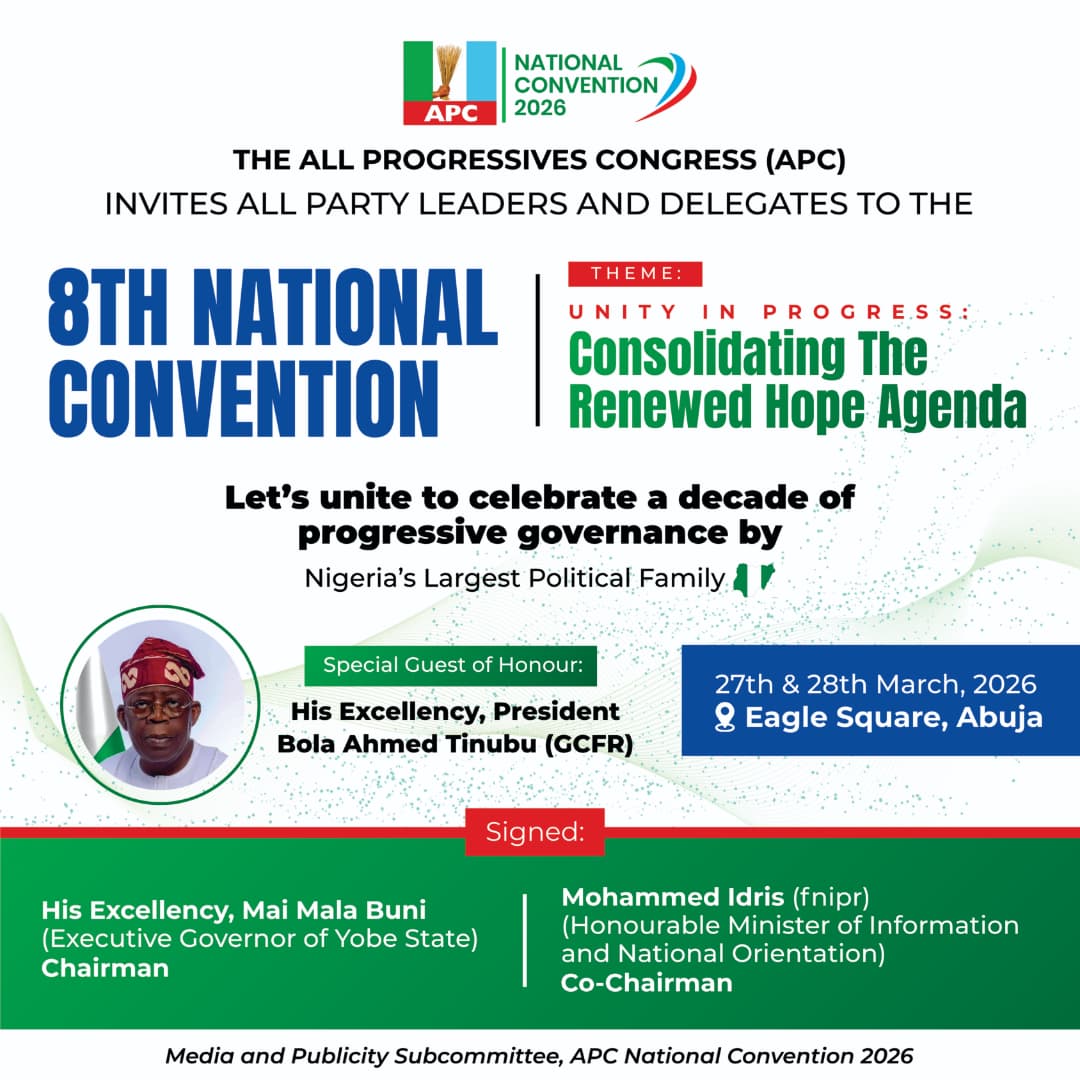
President Tinubu’s foibles are legion and in the last 11 years, the All Progressives Congress (APC), rather than being a vehicle for public good, has become a narcissistic private extraction enterprise, entrenching the corrosive culture of graft, in a much more venal manner than the Peoples Democratic Party (PDP) it dislodged from power in 2015. All these ought to put the president and his political party in the citizens’ crosshairs. But that is not happening. Instead, there is an inexplicable reward for perverse politics that thrives on hate, prejudice and exclusion. Countries intent on fixing their broken democracy ramparts do not travel on prebendal routes hollowed out by extreme narcissism.