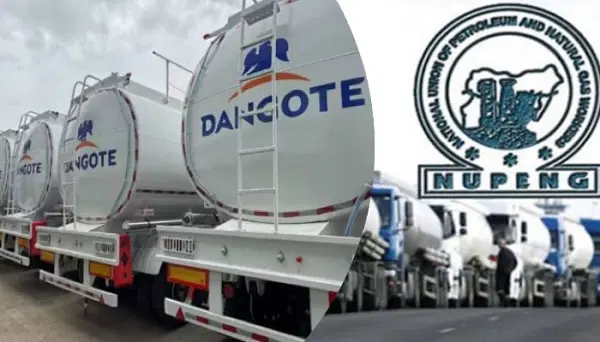
In a last push to stave off the planned nationwide strike by oil workers over alleged anti-union policy among others, the Federal Government has summoned the management of Dangote group and the leadership of the Nigeria Union of Petroleum and Natural Gas Workers (NUPENG), to an emergency meeting on Monday, September 8.
By Emma Ogbuehi
In a last push to stave off the planned nationwide strike by oil workers over alleged anti-union policy among others, the Federal Government has summoned the management of Dangote group and the leadership of the Nigeria Union of Petroleum and Natural Gas Workers (NUPENG), to an emergency meeting on Monday, September 8. The invitation was served through the Minister of Labour and Employment.
The move comes as oil workers have already announced a commencement of a total strike from Monday, with endorsement by the Nigeria Labour Congress (NLC).
READ ALSO:
NLC warns Dangote over anti-union policies, backs NUPENG strike threat
Aside endorsing the strike, NLC has equally written to its over 54 affiliates and 36 councils to prepare to join the action, arguing that the exercise, among others, is for the survival of Labour movement and dignity of workers.
NLC had earlier thrown its weight behind the NUPENG in its face-off with the Dangote Group, over what it alleged as persistent anti-union practices at the Dangote Refinery. At the centre of the dispute is Dangote Petroleum Refinery’s decision to import thousands of compressed natural gas-powered trucks for fuel distribution, allegedly with a condition that drivers must not join trade unions. NUPENG argues this violates workers’ constitutional rights.
In a statement issued on Saturday, NLC President, Comrade Joe Ajaero, described the group’s labour practices as “crude and dangerous,” noting that similar grievances had been raised by workers in Dangote Cement, Sugar, and Flour companies.
It accused the Dangote Group of underpaying workers compared to industry standards, obstructing union membership, promoting casualisation, and tolerating unsafe work conditions.
The NLC also faulted the company’s preference for foreign hires, recalling past cases where welders and fitters were brought in from India despite the availability of qualified Nigerians. It said such practices amount to exploitation and contradict the promises of industrialisation and job creation tied to the refinery.
The strike raises fears of fuel scarcity, economic paralysis, and social unrest if the issues raised by NUPENG and NLC are not resolved quickly.