Soludo’s second act: Redemption or ruin?
By Pat Onukwuli
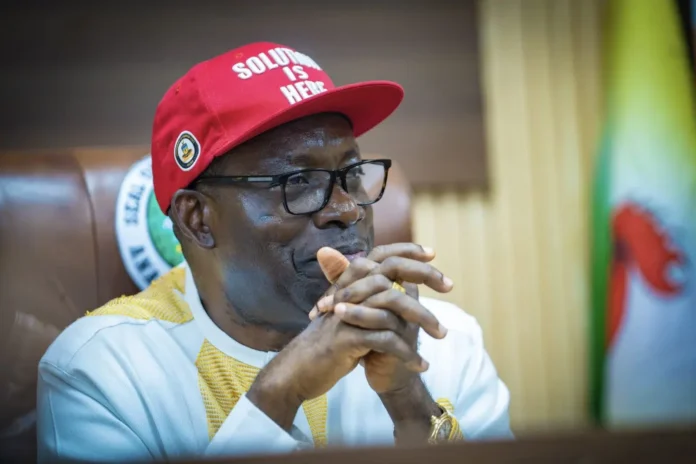
On March 17, 2026, Professor Chukwuma Charles Soludo once again took the oath of office as Governor of Anambra State, beginning his second consecutive term. In the political history of the state, this achievement places him among a small circle of governors who have secured the rare privilege of a renewed mandate from Ndi Anambra.
In democratic politics, a second term is often interpreted as validation. Supporters will call it a vote of confidence. Critics may describe it as the triumph of incumbency. Both interpretations may contain elements of truth. Yet the real question now is not whether Soludo deserved a second term. The ballot box has already settled that debate. The mandate is now a fait accompli. What matters now is how history will judge the next four years.
And history, unlike politics, is rarely forgiving. The first tenure of the former Central Bank Governor was greeted with extraordinary expectations. Ndi Anambra believed they were electing not merely another politician but a globally respected economist, a technocrat whose intellect would transform governance in the state. Soludo himself encouraged that perception, presenting his leadership as that of a “philosopher-king,” a concept borrowed from Plato’s political philosophy, in which the most enlightened minds govern society with wisdom and restraint.
But governance, like life, often tests the difference between theory and reality. Four years later, the optimism that greeted Soludo’s inauguration has largely given way to mixed reactions. His administration has been described in sharply contrasting terms. To his supporters, he is a bold reformer willing to confront entrenched interests and impose order where chaos once reigned. To his critics, however, his leadership style has often appeared authoritarian, centralised, combative, and intolerant of dissent.
The people of Anambra did not elect Soludo merely to wield power. They elected him to deliver stability, prosperity, and dignity to a state that has long prided itself on entrepreneurial excellence and civic pride.
In politics, language matters. One side calls it decisive leadership. The other calls it imperial governance. Events during his first tenure reinforced these competing narratives. One of the most controversial episodes was the demolition of sections of the Onitsha Main Market despite a restraining court order. To government officials, the demolition represented necessary urban enforcement. But to many traders and observers, it symbolised something deeper, a troubling disregard for due process and the rule of law.
Another controversy involved reports that ₦100 million from Anambra’s security vote account was transferred to the bank account of the Inspector General of Police’s son. Though the police later stated that the transfer occurred in error and was reversed, the incident nonetheless raised uncomfortable questions about transparency in the handling of sensitive security funds. Perception, in politics, is often as powerful as reality. Taken together, such controversies have contributed to the narrative among critics that Soludo governs with excessive confidence in his own judgment.
Psychologists have long studied this phenomenon. Behavioural Consistency Theory suggests that the most reliable predictor of future behaviour is past behaviour. People, including leaders, tend to repeat established patterns. Similarly, the Dunning–Kruger Effect explains how individuals in positions of authority may sometimes overestimate their competence while dismissing criticism as ignorance or hostility. When this occurs in political leadership, decision-making can become insulated from alternative perspectives.
If these patterns continue into the second term, then the next four years may replicate the turbulence of the first. Indeed, some analysts warn that a second term can sometimes make matters worse. A leader who no longer needs to seek re-election may feel less pressure to accommodate public opinion.
Yet the beginning of a second tenure can also offer a rare opportunity for redemption. History provides numerous examples of leaders who transformed their legacy during their final years in office. Freed from electoral anxiety, they shifted focus from political survival to historical achievement.
Soludo now stands at precisely such a crossroads. Greek mythology offers a powerful metaphor for this moment. The story of Icarus tells of a young man who flew toward the sun on wings crafted from wax and feathers. Despite warnings from his father, Daedalus, he flew too close to the sun. The wax melted, and Icarus plunged into the sea. The tragedy of Icarus was not that he dared to fly, but that he mistook ambition for invincibility. Political leadership carries a similar risk. Power can create the illusion of infallibility. When leaders begin to believe that criticism equals hostility and that authority equals wisdom, the fall often begins quietly but inevitably.
Anambra State, however, deserves a different ending to this story. It is a state that produced towering figures such as Nnamdi Azikiwe and Chinua Achebe, men who understood that leadership ultimately rests not on power but on humility and moral responsibility. However, Soludo still has time to rewrite his narrative.
His second tenure could become a period of renewal. He could build stronger institutions, encourage broader consultation, and focus on policies that directly improve the lives of traders, entrepreneurs, and ordinary citizens who form the backbone of Anambra’s economy. He could also restore public confidence by demonstrating transparency in governance and sensitivity in decision-making.
Above all, he could remember that leadership in a democracy is not a solitary enterprise. It is a collective project built on dialogue, trust, and accountability. History, after all, is brutally impartial. It does not care about political rhetoric or partisan applause. It records only outcomes.
When Soludo finally leaves office, he will not be remembered for campaign slogans or intellectual credentials. He will be remembered for what Anambra became under his watch. The next four years will therefore determine whether his story resembles that of Daedalus, the wise architect who learned restraint, or Icarus, whose ambition ended in tragic descent. For Soludo, the mandate has been given. What remains is the verdict of history.
- Dr. Pat Onukwuli, a legal scholar and public affairs analyst, can be reached via email: patonukwuli2003@yahoo.co.uk