



Senate shifts prove of election integrity from litigants to INEC as election organiser and regulator
By Jeph Ajobaju, Chief Copy Editor
****************************
Lawmakers backing the proposal, including Senate President Godswill Akpabio and Senator Seriake Dickson, argued that the INEC should “bear the burden of proving that elections were free, fair, and credible,” describing it as a long-overdue reform to strengthen democracy before the 2027 polls.
Under the current law, petitioners who challenge election results bear the legal burden of proving irregularities – in line with the Evidence Act, which provides that “he who asserts, must prove.”
Several Senators, including Akpabio, insisted that the INEC – as the organiser and regulator of elections – should be held responsible for defending the integrity of the polls it conducts.
Leading the debate, Dickson (PDP, Bayelsa West) argued that the reform is long overdue if Nigeria must strengthen its democracy.
“If there is one major achievement we must secure in this 10th Senate under your leadership,” Dickson told Akpabio, “it should be meaningful electoral reform.
“We have the opportunity to modernise our system – authorise INEC to deploy more technology and back that authorisation with adequate funding.
“Our political parties are among the greatest challenges to our democracy; we must find ways to regulate and control party behaviour so democratic norms are strengthened. Critically, the burden of proof in electoral disputes must be reformed.
“Electoral matters are sui generis and require special treatment.
“INEC conducts elections, appoints ad-hoc officials, collates and announces results; it should therefore bear the primary burden of proving that elections were conducted peacefully and in accordance with the law.”
Akpabio also insisted that the INEC must be held accountable for the conduct of elections.
“I agree with Senator Dickson and other Senators who have called for shifting of burden of proof in electoral litigations from litigants to INEC, being the organiser and supervisor of elections,” Akpabio said.
“INEC obviously must be held responsible because it is the one in charge of conduct and logistics, and is in the best position to carry the burden of proof in litigations.”
****************************
Senators have sought the transfer of the burden of proof in election petitions from aggrieved candidates to the Independent National Electoral Commission (INEC) that conducts elections and keeps the records.
This is against the current daunting practice of litigants having to obtain election documents from the INEC to prove in court that an election was rigged for purported winners, which makes it easy for the umpire election to violate the law, dive and dock and justify itself, even without facing scrutiny in court.
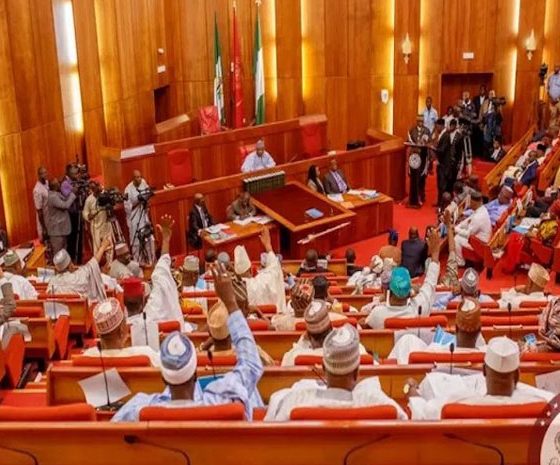
The Senate proposal was a key part of deliberations as lawmakers debated the general principles of a bill seeking to repeal the 2022 Electoral Act and enact a new Electoral Act 2025.
The move, they argued, would make the electoral process more credible, transparent and accountable.
The proposal seeks to make the INEC – as election organiser and regulator – primarily responsible for defending the integrity of elections it conducts.
Lawmakers backing the proposal, including Senate President Godswill Akpabio and Senator Seriake Dickson, argued that the INEC should “bear the burden of proving that elections were free, fair, and credible,” describing it as a long-overdue reform to strengthen democracy before the 2027 polls.
The lawmakers also believed the bill, if signed to law, will mark a turning point in the bid to reform Nigeria’s electoral framework.
Under the current law, petitioners who challenge election results bear the legal burden of proving irregularities – in line with the Evidence Act, which provides that “he who asserts, must prove.”
Several Senators, including Akpabio, insisted that the INEC – as the organiser and regulator of elections – should be held responsible for defending the integrity of the polls it conducts.
Leading the debate, Dickson (PDP, Bayelsa West) argued that the reform is long overdue if Nigeria must strengthen its democracy.
“If there is one major achievement we must secure in this 10th Senate under your leadership,” Dickson told Akpabio, “it should be meaningful electoral reform.
“We have the opportunity to modernise our system – authorise INEC to deploy more technology and back that authorisation with adequate funding.
“Our political parties are among the greatest challenges to our democracy; we must find ways to regulate and control party behaviour so democratic norms are strengthened. Critically, the burden of proof in electoral disputes must be reformed.
“Electoral matters are sui generis and require special treatment.
“INEC conducts elections, appoints ad-hoc officials, collates and announces results; it should therefore bear the primary burden of proving that elections were conducted peacefully and in accordance with the law.”
Akpabio also insisted that the INEC must be held accountable for the conduct of elections.
“I agree with Senator Dickson and other Senators who have called for shifting of burden of proof in electoral litigations from litigants to INEC, being the organiser and supervisor of elections,” Akpabio said.
“INEC obviously must be held responsible because it is the one in charge of conduct and logistics, and is in the best position to carry the burden of proof in litigations.”
The lawmakers raised other electoral concerns, including the status of delegates at party primaries and the defection of elected officials.
Senator Abdul Ningi (Bauchi Central) urged the inclusion in the bill of all elected political office holders as delegates during primaries, while Senator Muntari Dandutse (Katsina South) sought a clause that would compel defecting officeholders to lose their seats, to “strengthen multi-party democracy and restore Nigeria’s dignity in the international community.”
The bill also proposes:
- Transferring the conduct of council elections from state electoral commissions to the INEC.
- Making the use of the Permanent Voter Card (PVC) optional for accreditation, alongside provisions for enhanced technology deployment and real-time transmission of results.
The bill scaled through second reading with minimal opposition following its public presentation where many of the contentious issues had been discussed.
It happened a week after the Senate suspended consideration of the Electoral Act Repeal Bill to allow for broader consultations.
Debate on the current bill, led by Senate Leader Opeyemi Bamidele (APC, Ekiti) and Minority Leader Abba Moro (PDP, Benue), was to give Senators time to engage stakeholders and fully grasp the far-reaching implications of the bill.
Senator Simon Lalong (APC, Plateau), who sponsored the bill as Chairman of the Senate Committee on INEC, described it as a “comprehensive reform, repeal and enactment – not a mere amendment.”
Lalong stressed that while the 2022 Act introduced innovations such as electronic transmission of results, it also exposed deep flaws, including weak enforcement of electoral offences and disputes over result collation and voter register.
Reform deadline
Bamidele has previously assured Nigerians that the amendment would be concluded before December to allow sufficient time for implementation before the 2027 vote.
He explained that previous delays in the transmission of electoral amendment bills had hindered timely presidential assent, as seen under former President Muhammadu Buhari.
“Between now and December 2025, we will ensure that the amendment of the Electoral Act 2022 is concluded so that it will not be too close to the 2027 elections,” Bamidele said.
He reiterated the commitment of the Senate to strengthening Nigeria’s democracy through credible electoral laws and constitutional reforms, because “our focus is on rebuilding Nigeria, stabilising our polity and growing our economy – and we will never be distracted from this goal.”
Read also:



 ..)