
Re-thinking the Sheikh Gumi proposition
By Shu’aibu Usman Leman
The horrific scourge of armed banditry across North-West Nigeria has unequivocally descended into one of the most abysmal and darkest chapters in our nation’s recent history. Spanning from the epicentre in Zamfara across to Kaduna, Sokoto, Katsina, Jigawa, Kebbi, and bleeding into parts of Niger State, the entire geopolitical region has been mercilessly battered by a relentless series of deadly attacks, massive-scale abductions, rampant livestock rustling, and the deliberate destruction of entire settlements and farmlands. The resulting humanitarian and economic toll is utterly staggering, demanding nothing less than the most urgent and decisive action from the authorities in Abuja and the respective state governments.
It is within this profoundly troubling and chaotic context that Sheikh Ahmad Abubakar Gumi—a prominent Kaduna-based Islamic cleric and former military officer—has controversially waded directly into the heart of the crisis with a proposition that, while intensely debated, is undeniably thought-provoking. His proactive engagement with the various bandit groups, often offering spiritual instruction and consistently advocating for direct dialogue and amnesty, has consequently triggered an intense and highly polarised public debate not only across the North-West but across Nigeria as a whole. His efforts seek to address the deeply entrenched grievances fueling the crisis.
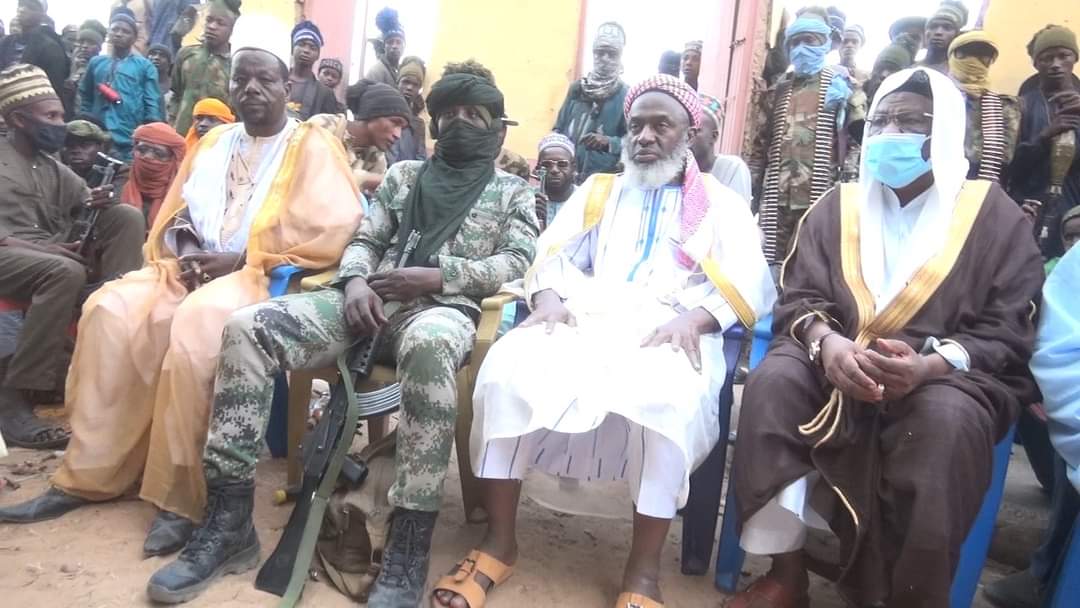
While many observers, myself unequivocally included, find themselves in considerable disagreement with some of Sheikh Gumi’s more vocal political pronouncements and his methods of engagement, the fundamental security dimension underpinning his arguments deserves an honest, measured, and objective reflection. We must make a conscious effort to set aside the immediate emotional reaction and moral outrage long enough to rationally interrogate any ideas, however unconventional, that might genuinely contribute to achieving a more sustainable and long-term peace in the region. Dismissing any potential strategy out of hand would be a costly error.
READ ALSO: The children the North refuses to see
The cleric’s highly visible initiative has involved direct, personal interaction with the Fulani herders and armed groups who have inflicted untold pain and suffering upon the people of the region. During these meetings, he has tirelessly preached to them regarding the sanctity of human life within the Islamic faith, earnestly encouraged them to renounce the path of violence, and invested his personal resources in establishing educational structures, including a comprehensive school specifically intended to provide guidance and literacy for pastoralist youths. These efforts highlight a commitment to the long-term solution of re-orientation and rehabilitation.
Sheikh Gumi frequently advances the argument that a significant number of these young men have tragically lost their sense of humanity and moral compass primarily because they passed through life without any foundational guidance, basic literacy, or essential moral and spiritual training. He strongly believes that unless wider society takes substantive steps to re-engage them through strategic education, persuasive moral instruction, and addressing socio-economic exclusion, relying solely on military force will ultimately prove insufficient to bring the devastating crisis to a definitive and lasting end. A holistic approach is, he insists, necessary.
To some commentators, these efforts by the cleric appear genuinely noble and humanitarian; however, to a considerable number of others, they seem dangerously naïve, potentially legitimising criminal behaviour. Yet, his intervention powerfully highlights a harsh and inconvenient reality that the Nigerian state must immediately confront. For many decades, the North-West has been crippled by chronic governance deficits. Massive swathes of territory have been effectively abandoned, retaining little to no essential government presence—meaning a total lack of basic schools, functional hospitals, motorable roads, basic health clinics, clean water sources, or adequate state-provided security infrastructure.
In such extensive, abandoned, and ungoverned spaces, the seeds of deep resentment and pervasive lawlessness inevitably germinate and take root, flourishing in the vacuum. Criminality and violence quickly rush in to fill this catastrophic governance void. This is the painful, complex, and undeniable backstory fueling many of the current, severe security challenges witnessed in Zamfara, certain rural parts of Kaduna, and the extensive hinterlands of Katsina, Sokoto, and Niger States. The lack of state presence created the perfect environment for violent non-state actors to thrive.
Crucially, however, merely acknowledging the deep-seated roots of the problem—the failures of governance and development—can never, and should never, excuse the carnage and atrocity now being routinely perpetrated by these criminals. No matter how legitimate the grievance, it can never justify the wholesale slaughter of innocent citizens, the deliberate burning of farms, the mass kidnapping of schoolchildren, or the savage violation of women. These are war-level crimes against humanity, and the perpetrators must be systematically apprehended and made to face the full weight of the Nigerian justice system.
It is therefore absolutely imperative to be clear and unequivocal that genuine, lasting dialogue cannot replace robust enforcement. A sovereign state that is seen to have abandoned its fundamental coercive authority immediately becomes a precarious playground for violent, non-state actors. While carefully managed engagement may prove helpful in certain, specific phases of conflict resolution, it must never be perceived by the criminals or the populace as a sign of weakness or desperation on the part of the government.
For any potential negotiation to be truly meaningful, effective, and sustainable, the Nigerian State must first and foremost decisively demonstrate overwhelming force. The armed groups currently terrorising the North-West must be degraded both militarily and psychologically. They must be forcefully made to understand that the State is fundamentally stronger, infinitely better organised, and possesses the unequivocal capacity to crush their ability to wreak widespread havoc and destabilise the nation.
It is only after these criminal elements are sufficiently weakened, fragmented, and cornered by sustained military pressure that the option of dialogue becomes a genuinely useful and leverageable tool. Peace must never, under any circumstances, be offered from a perceived position of helplessness or submission. Criminals, in a pragmatic sense, only ever agree to negotiate when they know with absolute certainty that the alternative is their certain, ultimate defeat on the battlefield.
The intensified military approach must therefore be resolutely sustained—it must not be abandoned or softened prematurely. Intelligence-led operations, surgically targeted aerial strikes, coordinated and sustained ground campaigns, and the increased deployment of advanced surveillance and communication technology must all be rigorously maintained. Security forces must be sufficiently empowered with modern tools, timely logistical support, and demonstrably improved welfare to withstand the incredibly gruelling and psychologically taxing nature of continuous counter-banditry operations.
However, even the most effective security operations alone cannot, by themselves, yield a lasting, structural peace. The North-West is simultaneously suffering from extreme educational backwardness, dire public health indicators, high rates of youth unemployment, and pervasive poverty. Entire local government areas are crippled by having no functioning schools or basic primary health centres. This socio-economic catastrophe serves as a constant and potent fuel for radicalisation and recruitment into armed groups.
Once a measure of normalcy is successfully restored to an area, a comprehensive rebuilding and rehabilitation effort must commence immediately. The Government must swiftly move to provide quality public schools, functional primary health clinics, essential grazing infrastructure, reliable water systems, mobile policing units, and functional, accountable local administrations. This massive, coordinated development effort must serve as the fundamental foundation of a new, durable social contract between the State and its often-neglected rural communities.
In this specific respect, Sheikh Gumi’s push for education and moral re-orientation does hold considerable value—provided it is meticulously implemented within a robust, government-led security and development framework. Crucially, moral and civic rehabilitation cannot be haphazardly left to individuals or private entities acting alone. It must be professionally structured, rigorously regulated, and completely transparent to avoid any perception of impropriety or favouritism towards criminals.
The reintegration of genuinely repentant fighters—if and when this path is pursued—must be handled with extreme care and caution. Only those who demonstrate verifiable, genuine remorse, and who unequivocally surrender all weapons, may be considered for rehabilitation programmes. Crucially, there must be strict and enforceable safeguards established to prevent any potential abuse of the process by insincere elements. The innocent victims must never be forced to bear the emotional or social burden of unilaterally forgiving those who brutally attacked and brutalised them.
Justice remains absolutely central to the entire process. The numerous victims of devastating violence in Kaduna, Zamfara, Katsina, Sokoto, and elsewhere must not be silenced or conveniently forgotten for the sake of achieving a purely cosmetic and superficial peace. Any eventual dialogue must fundamentally honour their immense suffering and loss. True reconciliation must therefore never be equated with simple forgetting.
Above all else, the authorities must meticulously avoid sending the dangerous message that engaging in violence, armed criminality, or terrorism is a viable shortcut to gaining immediate state attention, preferential employment, or financial incentives. The regrettable lessons from past, poorly executed amnesty programmes must teach us that rewarding armed criminality can quickly establish a perilous and destabilising precedent across the nation.
The correct and logical sequence for achieving sustainable peace and security in the North-West must therefore be rigidly adhered to. Government must secure and dominate territory by establishing full control and military presence across the affected areas. The military should also crush the armed groups militarily and eliminate their capacity to organise and strike, establish Governance and Infrastructure by introducing state presence, schools, clinics, and functional local administrations. Only then should dialogue be considered, and it must occur within a strictly controlled, high-leverage government framework.
Sheikh Gumi’s voice is certainly one among many, and he does not possess the entire solution single-handedly; his propositions must therefore continue to undergo rigorous, public scrutiny. However, his very willingness to provoke a much-needed national debate compels us all to think beyond a simple, one-dimensional military strategy. Effective security, in this complex theatre, is fundamentally multifaceted, demanding a careful blend of decisive force, robust development, proactive community engagement, and long-term moral and civic reform.
Ultimately, the paramount responsibility lies squarely with the government—not with individual clerics or private entities—to meticulously design, fund, and enforce a coherent, comprehensive security and development plan. The security and welfare of the North-West cannot, and must not, be permanently outsourced to private initiatives. The Nigerian State must assert itself with unshakeable conviction, overwhelming capability, and transparent accountability.
If the Nigerian government can successfully and consistently balance military strength with constructive, community-led engagement, sustain relentless military pressure while simultaneously investing heavily in essential education and health infrastructure, and painstakingly rebuild lost trust between its citizens and its institutions, then a true, lasting peace—one firmly rooted in social justice and economic development—can genuinely emerge across the North-West.
The courageous people of this long-suffering region have undoubtedly endured enough pain and trauma. They now rightly deserve a guarantee of long-term security, which is consistently backed by political wisdom, unwavering courage, and an unshaking, unequivocal commitment to upholding national sovereignty and the rule of law.