Punished for speaking: The injustice against Nigeria’s deployed troops
By Okechukwu Nwanguma
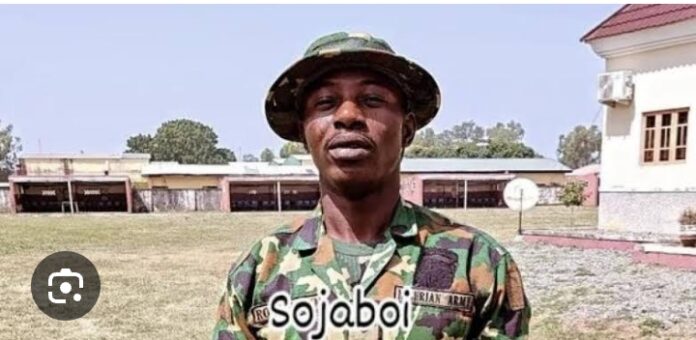
The story of Lance Corporal Rotimi Olamilekan is both troubling and revealing. It exposes a painful contradiction at the heart of Nigeria’s security architecture: those who risk their lives to defend the nation are too often denied dignity, fairness, and even the right to speak.
Here is a soldier who spent nearly five years in a conflict zone in the North-East, enduring the harsh realities of insurgency warfare – separation from family, constant danger, and the psychological toll of losing colleagues in battle. His “offence” was not desertion, insubordination in combat, or criminal misconduct. It was a video – a call for shared sacrifice, urging political leaders to allow their own children to serve in the same army where ordinary Nigerians bear the burden.
For that, he was arrested, detained, reportedly subjected to degrading treatment, denied communication with his family, and ultimately dismissed from service.
If these allegations are accurate, they raise serious questions – not just about military discipline, but about justice, proportionality, and respect for human dignity.
When Loyalty Is Met With Punishment
No military in the world operates without discipline. Order and hierarchy are essential. But discipline must not become a cover for injustice.
A soldier who voices concern about the disproportionate burden borne by the poor and the voiceless should not be treated as an enemy of the state. His message – however imperfectly delivered – reflects a reality many Nigerians quietly acknowledge: the risks of war are not equally shared.
To respond with arrest, prolonged detention, and dismissal sends a dangerous message – that truth, when uncomfortable, will be punished.
The Silence Imposed on the Frontlines
What makes this case particularly disturbing is not just the dismissal, but the conditions described during detention:
– Prolonged handcuffing
– Poor feeding
– Denial of communication with family
– Restricted access to legal representation
These are not just internal disciplinary measures. They raise broader concerns about fundamental rights, even within the military context.
Soldiers do not cease to be citizens because they wear uniforms.
The Bigger Picture: Welfare and Inequality
Beyond the individual case lies a systemic issue Nigeria has long avoided confronting honestly: the welfare of its troops.
Across multiple theatres of operation, soldiers have complained of:
– Extended deployments without rotation
– Inadequate equipment
– Poor living conditions
– Delayed or insufficient welfare support
Yet, when one of them speaks out – not to undermine operations, but to highlight inequity – the response is repression.
This reflects a deeper injustice: those who sacrifice the most are often the least heard.
Shared Sacrifice or Selective Burden?
The dismissed soldier’s call – that political leaders should encourage their own children to serve – struck a nerve because it challenged entrenched privilege.
In many societies, military service is seen as a shared national responsibility. In Nigeria, however, it is increasingly perceived as the burden of the less privileged, while the political elite remain distant from the frontlines.
Suppressing that conversation will not make the issue disappear. It will only deepen resentment.
A Call for Reflection and Reform
The Nigerian military remains a critical institution, and its integrity must be preserved. But integrity is not maintained by silencing dissent; it is strengthened by fairness, accountability, and respect for those who serve.
Authorities must:
1. Review the circumstances surrounding this case transparently
2. Ensure that disciplinary processes respect basic rights
3. Address longstanding concerns about troop welfare
4. Create safe, internal channels for personnel to raise grievances without fear of retaliation
Conclusion
A nation that depends on the courage of its soldiers must also be willing to listen to them.
Punishing a soldier for speaking out about inequality and sacrifice does not strengthen discipline – it weakens morale and undermines trust.
Nigeria must decide: will it continue to silence those on the frontlines, or will it finally confront the uncomfortable truths they carry?
Because in the end, justice is not only what soldiers fight for – it is what they deserve.