Obi highlights, Nigeria not at war yet millions of citizens are refugees in failed country, a “crime scene”
By Jeph Ajobaju, Chief Copy Editor
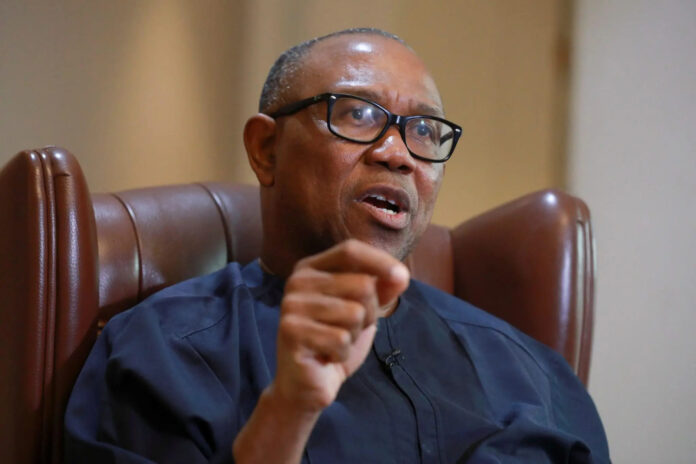
Nigeria is not at war yet millions of citizens have been degraded to refugees and scavengers in their country, a “crime scene” created by insensitive and lying government that prefers gaslighting the masses and attacking critics to solving problems, Peter Obi has said.
“Today in Nigeria, we’re not officially at war, yet Nigerians are living in IDP camps in their own country. Nigerians are refugees in Chad, in Cameroon. And the only reason is because we don’t have a government that cares for them,” lamented Obi, Labour Party (LP) presidential candidate in the 2023 general election.
“Some people are dancing while the ship is sinking. When it finally goes down, it will consume everyone – rich or poor. I’ve seen this before in places like Beirut and Afghanistan. Crisis does not discriminate.”
Obi was speaking in Abuja at the public presentation of a book Obi: The Political Change Agent written by Ike Abonyi.
He criticised misplaced priorities, wondering how public buildings are being renovated and renamed after those in power and parties hosted by sycophantic officials while women die during childbirth and millions of children are out of school.
“We use public resources to paint offices and build mansions, while women die trying to give birth. According to a recent report, one woman dies every seven minutes in Nigeria during childbirth. That’s what we want to dismantle.
“Our leaders in government and business are producing poverty. When people hoard money without creating value, they are fueling poverty. A functional economy must be built on the exchange of real value.
Öbi expressed support for fuel subsidy removal and naira devaluation but stressed the need to eliminate corruption first.
“Yes, I support removing fuel subsidy, but only after removing the criminality in the system. If we build confidence in the market and clean up corruption, the naira will stabilise. It’s happening in Ghana and Angola, why not here?”
He also lamented the collapse of national infrastructure, citing a trip to Kafanchan during which he did not see a single trailer transporting goods; a sign, he said, of a broken, unproductive economy.
“Colonial masters built railways to move goods – cotton, granite, ginger. Today, they’re gone. We have no trains, no trailers, nothing. And we wonder why people are hungry?”
Obi appealed for a new and better kind of leadership, especially in the National Assembly (NASS), urging voters to elect leaders committed to peace and service rather than personal gain.
“We must not allow people who want to make money from politics. If that’s your goal, you are part of the problem. This time, we will vote. The votes will count. We will be everywhere.”
Obi thanked supporters and urged them to remain committed to the cause of national transformation.
Sam Amadi, former Nigerian Electricity Regulatory Commission (NERC) Chairman, at the even described Obi as the ideal leader to spearhead a necessary democratic revolution.
“A successful revolution is defined by democratic civilisation and democratic diplomacy. Peter Obi possesses the profile, pedigree, personality, and passion to lead this change,” Amadi insisted.
He acknowledged that Nigeria’s challenges are vast but stressed that they can be overcome with the right leadership, commitment, and collective sacrifice.
Read also: