



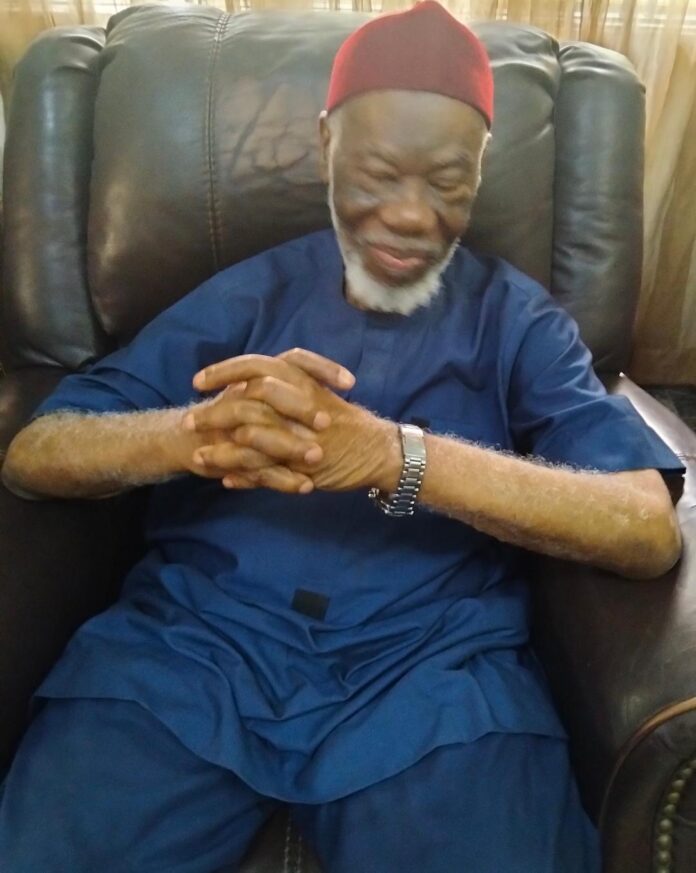
In this second part of the interview, Dr. Uma Eleazu talks about the South East, his home State of Abia and Ohanaeze Ndigbo. He didn’t think much of what was happening in the region in terms of governance but the coming of Dr. Alex Otti as governor of Abia State is beginning to rekindle his hope that the First Republic magic of the Eastern Region could be recreated. For him, those who governed Abia before Otti brought corruption, not government closer to the people. He also stated emphatically that there can be no political unity in Nigeria without economic integration. He spoke to TheNiche trio of Ikechukwu Amaechi, Emeka Alex-Duru and Eugene Onyeji.
Let us go back to the Southeast. In the first republic, the Eastern Region economy was touted as the fastest growing economy in the world. When you look at what is now the Southeast region, are you impressed with what is going on there?
The simple answer is: I am not. But since Dr. Alex Otti became governor of Abia State, I have started having hope that things can change. What has changed under Governor Otti? It is simply somebody who takes his policies from what is written in the constitution. Someone who recognises that public funds will be used for public purposes. Simple. What are the public purposes? Pay those who work for the state. They are entitled to their salaries at the end of the month. Those who have worked and retired are entitled to their pension. You pay it to them.
Then you look into the services that will be useful to those you are governing – their health, education, etc. You don’t have to go to their villages and hand over what they now call palliatives – N5,000 here, N20,000 there. No. But if you say, just dress your son, daughter, let him or her just come to school, we will teach him, we will pay the teachers, we will rehabilitate the classrooms, we will put chairs in them. You know in Abia State now, they have a group that if they see your son roaming about in the village, not in school, they will take him and put him in the nearest school where they found him and at the end of the day, they will tell that child, take us to your parents and they will ask them, we found your son roaming about in the village, he was not in school, why? It is the father or mother of the child that will be fined for not sending the child to school. When you fine him once, he will make sure that his child goes to school every morning.
These are simple things that whatever money they have given him from the federation account, he husbands the thing well and uses it in making sure that the people who voted for him into office and even those who didn’t enjoy that benefit of having a government. That is what we call bringing government closer to the people. But the other people who came before him brought corruption, not government closer to the people.
So, what I think about the East, my own annoyance is that these governors ought to use their tongue to count their teeth, knowing what has happened to Ndigbo. If they don’t know, they should call older people like us and say, sit down, am I doing well, or what should I do? But the governors in the Southeast are so full of themselves that once they become governor, they will start behaving like masquerade and nobody comes near. That makes it difficult. The governors, I cannot blame all of them. But if the governors can sit together, they will achieve a lot for the people.
Let me give you an example. The Federal Government said it has created a Southeast Development Commission, I would have insisted that the governors take ownership of that commission, sit down with the Federal Government, how much money are you putting into this thing and in that meeting, they plan an interstate development structure, one road will start from Aba or Obigbo all the way to Enugu and then to Abakiliki and another branch straight to Onitsha and through Imo back to join Oguta to Aba.
Our people are the people who import things and sell in this country. But the Custom Duty they pay is paid here in Lagos. To make it worse, the road to carry your container from Lagos to Onitsha is terrible. So, we the governors, one of the things that we have to do will be to look at the infrastructure. That is what will really hold us together. I call it regional economic integration. And when you have regional economic integration, it brings political unity. The same thing applies to the whole of Nigeria. The thing is that we are talking of political unity when we no longer talk about national economic integration. There is a correlation between economic integration and political integration. We cannot have political unity unless we have economic integration.
So, the governors of the five Southeast states can plan, take over the region and develop it no matter what is happening elsewhere. Just go and develop your region.
Where does Ohanaeze come in all these things?
Ah! Chineke mee! Ohanaeze should have been the belt that holds these states together. Some people interviewed me and I was telling them, do you know that when they were creating states, Eze Akanu Ibiam was against creating states but he couldn’t do anything about it and East Central State was divided into two – Imo and Anambra. The argument was that, well, if we don’t grab our own states now, when they start sharing whatever they are sharing, they will only give us two. So, that was the argument that made people to agree.
READ ALSO: At 95, I am still a young man – Uma Eleazu interview (1)
How corruption forced me out of Nigeria’s oil industry – Uma Eleazu
But Ibiam said, note what I am saying. After we have created all these states, Igbo unity will be difficult. And that is what is happening now. Now we have Anambrarians, Abians, Imolites, Ebonyians, I don’t know what Enugu people call themselves and from an anthropological point of view, when you have this, people start attaching certain values to being an Anambrarian, to being an Abian. And not only that, they also develop pride, if there is anything to be proud about.
So, what I am saying is that once we have created these states, it makes it difficult for us to come together as a unit. And whichever state that it comes to its turn and it is captured by the politics of the period, nothing happens until it leaves that state and that is what happened to Prof George Obiozor and my friend, Chief Emmanuel Iwuanyanwu because they could not tell Hope Uzodimma to go to hell with your government, this is Ndigbo and we should tell you what to do here. None of them could do that.
Why? Because Uzodimma’s power is from Lagos and Abuja. So, why should he listen to Iwuanyanwu or George Obiozor? This is what destroyed Ohanaeze. The geopolitical divisions in Igboland is what made it impossible for Ohanaeze to function well. And what we were doing in Anya-Ndi-Igbo is to say, okay, can we be giving some kind of direction to either the government or to people who are prepared to listen in Alaigbo so that we can salvage something. Before my friend Prof Obiozor died, we went to tell him something about the way he was elected so that he should correct it. He himself agreed with us that mistakes have been made and asked how it could be corrected?
I said, this thing called Ime Obi, I have looked at it, and this was before Prof Nwabueze died. We are still working with the template Nwabueze produced, which is to say, for Ime Obi, those who have been in the Senate, House of Representatives, those who have been appointed ministers or held major positions in the various states, we should select a few of them as members of Ime Obi. He didn’t say that once you have stepped into the House of Representatives, for instance, you are automatically a member of Ime Obi. Now, whenever a meeting of Ime Obi is called, you see all these young people, wearing very long caps with feathers and sitting down.
Before Ose Oji Nnewi, Senator Onyeabor Obi, died, we sat down and I said that these young men that were made governors, they don’t understand what we are talking about. That was how we started Anya-Ndi-Igbo after the election. I said, look, we have to systematize this thing. You cannot be a member of Ime Obi, there is a category that we should consider. If you have been a minister, how many people from that state have been ministers, who is older?
Let us take Abia State for instance, we can say, Dr. Kalu Idika Kalu, you have been a minister. But if we come to Ohafia, this man is older than you, so let him go first. Let us reestablish the concept of having a congregation of elders of Alaigbo. Ime Obi should be an assemblage of elders of Alaigbo and none of them should be less than 70 years. Now, I am 95 and I no longer go for meetings, but supposing I am there and Orji Uzor Kalu will come to say I have been a governor. If it is in Ohafia, people will tell him, my friend, please go and sit down, we are looking for our elders, our leaders.
There is no part of Alaigbo where respect is not accorded to elders. It is the elders that attend the Ime Obi conclave. And before you become President-General, you are thoroughly scrutinized from the state whose turn it is to produce the PG.
You have served Nigeria in various capacities. With the benefit of hindsight, which of those positions do you still remember with nostalgia and why?
Well, my philosophy in life is that in whatever position you find yourself, you do your bit and move on. But I didn’t do my bit the way it was planned at the Institute for Policy and Strategic Studies. When we were planning it from the Think Tank, the name was National Policy Development Centre. And it was part of Cabinet Office – one leg was in the Cabinet Office and the other one at the Supreme Headquarters. They tell us what they would like us to research in and we will draw scholars from various universities to be part of the research. Then, those of us who were sitting members, we will put all the papers together, what we have received and draw up a policy aspect of it which will now be turned into a memo to Council.
But when we were talking about the National Institute for Policy and Strategic Studies, this was to be where you look at the strategic issues of governance and you have specialists there, you bring them in to look at a matter and proffer solutions. For instance, just as everyone is talking now about insecurity, you bring in people who are in-charge of security to share ideas with experts on security. The other thing we decided was that we needed an institute like that. Here we have a new constitution and those who were going to be elected have not practiced democracy along what was stated in the constitution. Those of them who had practiced democracy was along the line of the British Constitution. Although both the British and American constitutions have similarities, but in operation, they were much different.
So, for instance, what is separation of powers? How did it operate in the First Republic which was based on the Nigerian Constitution patterned after the British Constitution and how does it operate in America? When they say separation of powers, how is power separated. We will now bring in the new set of people that were elected because they are now going to operate the 1979 Constitution which was more like the American Constitution. So, it was going to be an institute, both studies and teaching about democracy.
So, when we got there, myself, Babs Fafunwa and others, we went to Brookings Institute, we touched base with other institutions in Washington to see how they do these things and they were going to help us identify senators and professors who will come and do the trainings. In fact, then we said it was sensitization. We wanted to bring in people, they interact with them – what is the job of the President of the Senate? How does separation of powers work? What about the oversight function? How is it done? It was supposed to be a high class institute where we put into people the values that they must always remember and hold as politicians at the top. Not everybody will go there.
So, we finished, and towards the end of the handing over, we were asked to move to Kuru. It was difficult to move everything that was in the Cabinet Office. We held a meeting and drew up the organogram of how the place will work but the powers that be were working on their own what they wanted to do with the Institute. Before this happened, we had already mounted a study on the strategic minerals in Nigeria and all the sources of energy that could be harnessed – water, sun, etc. The strategic minerals available in Nigeria, a report was eventually produced on that one after I left and they established the Raw Materials Research Council.
In other words, this institute will be where people will be thinking 20, 30 years for Nigeria. But honestly, I must tell you the buildings they put there were huts. When I asked Obasanjo, he said, oh, the architect said that they wanted the institute to integrate into the local environment. It just looked like other huts that people had around there only that they had zinc on top and then put grass over the zinc. My own chalet was just like that, one bedroom. Most of them were like that for those of us who were going to live there. Some were two bedrooms, some were one bedroom. Honestly, I didn’t like the place. So, I stayed in a hotel.
When they now brought their organogram, how the thing was going to be run, they now said they wanted the head of the place to be a soldier because it will be dealing with intelligence and strategy. But they appointed a Brigadier and this Brigadier, when we looked at his background, we found out that he had a Third Class Honours in University of Ibadan and joined the Education Corps of the army. So some of the professors we invited said they thought they were going to bring at least a Major-General so that he can stand with the other officers. So, we didn’t like it and two of the professors left, went back to ABU. Prof Eme Awa was already working on electoral systems and he stayed. Some of the professors were my senior in the university hierarchy. I left America as associate professor and came and got tied down, so I didn’t even go back to get a full professorship. So, I was deferring to those who were full professors who were invited. So, when some of them left, I joined them and also left. I said, I better go and do some other things, these people are not serious about strategic studies. So, that was how I left.
But looking back now to see what that institute would have meant especially when the first Senate was established and we had this high turnover of Senate Presidents, I said these people really didn’t know what this was all about. Now, I would have preferred to have stayed and run that series but I was uncomfortable staying there.
You seem to have a reputation of quitting top jobs unceremoniously. You also resigned from the PPMC. What was it in the system that made you not to stay? Was it an ego problem or you left on principle?
In the case of the NIPSS, it was partly ego while most of the professors were leaving. It was one way of looking at it. On the other side, since they didn’t sit down and look at what the Institute was going to do and discuss it with us, at least with my chairman, Prof Fafunwa, and say this is what we want to do. At least the professor would have advised them and say, look, you cannot bring all these professors here and put them under a Brigadier. Prof. Fafunwa left also because they didn’t consider him as chairman of the Board. I think they brought in Danjuma as chairman of the Board. Yes, there was some kind of ego involved but elitism would even be better rather than individual ego. We were thinking that we were there to groom an elite corp of politicians who would understand that new constitution.
But PPMC was a different problem. It was an issue of principles. Here I was, I heard my name on the radio that I was now chairman of pipelines products marketing company (PPMC) to commercialise that corporation into a company. The first thing I did when we had our first meeting after we were inaugurated by Babangida I confessed to them that I had never sold petrol in my life. And I wasn’t a trader either. I had been teaching. Then I said everybody should tell us their experience, what they had done in their lives. What are we bringing in as board members? Some were teachers, others were businessmen and we didn’t even know each other. That was not how to compose a board.
Okay, we decided, NNPC, you are giving us a company you had already set up, what is the capital invested in all the things – pipelines, products, etc. and we were to receive refined products from Warri, Port Harcourt, and Kaduna. That was the product side of it and we were to look after pipelines. Where are the pipelines? They gave us a map of Nigeria showing where they laid the pipelines. Who is to be in charge of these pipelines? How much does it cost to look after the pipelines? Who built the pipelines so that if there are issues, we can call on those who laid the pipelines and they told me not to worry, that they had the experts in NNPC and that I will be interacting with them until I knew what to do. I was not satisfied with that response.
So, I invited a friend of mind and said look, this is the problem we have, they appointed me chairman of the PPMC and NNPC has not given us any account, we don’t know what the capital is, and he said okay, the best thing is to get an accountant to do an audit of what you are receiving from the NNPC. So we invited Dafinone & Dafinone, a Nigerian accounting firm because I asked questions and I was told that he was one of the best and he said they will do it. And he did a thorough job. It was more like a forensic audit. He went to all the places and checked everything. He even discovered containers that have been imported that have all the parts to maintain the pipelines for a period of time because the people who built the pipelines supplied spare parts that will last at least five to seven years. The same with refineries. By the time he finished, then we discovered that right from the word go, Warri Refinery was not producing PMS, it was producing only diesel, LPFO etc. It was not putting any PMS into the pipeline. Port Harcourt refinery was producing PMS up to a point but also suffered the same thing that Warri Refinery suffered, which is not having a Fluid Catalytic Cracking (FCC) unit, also known as a “Cat Cracker,” which is a critical piece of equipment in oil refineries that converts heavy crude oil fractions into lighter, more valuable products like gasoline. I learnt all that on the job.
So, the question was, what do we do with the report from the accountant? The lawyer they attached to us said, we had to call an annual general meeting for the company and the accountant will come to present the report. Who are the shareholders? Ministry of Finance Incorporated and NNPC. They are the shareholders according to the article of association that was given to us. So, they were written and we were told to come. To cut the story short, on the day of the AGM, nobody showed up from Ministry of Finance. Jubril Aminu who was Minister of Petroleum was there in his office and all the executive directors of NNPC were there in their offices and this meeting was to hold in the conference room of their office at Kofo Abayomi Street, Victoria Island. What pained me that day was that the lift was not working and I had to climb the floors. So, after two hours, nobody showed up and the lawyer said the meeting has been postponed to same time, same venue the next day. Dafinone left with all his staff. The next day, we came back, and I think somebody went to tell Jubril Aminu that these people are back and he came in and said, “Uma, are you back,” I said yes, I heard you were busy yesterday and nobody showed up as shareholders and he said sit down, we will hold the meeting. He sent someone to go and call all the executive directors and they came in and sat down.
And you know how AGMs run. The auditors presented their audit report and it was circulated. Every executive director had it and they all were staring at the floor, none of them looked up because they had all received it before and they had their own meetings where they discussed what they needed to do with all the findings. That was why they didn’t turn up for the meeting the previous day. So, when the auditor finished presenting his report, any question? None!
So, the disagreement between my board and that of the main NNPC was how do you commercialize an entity like this. Some of our board members were doing their own deals. I don’t know whether they were planted or not. Some people were offering us money to share in lieu of our doing anything, we just assign them Aba to Makurdi, go home and sit down, we will be giving you N5 million, was it every week or month? I can’t remember exactly now. And you know what a million meant in those days. Somebody will come from Atlas Cove and say we will bring the boat that will take all the products of Port Harcourt and Warri and bring it to Atlas Cove, if you know where Atlas Cove is… from Atlas Cove you pump to Mosimi and from Mosimi to Ibadan and Ibadan and Aba were the hub for the products and someone will say, give us Ibadan for this amount, outrageous amounts of money. My God. So after some time, I looked at these things with some of the proposals I have and I went to Jubril Aminu and said, look, you are a professor like me, this is the latest proposal that we have. Do you know about it? What do you think we should do as a board? He just said, Uma, go and do the right thing.
I will never forget that. So, when I left, I replied to some of these people that things should be done the proper way. We will ask our auditor to advise us and they advised and said look, now that you know how much money was put in, that is if NNPC accepts, we should now float PPMC as a company. If you float it as a company those who buy the majority shares in the company, in other words, government has spent N1 billion and you float that as shares in the stock market, people will buy the shares and you give the government back their N1 billion and let the new owners of the company form their own board and run the place.
I never got an answer. So, before then, they caused long queues at the fuel stations which made Babangida to appoint a commission of enquiry. And they said, IMF and World Bank said we should do this, now that we have commercialized it there is no petrol anywhere. So, what is wrong? They called on Justice Belgore to chair the commission of enquiry. NNPC wrote their report, others did also and I went back to my friend Dafinone and said, look, what do I do? And he prepared a paper for me based on his findings as an accountant and said, if I present it, if they ask any questions, I should call him. We presented it and they went round and round and they didn’t call me. In the end the commission said they had nothing to ask the chairman of the board. Two managing directors were fired – Port Harcourt and Warri. Some executive directors were fired also because of what they were doing in the place. Later on, those who love me came to say that people in the NNPC were saying that I was not a team player and therefore I should find my way out before they remove me by hook or crook. So, I resigned. That was how I left and I don’t regret it. That one was a matter of principles. Even till today, they cannot handle oil. That was when I discovered that all this noise about subsidy was mere thrash. There was no subsidy. Nobody ever put subsidy on oil. Right down to Mrs. Alison-Madueke. What was happening was that they were subsiding importers to go and bring back Nigeria’s oil taken as crude to somewhere near Saudi Arabia and United Arab Emirates and refined there. Who owns that company that refines our crude and we sell it to them to bring back and then we pay them for bringing it back and we say, oh, we have subsidized fuel. Many people don’t believe me when I say it. I think they are finding out now.
How hopeful are you for Nigeria?
Well, one poet said hope never faileth. There was a time I thought about Nigeria and I said Nigeria is finished. In fact, the book I am writing now, that was the original title. This Nigeria, that is the current situation we call Nigeria now, has finished. When you look at what happened in this 2023 election, and what goes on in the name of governance in Nigeria, those of you in the media, you even know better than those of us sitting in the house, watching and hearing. What is really going on in government? You look and there is nothing. What is going on in the National Assembly? There is nothing that interests them other than legislative oversight. It started from Obasanjo’s regime. Do you remember a friend of mine called Prof Fabian Osuji who was minister of education? As education minister, he took his budget to the Senate and they wanted him to bring money or they will not recommend approval and he made the mistake of going to ask his permanent secretary and other top civil servants in the ministry. He told them that he didn’t know what to do because the people were asking for N50 million to approve budget and wondered where he was going to get it from.
The permanent secretary advised him to find the money or he will help him to find it. Give it to them and when the budget is approved, you will repay from where you borrowed the money. And it sounded like what people were telling me in 1993 when people were telling me, go and borrow and when you get there you will recoup. But the question is recoup from who, from where? So, they were sending me to go and steal money and come and give to them. I said no, I cannot do that. So, Osuji followed the advice of his permanent secretary and was the only person who was fired. What happened to the senators who asked him to bring the money?
So, you get to this situation where things happen and there are no consequences. It is not just now. People get away with murder. When we say people get away with murder, you think it is an idiom, that it is not really murder. But in Nigeria, today, people are getting away with murder. You switch on your television and all you will hear is 40 people killed, 52 people killed, and you see the dead bodies. And what happens next? Nothing! So, people are getting away with blue murder. A whole village is sacked and other people replace them and what happens? Nothing! What kind of country is this? That is why I said this country, this Nigeria where this thing is happening is finished.
So, we need to build a new Nigeria. And it will not be built by all these people who are in politics now. It will only be built by a much younger generation of Nigerians. They are there. And they are seeing what is happening. That is why I like people who write in TheNiche. I read people who are really thinking because what can change this country are the thoughts of individuals. What they say and what, as time goes on, will teach the next generation.
How possible is that considering the depth of the rot?
We have to find a way of reeducating the next generation of Nigerians. We have to find a way of writing about the virtues of being a leader. It has sent me back to the Bible and when I read the Bible, I look at those who were leaders, what made them good or bad leaders as examples. Which leader of the people who is in the Senate has courage enough to tell Tinubu the truth? None! Which Nigerian leader of today can, after telling Tinubu off, open his own cupboard for others to see what is in it? I have been following someone called Senator Ali Ndume, the way he used to talk until he stepped on the toes of Daniel Bwala, who now exposed his underneath. So, you ask, who can be pointed at and say, that is a leader to follow of the crop of people who are in the Senate now. Is it this one whose strategy in chasing Senator Natasha Akpoti-Uduaghan is to say, come and see the house I built in my village, nobody in Ikot Ekpene has this kind of house? Or, there is also a bedroom there, when you see it, you will like to lie down on my bed. This is actually what happened and I wish I could reach Olisa Agbakoba and I will him, my friend, why do you want to get yourself involved in this mess? Please, if you know Agbakoba, tell him Eleazu wants to talk to him. How do you want to go and defend Akpabio? I know they pay good money to get a good lawyer to go and disgrace Natasha; that is why he is looking for a good lawyer. He must have told Agbakoba, don’t worry, if you can just find mud and splash on her, just mess her up in public, and you want to use an Igbo man to do that? That is why I said, if I reach him, I will tell him, please Agbakoba, you are a good lawyer, please take another case, don’t let Akpabio use you and splash mud on this girl because she is talking on principles. The principle that Natasha is following is, should people at the level of the President of the Senate be behaving the way that Akpabio is behaving? And not just towards women, there are other things that we know about in his backyard.
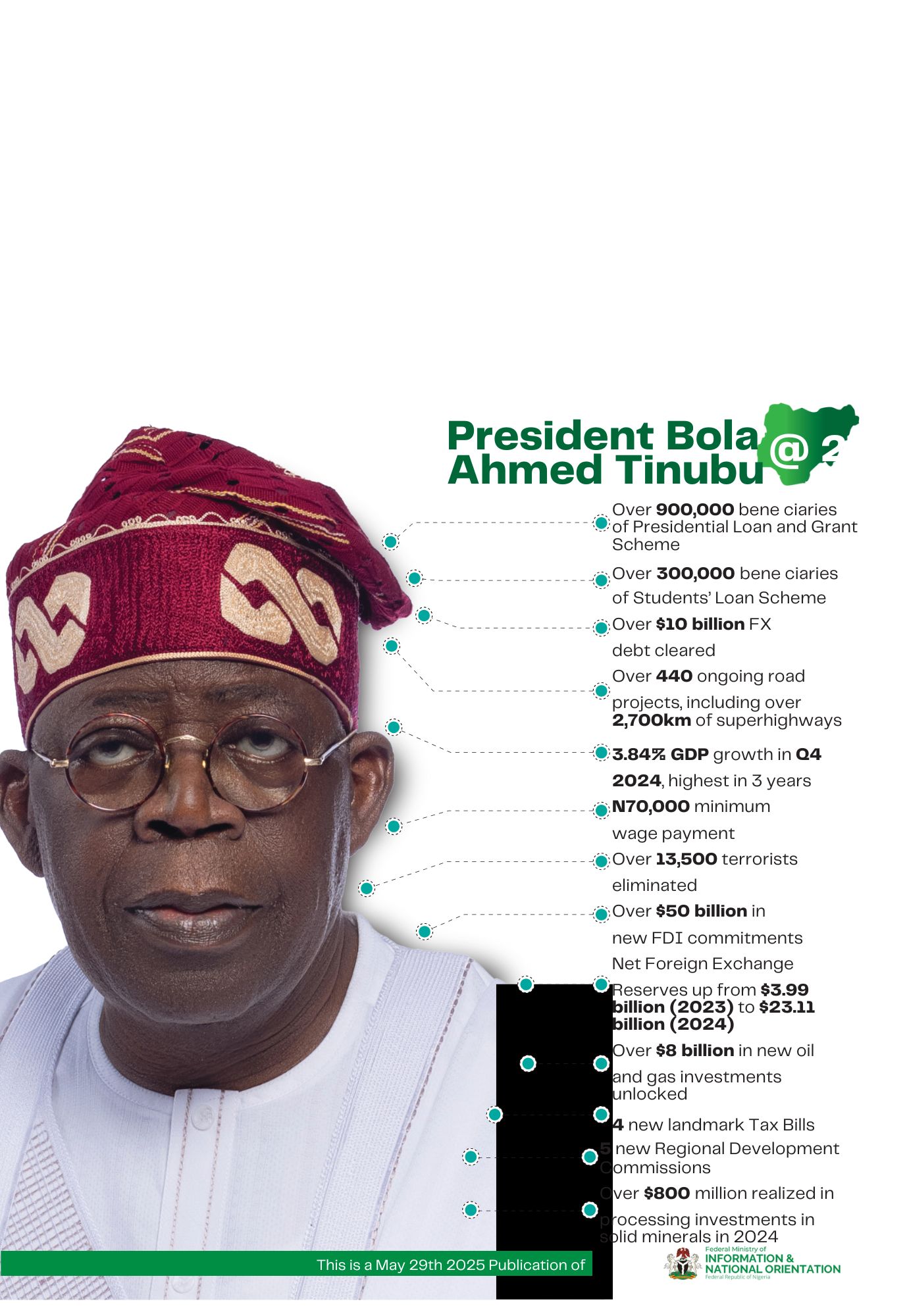
How then will you assess the two years of the Bola Tinubu Presidency?
That is the easiest question you have asked me. Nothing is happening in his government. We thought he will be stronger than Buhari health-wise but where is he now? There are issues that happen in a country and you expect the president to come out and say something. Since he left for this trip to France, if my tabulation is correct, over 182 individuals have been killed in different parts of this country. No consequence. Nobody is asking who killed them. Plateau State governor, Muftwang will come out on television and say, I have told them, I have begged them, we will need to do something, this thing is not good but where is the president? And then another group will gather and you see the Sultan of Sokoto say, oh, this thing is bad, people should begin to defend themselves. How many hunters did he send to Edo State, to hunt what kind of game? Nobody is asking. But when you go for a hunt and the tiger catches you, then you blame the tiger. Where is our president? We have not heard from him.
So, what can we say that he has achieved in two years? Even on the economic front, Trump is imposing tariffs across the board in every country. Why? He thinks it is in America’s interest for him to impose tariffs on every country that trades with the U.S. How does that affect Nigeria? Has any group, Governor of the Central Bank, Minister of Finance, Minister of Economic Development, Agriculture, have they come together for the president to say, look, I am not an economist, but get people, let us talk, how will this Trump’s tariffs affect Nigeria? Get me Okonjo-Iweala, she is the WTO DG, she is your daughter, please come and advise me, all these things that Trump is doing, what are other countries doing? What do we produce that will be affected by Trump’s tariffs? If he has done that, please tell me, I will like to read what the government of Nigeria has said in reaction to Trump’s action on tariffs.
The other day, my son sent me a very pathetic video about the Prime Minister of Barbados where she said this is the position the black world expected Nigeria to play to cover them. She was literally weeping, saying look, we don’t produce anything, we live on tourism, what do we do? Where is Africa? Where is Nigeria? Where is our president? Has he anything to say to our brothers and sisters in the West Indies? This is where the giant of Africa should roar. Where is our president?
So, you ask me, I look east, west, front and back and I don’t see anything that Tinubu is doing or has done since he was elected except palliatives. If you go to the Latin root of the word palliative, you will know what it means – just a little thing to make you not cry too much. If a child is crying and the mother looks round, she brings out her breast to put in the child’s mouth to stop him from crying. That is what palliative is all about. Does that solve any problem? No!
- To be concluded tomorrow, Friday, June 13, 2025


)