


Nestlé’s 13 years of Iron-fortified Maggi: Why most consumers choose seasoning cubes based on flavour, not nutritional content
By Ishaya Ibrahim
In the Lagos suburb of Iju-Ajuwon, Rakiya Yusuf had just been discharged from the hospital. Still pale and weak, she was given a list of food recommendations to ensure a full recovery and avoid anaemia. The list was simple: fish, meat, eggs, fruits, vegetables, and milk.
But as a full-time housewife married to Malam Yusuf Abubakar, a waste collector, putting a balanced diet on the table for her recovery remains a significant challenge.
Cases like Rakiya’s are not isolated. In the 2025 Global Hunger Index, Nigeria is ranked 115th out of 123 countries, with an estimated 19.9 per cent of its population undernourished.
Nigeria is listed by the World Health Organisation (WHO) as among countries with a severe burden of anaemia, a condition where sufferers have a lower-than-normal number of healthy red blood cells. The global health body recommends large-scale food fortification as a cost-effective intervention to address this challenge.

Anaemia occurs when a person’s blood lacks the capacity to deliver oxygen to the body’s organs, often resulting in fatigue, weakness, dizziness, paleness, headaches, and shortness of breath. It is also a major factor contributing to mortality.
Since 2012, Nestlé has been responding to this national health concern, which at the time was affecting 67 to 71 per cent of children under five years old.
Nestlé’s response was fortification, adding iron and other micronutrients, including iodine, into its bouillon cubes Maggi seasoning—one of the most affordable items in the average Nigerian family’s food budget.
Iron is a mineral that the body needs for growth and development because it helps to make haemoglobin, a protein in red blood cells that carries oxygen from the lungs to all parts of the body.
Nigeria is still not out of the woods, according to the latest World Bank data on anaemia prevalence in 2025. However, there is some good news in the fight to counter it. Out of the current 67 per cent prevalence rate of anaemia among children under five years, only 3 per cent are in the severe zone. The remaining cases are categorised as mild (26 per cent) and moderate (38 per cent).
Curiously, a recent mini survey on fortification in bouillon cubes revealed interesting facts about consumer behaviour.
The survey conducted by this reporter sought to gauge respondents’ awareness of micronutrients—including minerals and vitamins—in bouillon cubes.

The survey, administered randomly via Google Form, revealed mixed awareness. Out of 19 respondents, 52 per cent were aware of micronutrients in bouillon cubes, 36 per cent expressed ignorance, and 10.5 per cent were somewhat aware.
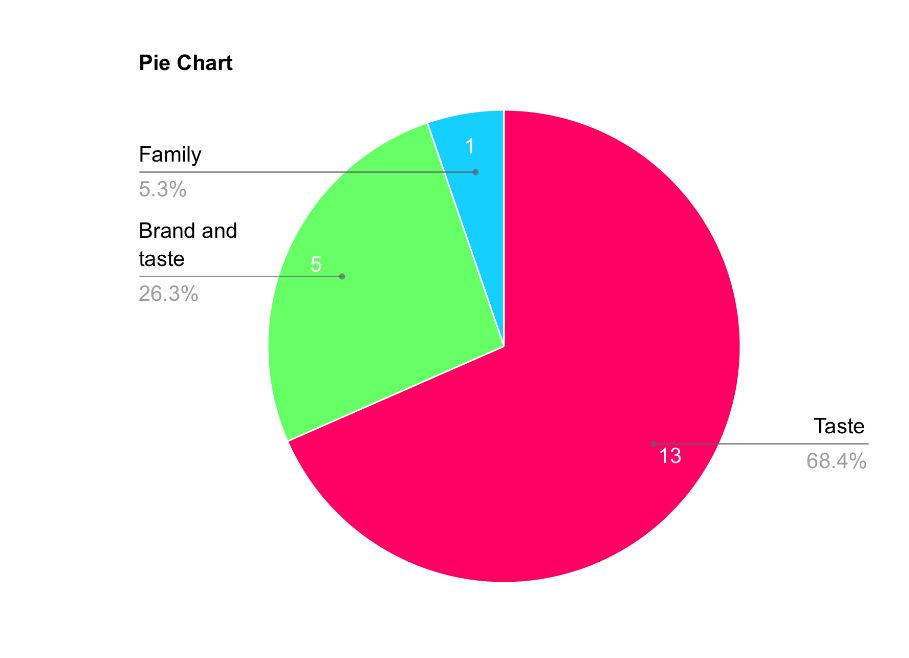
Despite the majority being aware, 68.4 per cent of the respondents said their choice of seasoning cube is influenced by taste. Another 26.3 per cent cited a combination of brand loyalty and reputation, while 5.3 per cent attributed their choice to family influence. Critically, none were influenced by the micronutrients.
Housewife Abimbola Okeowo said that for her, the reason for using seasoning cubes in the first place is to enhance the flavour of the food, not to get vitamins from them.
However, brand expert and Business Editor at Legit, Pascal Oparada, praised Nestlé for fortifying Maggi with iron and other minerals, despite the consuming public not looking out for such benefits.
Oparada said more sensitisation needs to be done by Nestlé to increase awareness of the nutritional additions to its seasonings. “Maggi has become a generic name for the seasoning industry in Nigeria. However, it is dealing largely with an illiterate population who rely more on its taste and name rather than on its benefits,” he noted.
He added: “So, Nestlé needs to embark on unorthodox campaigns to promote the added benefits.”
Aside from Nestlé, and Unilever which began introducing iron-fortified Knorr cubes in 2015, no other seasoning makers have so far announced adding micronutrients to their products.
For Nestlé, fortification of Maggi with vital micronutrients is strategic— to increase iron intake at a low cost to millions of Nigerians.
The company’s Corporate Affairs Manager, Ms Toju Egbebi, explained that Nestle recognises that the average Nigerian consumer may not afford imported cereals or supplements, but will use a seasoning cube or eat porridge.
Bukola Olukemi-Odele, a food scientist and the Programme Officer (Cardiovascular Health, Food Policy) at the Corporate Accountability and Public Participation Africa (CAPPA), told this reporter that while the fortification approach to reducing micronutrient deficiencies sounds promising, it requires proper implementation to achieve the desired results.

She said: “Food fortification is a public health intervention endorsed by governments of countries and the World Health Organisation (WHO) to prevent or control micronutrient deficiencies among populations. It involves adding one or more micronutrients, such as vitamins and minerals, to commonly consumed staples to enhance their nutritional value and provide public health benefits. While this approach sounds promising, improper implementation may not achieve the desired results.”
According to Olukemi-Odele, the fortification of bouillon cubes with micronutrients such as iron is, in principle, a commendable public health strategy because it leverages foods that are widely and consistently consumed across households.
“In Nigeria, where anaemia remains a significant burden, fortifying a product like bouillon cubes—which are used daily in millions of homes—seems like a practical way to reach vulnerable populations at low cost,” she said.
She said Nestlé’s decision to fortify Maggi cubes with iron since 2012 is likely to improve iron intake for many low-income households who might otherwise struggle to access diverse diets.
Olukemi-Odele, however, cautioned against excessive intake, which may affect cardiovascular health. “While this initiative may seem laudable, it is not without limitations and risks. Bouillon cubes are inherently high in sodium, and excessive sodium intake is strongly linked to hypertension and cardiovascular disease, which are already on the rise in Nigeria.”
The National Agency for Food and Drug Administration and Control (NAFDAC) appears to be addressing concerns like those raised by Olukemi-Odele, as it sets strict guidelines on fortification.

In its gazetted Food Fortification Regulation (2021), NAFDAC explicitly states that no one shall sell or advertise any food represented as fortified with vitamins and minerals unless it is registered with the agency.
Ultimately, while taste remains the key driver of patronage for bouillon cubes and regulation seeks to protect consumers, the challenge returns to households like Rakiya’s. Standing in her small kitchen in Iju-Ajuwon, she must weigh the urgent need to boost her iron levels against the simple, affordable comfort of a flavour her family will accept.
For millions of Nigerians, that difficult choice between flavour and fortification continues to be the daily reality.

