


My Igbo magical years: A short story (3)
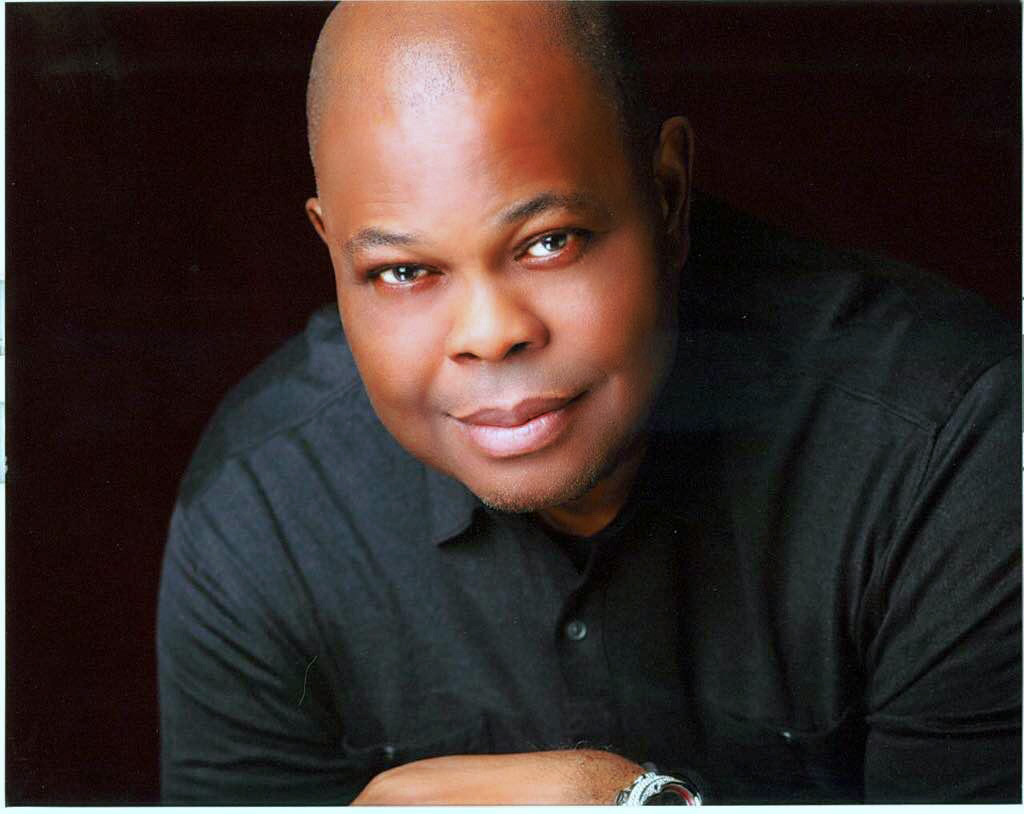
By Okey Anueyiagu
The Part III of my short story series centered on Nkoli set in a remote village in Awka in the early 1960s, is for me a compulsively readable, realistic romp through a burgeoning era and period in lgbo history. It presented an immense impact and revealing potentials for the practitioners of our many faiths, our law and order, as well as an incredible exposition of our collective curiosity about our ways of Life and cultures.
The events in Amudo village got me pondering why human nature seemed then to provide a different standards of law and justice both for the boys and girls, and for the home and for the city. I witnessed the basis of morality, law and justice as lying disproportionately against girls and women – thieving boys were not as often subjected to these forms of humiliating punishment, and these abnormal practices were not to be tolerated in the cities.
As the morning continued to break, Nkoli’s sobbing and wailing remained constant. I was horribly jolted as I realized that I needed to begin to plan my defence before the village elders. I raised myself and sat on the ikpo with my legs dangling above the ground, and my brain calculating strategies that would free me from a likely banishment from the town. I had put myself right in the middle of a counterculture conundrum – at the village square the previous day, I inserted myself into a way of life and set of behaviours and attitudes that diametrically opposed and became at variance with the prevailing social norms of the Awka people. Now, I must device a way to get myself out of this quagmire.
I sneaked into my grandmother’s room, grabbed a bottle of Snapp Aromatic Gin and neatly tucked it under my shirt close to my armpit, and set out on a short journey to the home of the Otochalu – the eldest male in the village. Under the rising sun, I walked briskly towards the main pathway leading to his home a short distance from my grandmother’s. I looked up to the morning sky and soaked up the warmth of its early rays.
As l continued on my way, I began to construct and conjure various hypotheses about the events of yesterday. Thinking about yesterday, brought back uncomfortable memories that served only to increase and heighten my anxiety.
Deep in thought, I kept walking until I reached an intersection where l encountered a bunch of village urchins who accosted me and began to aggressively question me about my actions of the previous day. They were raving mad, and began to abuse me.
READ ALSO: My Igbo magical years: A prelude
My Igbo magical years: A short story (1)
My Igbo magical years: A short story (2)
“Okechukwu the idiot from the Hausa land, how dare you return to desecrate our land?” They asked. “You think you are better than us with your fancy clothes, your polished English, and your pomposity?”
They continued. “Are you not aware that our culture is superior to those of those foreigners you follow?!… You must be banished from this town… you sacrilegious fool.”
The boys numbering about six, and as they spoke, began to move menacingly closer towards me. As I glanced at their faces that were drawn, angry, tense and strained with the muscles on their foreheads pulling their eyebrows into distinctive frowns, I knew that I was in trouble. I had to defend myself. I had been in many fights growing up, and had mastered the Hausa version of the kung fu called dambe, but never been in a fight against six muscular strong village boys. I quickly remembered my sharp and dangerous companions – those long blades from Kano that were safely sheathed in my waistbands. I raised my long shirt to intentionally expose the two daggers, and pronto, the boys fled in different directions, and I continued my journey to the home of the head of the village.
As I drew near to the home of the Otochalu, my steps were heavy and fragile, trembling and delicate. There were poignant emotions inspired by courage and conviction on my mind, as I was preparing to put forth words laced with purity and weaved in clear innocence. The Otochalu will hear every syllable that I have wreathed in my defence.
The Otochalu was the oldest male in the village. He was the head of the village in whose hands all the powers were vested. He ran the affairs of the village with a small group of other older villagers who were selected by the various clans or umunna that made up the entire village. The Otochalu did not have absolute power, but within the democratic setup, commanded a considerable amount of influence, power and authority.
My hometown of Awka, as in many other towns in Igboland never had Kings nor Queens. They were never plagued by superficial types of monarchies that blighted all forms of good traditional governances. In Awka, we didn’t have kings or any domineering local oligarchies with their venal ruling and contemptuous nonsenses. If anyone desired to be the head of his family, village or town, all that person needed was the benevolence of God for a long life. This was a beautiful and effective form of government until the Europeans and the Arabs corrupted Africa with their demonic and disjointed forms of politics.
The Otochalu whose name was Nnameke Aguiyi was in his mid-nineties. He was an elegant soft-spoken man of very moderate means. He was educated but remained a heathen. He did not believe that Jesus Christ, the Son of the white people was the saviour of the world. He carried this belief with such authenticity and dedication, and spoke very clearly and eloquently without ever raising his voice about it.
He thought of the white people who invaded our land with their Bibles in one hand, and chains and shackles in the other, as thieves and opportunists. He called the Igbo the true descendants of God – and that we must never cease in our struggle against the occupying forces from Europe and elsewhere. He often spoke forcefully about how we must all make the supreme sacrifices to protect our dignity and safeguard our culture and traditions.
I had enjoyed a close interaction with Aguiyi who was a distant uncle. A few years earlier my father brought him to Kano to undergo an eye surgery. Aguiyi who was very fond of my father was going blind after a protracted illness from cataract eye disease. My father brought him to Kano where he underwent medical surgery at The Sudan Interior Mission Hospital. After a very successful eye operation, Aguiyi returned to our Kano home for recuperation. During this month-long stay at our home, we became adequately acquainted.
During Aguiyi’s stay at our home, my mother took particular care of him spoiling him with delicacies from her kitchen and assorted brands of pastries from her bakery. I spent a considerable amount of time with him listening to scores of native folklores and tales about Igbo culture that thoroughly delighted my heart. I enjoyed Aguiyi’s company, and he in turn, I believe, cherished my inquisitiveness. We both became kindred spirits.
As I walked the dirt road leading to the Otochalu with the sun hanging low without any disruptive clouds, my feet were full of dust, and the smell of dust rose up in the air with my soul filled with sins. I was lost in thought trying to find where the pain began, and where my redemption laid. There was a bright light I found on the road like a holy ground of peace.
Someone it felt like, was speaking in my ears with the echoes of that voice sounding in my head. That voice was saying: “Boy, your trouble never ends – they will follow you everywhere you go like an unshakeable evening shadow, no one can ever be faster than his shadow – every tears you cry is the price you pay until you learn your lessons”.
As I continued walking, I began to daydream. I was in a trance. To my left, the devil stood by the crossroad talking to me – telling me as the wind weeps in my ears that I was done. The devil brought some sunlight to my face, but it felt like darkness, night and gloom. To my right on the same crossroad, the Angel stood by and as the wind blew, was whispering my mother’s name, and telling me that everything was going to be alright. As I kept walking fearlessly to the Otochalu’s house, I became an alchemy of pain, power and redemption.
As I walked into the beautifully well-setup compound of Nnameke Aguiyi, the Otochalu, I felt the heavy burden I had carried since the day before ease. In a solemn voice, enunciating each word that I spoke in a sort of inaudible murmur, I called out Aguiyi with a greeting, “Nnanyi Aguiyi” – our father Aguiyi, “eke nem gi oo” – I greet you. He was in his obu – the front little house reserved for receiving important visitors. In his obu, he sat in the middle and was surrounded by as many as 20 or more gods made of scary effigies of carved wood, molded bronze and other metal materials. He lifted his gaze from his shrine, took a quick look at me, and with a tiny break of a smile, nodded me to a short stool next to him.
I sat down and began to look at his face which was bathed with features of a glow, giving his face a gentle expression of a cherub. To his left sat one of his grandsons who was slightly younger than myself.
Aguiyi, without as much as looking at me, asked me about my parents and what brought me to his home. Before I could respond, he began to tell me about the goodness of my parents. He reminded me that without my father’s intervention he could have been blind and unable to look at his gods. He looked to his left and told his grandson, with a smile, about my mother’s cooking and her tender love.
“Ngozi your mother, is our special wife… and your father, Chuma, the kindest of all our sons … how can I ever repay them for their graciousness towards me …” He said. In my mind, I said, “free their son, and let him return to his parents”. As he spoke, a chill wind blew from the bamboo fireplace prepared for the roasting of a cock for that morning’s sacrifice. He grimaced and shut his eyes, even as his expression remained calm and focused. I was very reassured by the ease and contentment that I detected in his features. This man will rule in my favour. There was some generosity in his face, perhaps in solidarity with the favours my parents had done him.
But the Otochalu was not done with talking about my father. He swung around with such an agility that betrayed his old age, backing his gods and now facing what appeared to be his library where he stacked up to the ceiling various reading materials that were very neatly arranged. From a pile of discoloured old newspapers, he pulled a bunch of newspapers and began to rifle through them quickly. It appeared that despite his hurried search through the newspapers, he knew precisely where everything was. He brought out “The West African Pilot”, a newspaper that my father had edited for several years in the pre-independence era. The Otochalu opened the editorial page, and began to read rather loudly my father’s editorial writing titled: “When A Man Bites A Dog”, a parody of the incessant colonial master’s oppression of Africans. In this editorial, the Otochalu began to read out where my father wrote an essential thesis stating that colonialism was a sinful act and was brutal to Africans and lucrative for the Europeans. He wrote that it is only through proper appreciation of the full reality of European imperialism and colonialism that Africans will understand first, the enormity of these deadly crimes, and secondly, that it was through the blood, sweat and tears of Africans that European wealth and power was built.
With a vicarious thrill, the Otochalu brandished another newspaper, this time “The Daily Comet”, another newspaper amongst many others that my father served as the editor-in-chief: Dusting off the dust that had gathered all over the newspaper, he turned to the editorial page and started to read: “Throughout recorded history Europeans and Americans, and even Arabs have invaded Africa and subjected its people with deadly subjugation, enslavement and even deaths… acts committed by kings and queens of wicked countries. They commit these crimes in the name of their God as they steal, rape, and pillage just to consolidate and expand the wealth and the power of the white people”.
The Otochalu continued to read from other writings of my father: “The crimes of the white people against us are atrocious and a seemingly never–ending cycle. They are oppressing us – is it because we are less powerful or for our docility? They leave us with scars that have destroyed our collective psyches, robbing us of our pride and humanity… how can the Queen of England claim to be truly human and allow such inhuman treatment, torment, pain and suffering to be inflicted on human beings?”
With the mention of the Queen, the Otochalu angrily flung the newspaper to the floor, and began to berate the Queen of England, wondering where she derived the power to rule over us. Hear him: “What a bloody shame that a woman, or is she not just a girl, is ruling us – a people filled with strong, noble and virile men – we must break this cycle of madness, and of indolence, and claim our humanity. We must heal from the vicious injuries brought upon us by these wicked white people… just imagine their temerity to impose a little girl who should be in my kitchen preparing my onugbu soup as our head …. Nonsense.”
The Otochalu continued by acknowledging what he considered to be the powerful contributions of my father to securing independence for Nigeria, and for his community and his social and political activism: “Your father and our son Chukwuma is a brave man. He fearlessly wrote against the injustice of the colonial masters. They arrested and terrorized him, charged him for writing seditious articles and editorials, but he persevered and conquered the evil people from Europe.”
I waited anxiously to introduce the subject that brought me to the Otochalu, but he would not stop speaking to the audience of two young boys about the good work done by my father. At this point, I’d rather table my matter about Nkoli and the crazed mob, but the village head had other plans. He continued: “Your father is a visionary man, and a leader. Look at the work he has done as the leader of the Ibo Union – the schools they have built, the scholarships they provide for our sons and daughters to study Law, Medicine, Engineering, Accounting and other subjects overseas. What about the fostering of conducive relationships between the Ibo and the other tribes? Do you know that you father has brought honour and pride to the black race, to his country and to his people back home? Yet he is quiet, humble and determined.” In my mind, I said “yes”, but that’s not why I came to see him.
From underneath my shirt, I brought out the bottle of gin, and placed it on the floor right in front of him, announcing: “nna anyi, oji abia” – our father, a gift has come. He did not look at the gift that I brought, instead he reached out to the wooden bowl on the floor and picked up a rounded nzu – a white ball of clay chalk substance, and began to pray over it. He broke it in half and rolled the other half portion at my feet. He squeezed out a tiny portion, ground it to powder form, and began to rub it judiciously underneath his eyes and on his forehead, I began to do the same as l listened very attentively to the supplications and words in parables and local idioms that Aguiyi spoke. After a series of prayers, he used the white chalk to draw four horizontal lines on the mud floor – these four lines, he told me, represented the four market days of the lgbo native week. He asked me to do as he just did, which I complied with and returning what was left of my white nzu. He took it from me, broke off a little piece, squeezed and ground it in-between his fingers, and this time, applied what remained under his right eye.
Aguiyi continued in his verbal incantations. He reached in his side pocket of the native jumper made of ankara clothe and brought out a kola nut. He broke it into four pieces and threw a piece at the feet of his gods asking that they partook of his obeisance, and to his homage and respect. He handed me and his grandson each a piece of the kola nut while he proceeded to chew on the remaining piece, I quickly snuck my piece in my back pocket, as my mother’s admonition not to partake in the feast of the heathens hung fresh in my mind. I began to move my jaw, pretending that I was chewing the kola nut. If his gods with their scary eyes caught me in my deception, I didn’t care, as long as I pleased my loving mother.
Nnameke Aguiyi, The Otochalu Amudo was enchanted. He had reached the apogee of his divinity and spiritual ascendency. He became revivified and envigorated. He charged up and grabbed the bottle of schnapp gin from the floor, twisted the cork open and poured a sprinkle all over the effigies while reciting strange prayers calling on the gods to give him powers to defeat his enemies. He walked with force and gyration towards the entrance of his house and poured some more gin, splashing the liquid from one corner of his gate to the other.
We followed Aguiyi as he was gyrating at his home’s frontage, humming powerful Awka songs reserved only for the great idu masquerades. He looked up in the sky as if he was conjuring the sun god to return to earth and adjudicate to his supplications. He pointed to an old palm tree and began to tell me the story behind that particular tree.
Hear Aguiyi: “Do you know that in old Awka tradition baby boys had palm trees that were called after their names … Long ago in Igboland when a baby boy’s umbilical cord falls off, the father will wrap it inside an ogilishi leaf together with one fresh palm nut and then bury it in his ancestral land. And when the palm nuts germinate and grow into a palm tree, the tree will be called after the boy’s name, such as: “Nkwu Chukwuma”, because the palm tree lives long and healthy life, it is believed that the boy will live a long healthy and strong life also. In Igboland palm trees are known as the wealth tree because every part of it is useful. Therefore, the boy would grow to be wealthy and resourceful. We believed that wherever the child may travel to make money he would always return home to invest and prosper just as his palm tree stood rooted in his father’s land.”
“That palm tree out there, bears the umbilical cord of your father Chukwuma… I was here the day he was born and the day his fortune was buried under that ground… it has germinated greatness and bears us a great resourceful fruit in your father…” Aguiyi declared with joy. He turned to me with glazed eyes and asked me: “My son Okechukwu, where was your umbilical cord buried?” I offered no answer.
Nnameke Aguiyi returned to his obu, and as he sat on his stool in front of his many gods, the fire from the shrine began to flicker. A sinister shadow split his face in two; a dark strange revelation beneath his demeanor appeared. At that moment, the man of faith and fortitude was staring at his gods with an expression of intensity that combined hope and gloom appearing in his immense solitude. I felt a rush of a feeling of affection towards this man.
Aguiyi began a fresh round of incantations, this time speaking only in parables. He picked up the half full bottle of gin and began to gulp the contents, He handed me the bottle indicating that I took a swig. I was confused about this gesture as l was not legally or even morally allowed to drink alcohol. He looked at me and sensing my hesitation, asked me to partake. l brought the bottle to my lips and smelling the pungent strong scent that filled my nostril with some irritation, kissed the mouth of the bottle. I felt a woozy feeling as I inhaled the fumes. My eyes began to spin, and Aguiyi was content that he may have initiated me into adulthood. I could confirm this from the wry smile across his wrinkled face.
Praying, Aguiyi spoke forcefully: “Chikwu anyi abia” – our gods here we come. “Nwatakili bu Okechukwu ga adu ka echi, na echi anara agwu agwu” – This boy Okechukwu will be like tomorrow because tomorrow never ends. “Mbosi ikeli madi ka ekeli ife oga abu” – The day you created someone is the day you made him what he will be. “Okuku ga abu oke na eshi na eju” – The male chick is formed from the shell. “Ikeli nwatakili bu Okechukwu ka obulu nnekwu madi” – You created this boy Okechukwu to be a wealthy and successful man. “Nyie ogonogo ndu, na aru ike na amamife… kpochapu nsogbu ya” – Give him long life, good health and wisdom … and may all his troubles disappear. With the prayers offered on my behalf to Aguiyi’s many gods, he rose and began to gaze at the thatched roof of his obu, leaving me and his grandson saying many choruses of “ise, ise, ise” – amen, amen, amen.
Without addressing the matter that brought me to Aguiyi’s home, he waved me away and began to walk back into his house. I returned to my grandmother’s home, and met a messenger of the village head who informed me that my presence was mandated at the village square that afternoon to defend myself in a matter of grave and grievous importance.
(Part IV and the concluding part of this short story series will follow on Saturday, November 15, 2025)
- Okey Anueyiagu, a Professor of Political Economy, is the author of: Biafra, The Horrors of War, The Story of A Child Soldier

