


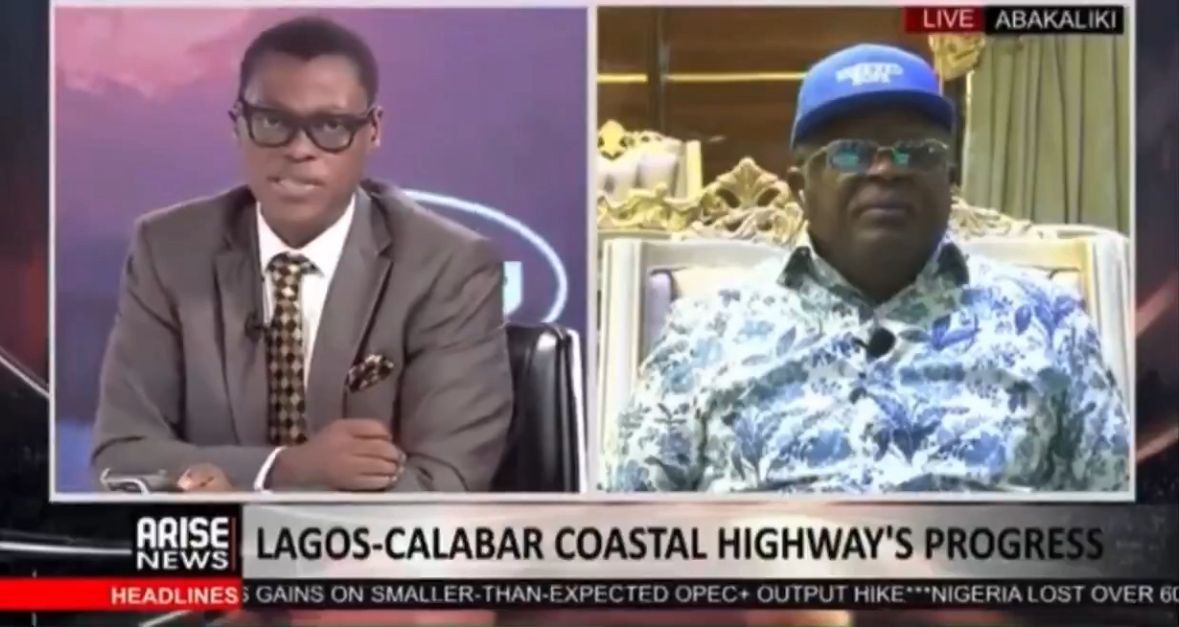
Mixed reactions trail Umahi, Rufai heated exchange
By Habiba Kaita
A heated on-air exchange between the Minister of Works, David Umahi, and Arise TV anchor, Rufai Oseni, has sparked widespread debate among Nigerians on social media.
The incident took place on Tuesday during Umahi’s appearance on The Morning Show on Arise TV, where Oseni questioned the minister for details regarding the Lagos-Calabar Coastal Highway project.
The conversation took a sharp turn when Oseni accused the minister of reporting him to President Bola Tinubu over his previous comments on the project.
Visibly displeased, Umahi fired back, saying, “You are too small for me to report you to Mr President. Who are you?”
The exchange quickly became tense, with the minister asking Oseni to “keep quiet,” a moment that immediately went viral online.
Public Reaction
The encounter drew mixed reactions on X (formerly Twitter). User @iamkennifizzle criticized Oseni’s tone, writing, “There’s too much disrespect coming in form of journalism. You shouldn’t go on air and make your guest feel attacked.”
But others defended the journalist’s questioning. @daemperor007 countered, “CNN does this all the time with US politicians. So is Rufai asking the wrong questions here?”
Similarly, @Niks_eo wrote, “He still didn’t answer the questions that concern Nigerians. Someone is asking for accountability and you’re angry at his delivery. God abeg.”
Another user, @BELVAZ89, commented, “We employ them and have every right to hold them accountable for how they spend our money.”
Rufai reacts
Amid the online debate, Rufai Oseni shared a post on his verified X account, saying he was encouraged by the growing public consciousness among Nigerians.
“I must confess that you guys have really made Nigerian citizens begin to wake up to their rights,” he wrote.
“Leadership is just a dirty thing without a single conscience. But I’m happy that the consciousness is gradually brewing up. Very soon it will blow beyond everybody’s imagination.”
Beyond the exchange
Reactions remain divided but many believe that the exchange shows ongoing tensions between public officials and the press, as well as the growing demand from Nigerians for the government to be accountable and transparent.

