
Laugh, Resist, Survive !!!
At a time of deepening ecological crisis, widening social injustice, and rising activist burnout, environmental justice advocates are advancing an unexpected yet powerful response to the demand for resilience, urgency, and moral courage – humour.
Activists are always at alert -responding swiftly to important existing and emerging socio-ecological and other issues. Often times they are faced with traumatic experiences on the field and met by stark opposition or even failure. This leads to burnout which can become persistent and reduce productivity/impact, as well as lower quality of life.
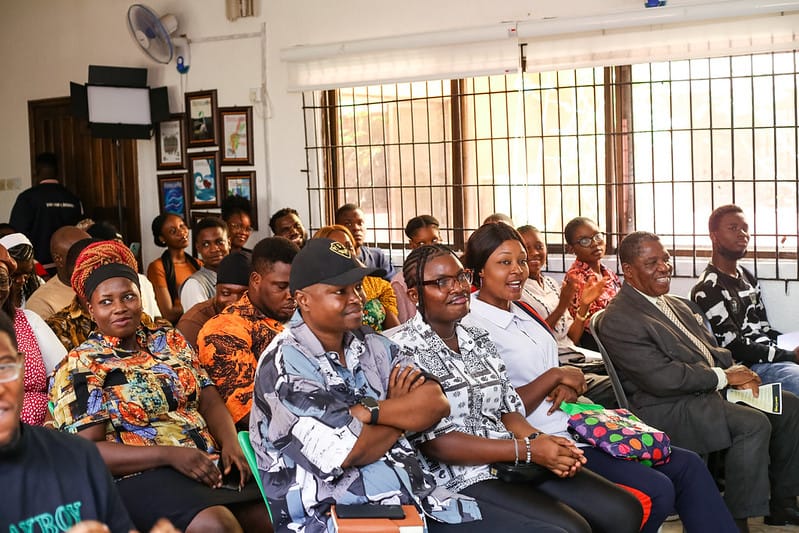
This challenge requires personal and collective reflection on the causes of burnout and what tools can be effective in addressing it. To this end, on 7th April 2026, Health of Mother Earth Foundation and Environmental Rights Action organised an eco-comedy live show which explored the relevance of humour and storytelling in curbing burnout and promoting wellbeing in the course of activism.
This event which held in Benin City, Edo State had in participation young, middle aged and experienced activists, comedians, students and media representatives. The event featured short speeches, storytelling (activists’ chronicles), live comedy performances, and group discussions, all of which were infused with humour while delivering practical ideas on how to avoid burnout. The event also featured a presentation of prizes to two winners of the eco-comedy short film competition which preceded the live show.

The Eco-Comedy gathering opened with a deeply reflective and thought-provoking message that blended humour with urgency. Nnimmo Bassey, HOMEF’s Executive Director, spoke of a time defined by overlapping ecological and social crises, and because of that, we must remain rooted in purpose, conscious of our collective power, and alert to the urgency of the moment. According to Dr. Bassey, humour/laughter should inspire us to think about who we truly are and the socio-ecological issues that we need to address, stressing that comedy and humour are not neutral but viable tools for action.
Dr. Bassey’s remarks acknowledged the serious and often numerous challenges that activists face year after year sometimes with little success owing to deep-rooted systemic disorders. “But”, he noted “giving up is very dangerous”. He stressed that activists must remain consistent and persistent even if the change does not happen in their lifetime. “To surrender is to allow injustice to prevail unchecked”.

Furthermore, Dr. Bassey noted that humour is a great tool for educational purposes and can be used can be used to break barriers – whether personal, structural, or systemic. The notion of power was also central. Dr Bassey left the impression that communities and individuals often underestimate their own power, especially in the face of institutional failure or injustice. Yet real change begins when people recognize that power lies in their voices, their unity, and their refusal to remain silent. Even small acts of speaking out, using caricatures to campaign and sharing stories contribute to a larger movement for justice.
The Deputy Executive Director of Environmental Rights Action, Barr. Mariann Bassey-Olsson, building on the importance of integrating humour in activism, noted that if activists lose their joy, they will lose the movement. Humour allows us to stay human without which we would lose empathy and the motivation to instigate change. While the realities that we face are grievous, our response must not be stripped of humanity.
Mrs Olsson established that humour does not attempt to make light of the socio-ecological struggles but helps to break tension and strengthen commitment. “We are not laughing because things are easy; we are laughing because we refuse to be broken. Humour reaches where policy papers cannot. Activism must sustain people, not consume them”, she explained. Moreover, Mrs Olsson added that “when we laugh together, we heal, we reconnect. We remember why we started. This isn’t a distraction. It is resistance!” Humour allows civil society activists to release tension, reconnect with one another, and sustain the energy needed for long-term struggle.
The session on activist’s chronicles had activists from different countries and regions sharing personal experiences they have had in the past which were not funny at the time but now when they look back they can laugh about them. Some of the stories were rather touching including personal sacrifices and betrayal, communications hassles/language barriers, security issues, mistakes due to inexperience, and more.
Across all accounts, a common thread emerged: these challenges did not deter the activists but instead became catalysts for learning, growth, and deepened resilience. The session underscored the significant personal costs inherent in activism and reinforced the imperative for activists to foster mutual support, cultivate solidarity, and engage in practices that promote collective and individual wellbeing.
The session also highlighted practical ways to avoid burnout and deal with trauma including prioritising areas of engagement and maintaining focus, proper planning/time management, collaborations, delegation, infusion of art/humour in programme design, avoiding competition, prioritising rest, celebrating wins (no matter how little) and addressing systemic socio-economic factors that contribute to burnout. On trauma, it was noted that rest and carefully chosen leisure activities can promote recovery.
Eco-Comedy emerges from a growing recognition that activists across the world, rather than retreat, claim humour as a political and cultural strategy, one that enables movements to communicate complex issues in accessible and relatable ways, connect with broader and more diverse audiences, and sustain emotional strength and collective resilience.
Rooted in Nigeria’s rich tradition of satire and social commentary, Eco-Comedy bridges activism and performance, using storytelling, comedy, and lived experience to expose injustice while creating space for healing, reflection, and renewal.
Overall, the event demonstrated the integration of art and advocacy, highlighted the need for movements to adopt humour as an artistic language for ecological justice, and a means to strengthen public engagement, as well as the need to build communities of eco-comedians: activists who can communicate systemic critique and propagate action with wit, clarity, and cultural relevance.